
Microfused® Essential Oils
Microfused® Essential Oils is patented technology that transforms essential oils into microscopic droplets. This improves how they interact in the gut and supports beneficial bacteria for more consistent performance.
Understanding the Role of Essential Oils in Livestock and Poultry
What Are Essential Oils and How Are They Used in Agriculture?
Essential oils are naturally derived plant compounds that have been used in agriculture for many years. Today, they are designed to support animal production and help producers meet their performance goals.
The composition, quality and delivery of essential oils can vary significantly. As a result, how these compounds are formulated can influence product consistency and overall performance.
Why Traditional Essential Oil Delivery Can Be Challenging
Essential oils are naturally hydrophobic, meaning they do not readily mix with water. Without specialized formulation technologies, they can separate or disperse unevenly during formulation and digestion.
Because of these physical properties, consistent delivery of essential oils throughout the digestive tract can be challenging. Technologies that improve stability and dispersion may help provide more uniform distribution and more consistent product performance.
What Are Microfused Essential Oils?
Microfused Essential Oils transform essential oils into microscopic droplets that perform consistently, support gut health and preserve the beneficial bacteria animals need to thrive. Ralco has spent more than two decades refining this system to overcome the common limitations of traditional oils.
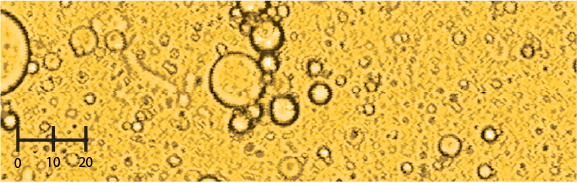
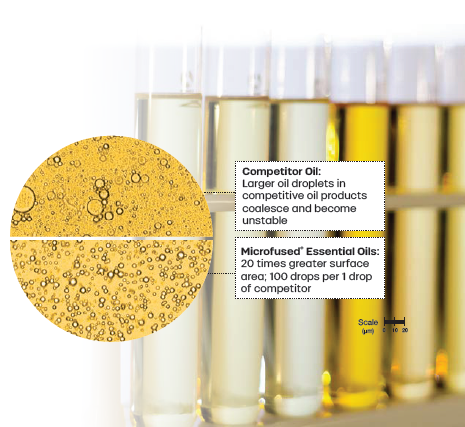
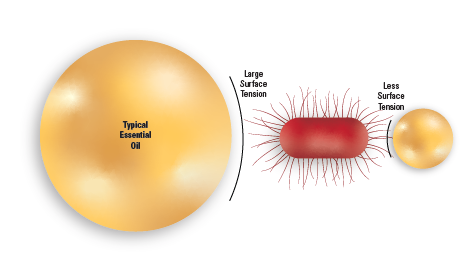
Competitor Oil
Larger Oil Droplets in competitive oil products coalesce and become unstable
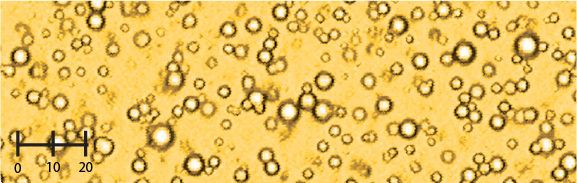
Microfused Essential Oils
20x greater surface area: 100 drops per 1 drop of competitor
How Microfused Essential Oils Work
Here’s how the Microfused process tackles essential oil challenges:
Micronized Droplets
Improved Interaction
Emulsified Contact
Feeds Beneficial Microbes
Protects Beneficial Bacteria
Microfused oils are broken into droplets, 100 times smaller than traditional formulations. At 5 microns or less in size, they’re small enough to interact directly with bacteria, while increasing surface area by 20 times in the gut.
Smaller droplets reduce surface tension and allow oil droplets to move closer to microbes by overcoming their water-lipid barrier.
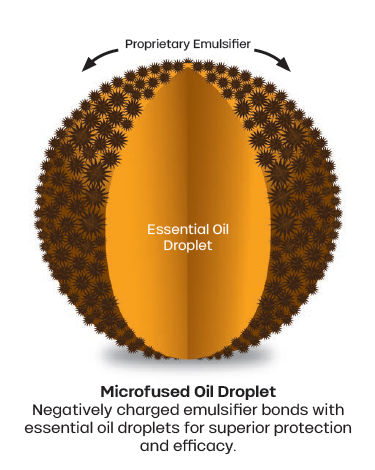
Each droplet is coated in our proprietary emulsifier which helps stabilize the oil droplet and overcome the natural barrier between oil and water. This creates a more stable emulsion, helping the essential oil chemistry stay evenly distributed instead of coalescing into larger droplets.
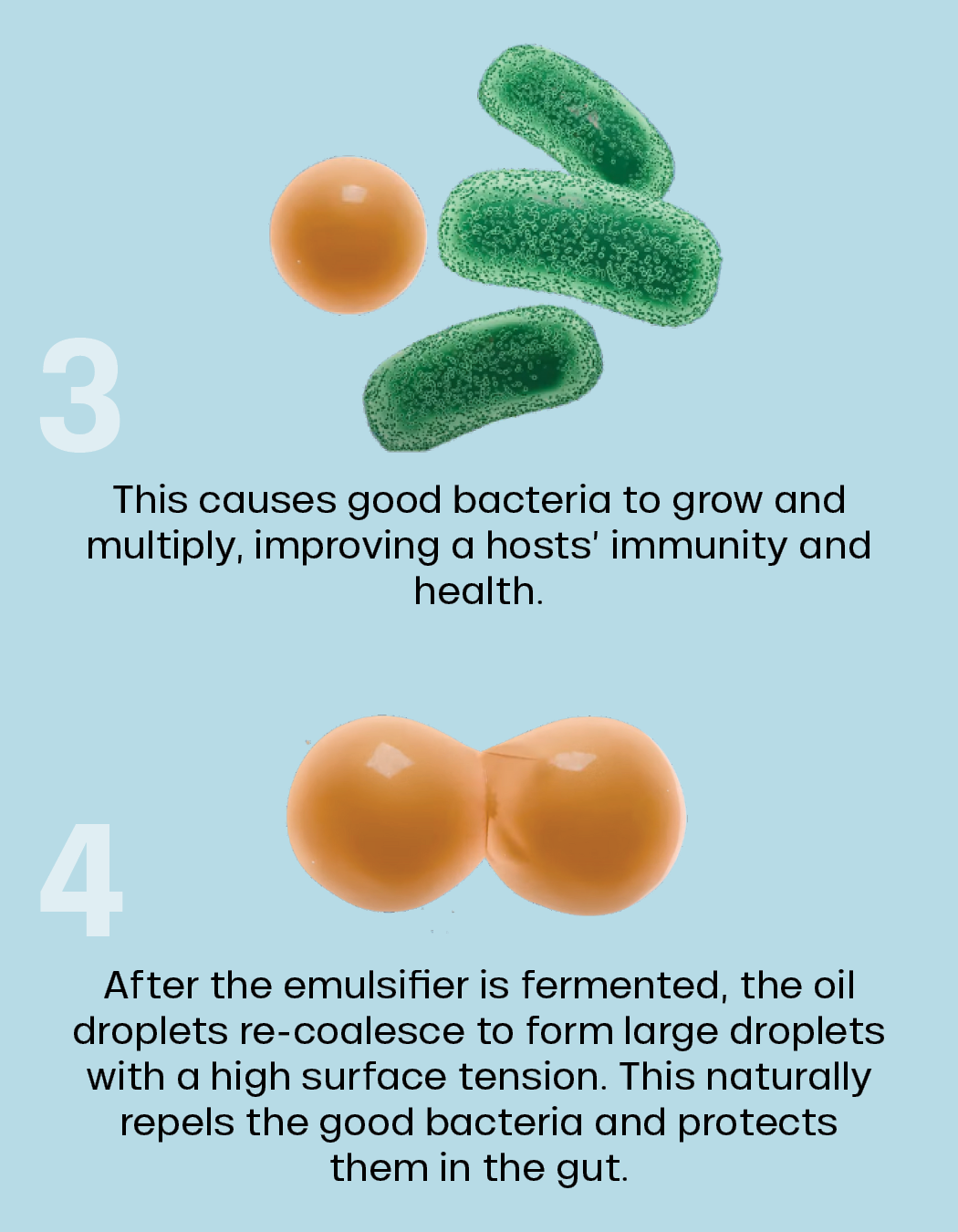
Beneficial bacteria like Lactobacillus ferment our emulsifier into sugars they can use as an energy source and multiply. Once metabolized, the surrounding emulsion changes and the oil droplets recoalesce.
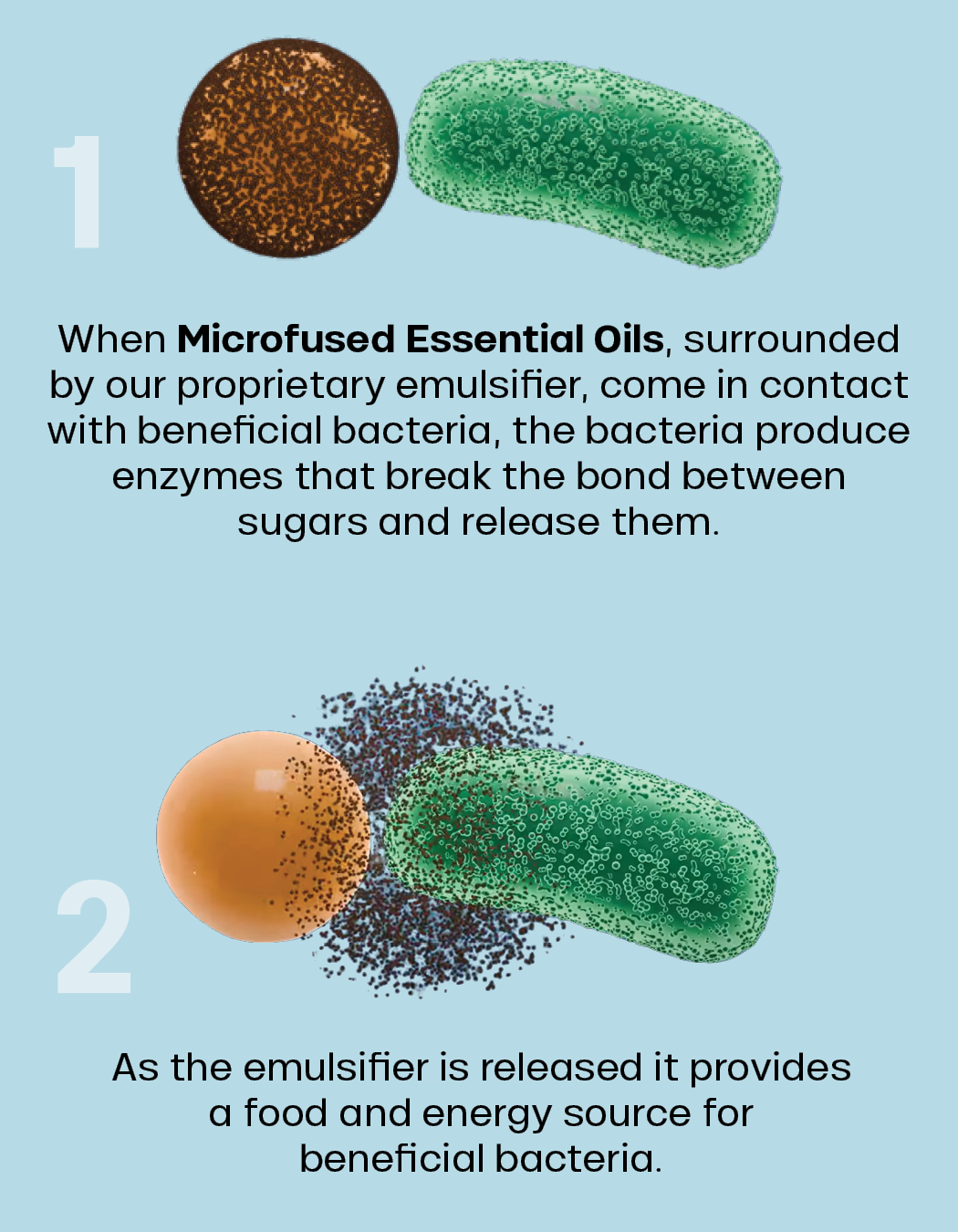
Ralco essential oils protect beneficial bacteria by using our prorietary emulsifier. Beneficial bacteria, like Lactobacillus, ferment the emulsifier into energy and multiply.
Gut Health You Can See
Research shows that animals fed Microfused Essential Oils develop stronger gut health and improved nutrient absorption. Tissue samples reveal taller villi and tighter cell junctions, both indicators of stronger gut integrity to better defend against stressors.
These micrographs highlight that structural difference, showing how stronger villi help support a more resilient gut barrier.
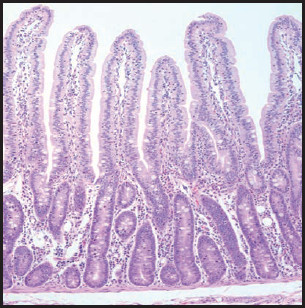
Control
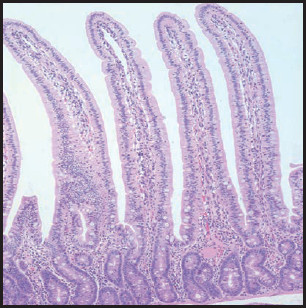
Microfused Essential Oils
Research Proven
With more than 25 years of research behind it, Ralco’s Microfused Essential Oils technology is backed by extensive internal data, on-farm trials and third-party validation.
Ralco maintains the largest known essential oil database in animal agriculture, with over 95% of oil constituents mapped. This research is supported by dedicated microbe labs at Southwest Minnesota State University and a lab partnership at the University of Minnesota, allowing us to study how plant compounds support animal health at the molecular level.
How We Formulate Essential Oils Differently
Microfusion is only part of the equation. Through our NEXUS™ formulation approach, we map the properties of over 400 plant extracts to match the right oil combinations to over 80 challenges. That means we don’t just deliver essential oils well, we deliver the right oils for each challenge.
Ralco’s Quality Advantage
Essential oil quality is only as good as the plants they come from, and not all plants are created equal.
At Ralco, we don’t take shortcuts or settle for off-the-shelf oils. We control the entire process from plant to product to ensure every drop meets our performance standards in livestock and poultry.
Here’s what sets our essential oils apart:
- Exclusive sourcing and grower contracts
- Precision extraction for maximum potency
- In-house testing for consistency and efficacy
- The industry’s largest known essential oil database
Even essential oils from the same plant species can differ dramatically depending on the environment. That’s why most suppliers can’t promise consistency. We can, because we control what others don’t.

Explore Our Other Technologies

Targeted
Prebiotic Support

Natural Microbial
Stimulation

What This Means for Your Operation
Bottom line, Microfused Essential Oils give you a more reliable way to support gut health and the performance that comes with it. Research shows animals fed Microfused Essential Oils stay healthier, maintain intake and recover faster during stress.
That means:
- Support during times of challenge
- Improved weight gains
- Faster recovery during stress
- More consistent performance across your operation.
Ready to Improve Gut Health and Efficiency? Find out how this proven technology can support gut health and performance in your operation.Our team will help you choose the right solution based on your goals and species!
FAQs About Microfused Essential Oils
What are essential oils?
Essential oils are natural compounds extracted from plants. They’re a type of phytonutrient that act as the plant’s defense system against stressors.
What are phytonutrients vs. essential oils?
Phytonutrients (also called phytochemicals) are a broad class of natural compounds produced by plants. There are over 100,000 different phytonutrients, each with unique benefits. They’re grouped into categories like polyphenols, terpenes, carotenoids and polysaccharides.
Essential oils are one type of phytonutrient, specifically, the volatile oils made up of compounds like terpenes and phenols. So, while all essential oils are phytonutrients, not all phytonutrients are essential oils.
What are the different phytonutrient categories?
Ralco uses a broad spectrum of phytonutrients, or natural compounds produced by plants to support growth. Technically, these fall under what are known as phytochemical classifications, which group compounds based on their chemical structure and function.
There are thousands of individual phytonutrients, but most fall into these 12 major classes:
- Polyphenols – Includes flavonoids, phenolic acids, tannins and lignans known for their antioxidant and anti-inflammatory properties.
- Carotenoids – Compounds like β-carotene and lutein that support immune and cellular health.
- Glucosinolates – Sulfur-containing compounds known for detoxification.
- Polysaccharides – Prebiotic fibers such as inulin, arabinoxylans and pectins that promote gut health and immune function.
- Terpenes – The foundation of essential oils.
- Alkaloids – Bioactive compounds with a range of effects.
- Allium Compounds – Found in garlic and onions. Supports immune function and metabolic balance.
- Capsaicinoids – Compounds like capsaicin that support circulation and metabolism.
Are all essential oils the same?
No. The properties of essential oils can vary widely depending on several factors:
- Plant species and variety – Different plants produce different oils with unique active compounds.
- Environment – Soil, weather and growing conditions affect the essential oil’s chemical makeup.
- Harvest timing – When a plant is harvested affects the strength and composition of its essential oils.
- Extraction method – How the oil is processed (steam, solvent, cold press, etc.) influences potency and consistency. It’s similar to the difference between espresso and light roast coffee. Same plant, but very different profiles depending on how and when it’s processed.
Even essential oils from the same plant species can perform differently depending on how and where they’re grown. At Ralco, we test every batch against strict regulations to ensure consistent, reliable performance on every farm.
How does Ralco source their essential oils?
Essential oils can vary significantly in quality and performance without strict control measures in place. That’s why Ralco manages the entire process from plant to product.
Ralco:
- Works with exclusive licensed growers
- Controls seed selection, inputs and farming practices
- Monitors plant growth and harvest at the exact stage for optimal oil extraction
- Oversees the distillation process to preserve key active compounds
- Analyzes every batch in our lab to ensure it meets our strict specifications before it goes into any product
This level of control ensures that the essential oils we use are consistent and effective all the time.
How are essential oil properties measured?
Essential oil properties are determined by the specific compounds, called constituents, within each oil, and how those compounds interact. Measuring these requires advanced analytical tools.
While most suppliers don’t have full-spectrum analysis on essential oils, Ralco does. We utilize Gas Chromatography with Flame Ionization Detection (GC/FID) machines to analyze every batch of oil in-house.
This allows us to:
- Identify and quantify the constituents that give oils their biological activity
- Maintain a consistent standard of quality and efficacy
- Build the largest known essential oil database with 95% constituent composition mapped per oil
We’re also expanding our capabilities with technologies to further deepen our understanding and precision to the full 100%.
How does Ralco formulate essential oils?
We first identify the specific condition that needs support, then select a specific formulation utilizing phytonutrients based on our in-depth NEXUS database. By understanding how each oil functions and the inclusion level required, we have proven results with greater consistency.
Our proprietary NEXUS formulation uses an extensive library of phytonutrient data to match the most effective oil combinations based on our proven scientific research results. This is a precise, research-based process that goes far beyond trial and error.
After the formulation is defined, we apply our Microfused technology to deliver the oils in a stable and consistent form that performs effectively in the gut. This two-pronged approach ensures each product is both purposeful and reliable in real-world production environments. Not just a one-size-fits-all formulation.
Do essential oils make animals go off feed?
No, not when they’re formulated and delivered correctly. Some essential oils can have strong aromas or tastes that reduce palatability, but Ralco’s Microfused Essential Oils are specifically designed to avoid that issue. By controlling droplet size, concentration and blend profile, we ensure animals stay on feed.
Do essential oils have antioxidant properties?
Yes. Many essential oils contain powerful antioxidant compounds. Ralco has conducted extensive testing and found specific phytonutrients or essential oils have up to 49x the antioxidant capacity of natural vitamin E.
Antioxidants are important because they protect against oxidative stress, a condition caused by an excess of unstable molecules called free radicals. These free radicals can damage proteins, fats and DNA, leading to inflammation, poor performance and reduced immunity in animals.
The antioxidant compounds in essential oils, especially phenolic compounds, work by donating hydrogen atoms to neutralize free radicals. This breaks the oxidation chain reaction and reduces the formation of damaging compounds in the body. In short, essential oils help defend animals at the cellular level, supporting health, performance and recovery during stress.