

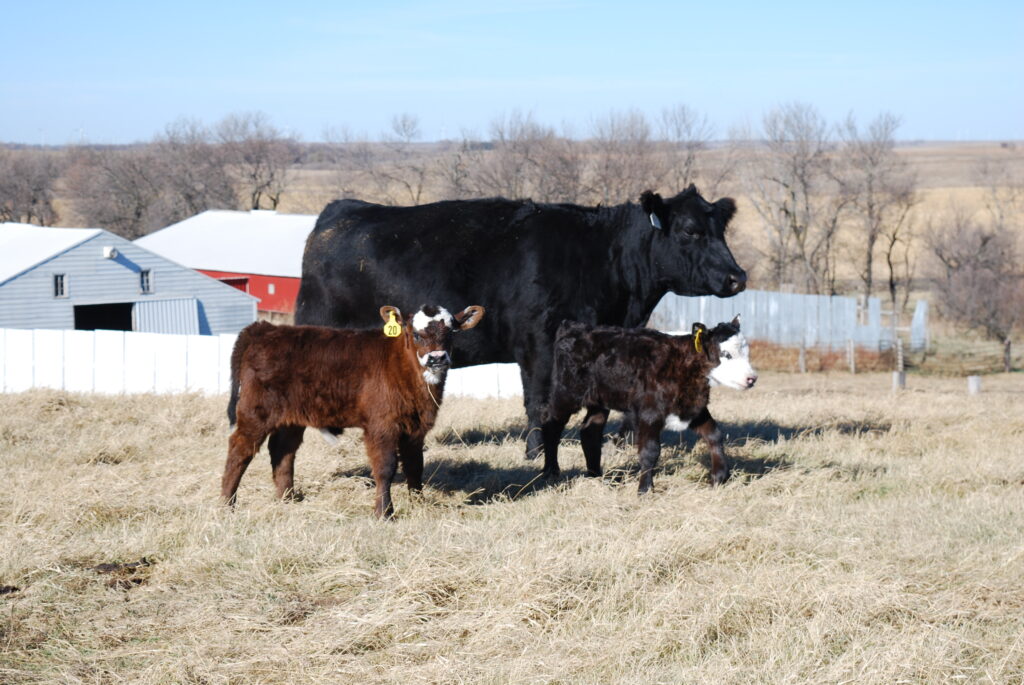
Early weaning often enters the conversation when drought begins putting pressure on pasture and cow body condition.
But how early is too early, and will forage savings outweigh additional calf management? The answer depends on the needs and resources of each operation.
Why Early Weaning Changes the Drought Equation
Lactation requirements are the greatest nutrient demand for cows. Once calves are weaned, energy and protein previously used for milk production are directed toward maintaining or improving cow body condition score.
Removing nutritional demands of lactation can reduce dietary energy needed by approximately 15-20%. (1) Research suggests early weaning may reduce the cow’s total nutrient requirements by 1/3-1/2, depending on her level of milk production. (2).
Additionally, calves consume approximately 2-2.5% of their body weight while on pasture. After weaning, forage intake decreases as the cow’s nutrient demand for lactation subsides, and the calf transitions to a separate feeding program. Together, these changes can reduce pasture forage demand by an estimated 30-40%. (3)
This reduction can help producers:
- Extend the grazing season
- Reduce purchased hay or supplement needs
- Reserve hay for the cow herd
- Allow pastures time to recover
- Help maintain current stocking rates
Additional research demonstrated that weaning calves 90 days early reduced forage disappearance by 36%, or approximately 18.9 pounds per pair each day. This provided an estimated 1.1 additional animal unit months of grazing. (3)
Protect More Than This Year’s Grass
The greatest benefit of early weaning may not be the grass saved today, but healthier pasture available for future grazing seasons.
Grazing during drought can reduce plant leaf area, limit root development and deplete reserves plants need for recovery. Grazing too closely to the root can also leave soil more exposed and reduce the pasture’s ability to capture moisture.
Rain may make drought-stressed pastures look better, but appearance doesn’t always reflect available forage. Plants still need time and moisture to rebuild growth and recover from earlier grazing pressure.
Maintain Cow Body Condition
Early weaning can be especially valuable for females that have greater nutritional demands or are at risk of losing too much body condition. Removing lactation gives those females a better opportunity to improve body condition before fall and winter. (2)
Cows that may benefit most from early weaning include:
- First and second calf heifers
- Thin or older females
- Heavy milking females
- Females grazing poor quality pastures
- Superior genetics producers want to retain through the drought
Although this study wasn’t conducted specifically under drought conditions, K-State research found cows grazing native pasture late in the grazing season gained up to 1/2 of a body condition score over 60 days when their calves were weaned at 100 to 115 days of age. (4) For a 1,200-pound cow, 1/2 a body condition score represents more than 40 pounds of body reserves, which can help a thin or borderline cow move closer to the condition needed for timely and successful rebreeding.
Weaning before or during breeding season can reduce nutritional demands of lactation and may help thin cows return to estrus sooner. However, timing must align with calf development and operation’s ability to manage younger calves.
What is the Right Age to Wean?
Calves have been weaned as early as 45 days when drought conditions require immediate action. However, this should be considered an intensive management strategy rather than a standard recommendation. At that age, a calf’s rumen isn’t fully developed, so calves require a highly digestible diet, appropriate facilities and close monitoring to maintain health and growth. (2,7)
A calf’s rumen is generally developed enough to function as a true ruminant by approximately 85 to 90 days of age. Research and extension guidance support weaning around 90 days, although waiting until calves are closer to 100 to 120 days can make the transition to a dry diet easier and reduce the level of management required. (2,7)
Ultimately, the decision should account for how quickly pasture pressure needs to be reduced as well as calf health, feed availability, facilities and labor. The younger the calf, the more carefully its nutrition and management must be planned.
Does Early Weaning Pencil Out?
Early weaning shifts where the operation’s resources are used. Producers may save pasture and reduce the cow’s nutritional requirements, while taking on cost of feeding and managing calves separately. With a highly digestible ration and proper management, early weaned calves can maintain or improve performance compared with calves left on declining pasture.
Before making the decision to wean early, consider:
- What will the calf ration cost per head per day?
- Will calves be sold, backgrounded or retained?
- Are adequate pens, bunks, waterers and shade available?
- Does the operation have enough labor to monitor calves closely?
- Could early weaning help retain cows that might otherwise need to be sold?
- What is the cost if cow body condition and pasture health continue to decline?
When grain and byproduct feeds are competitively priced to forages, feeding the calf may be more economical than feeding a nutrient demanding, lactating cow. Local feed prices, calf prices, pasture value, yardage and marketing plans all need to be included in the calculation.
Can Early Weaned Calves Still Perform?
Research shows young calves can convert high-quality dry feed efficiently when intake and health are managed correctly.
In one study, 243 calves were weaned at an average age of 113 days and fed for an 84-day receiving period. Calves in the highest intake treatment gained 1.94 pounds per day while consuming 9.52 pounds of dry feed. Their feed conversion was 4.88 pounds of feed per pound of gain. (5)
Not every group of early weaned calves will gain nearly 2 pounds per day. Performance depends on genetics, starting weight, diet, health, weather and management. The greater challenge is getting calves to eat consistently during the first several days after weaning.
How to Get Calves Eating
Early weaned calves may eat very little during first few days after separation. A new diet, unfamiliar environment and added stress can make getting them to the bunk even harder.
When possible, introduce creep feed or the planned weaning ration three to four weeks before separation so calves are familiar with the feed. Freshly weaned calves may initially consume only 1-1.5% of their body weight in dry matter. Start with high-quality grass hay and a palatable, nutrient dense ration, and gradually work calves toward consuming approximately 2.2-2.5% of their body weight within 10 to 14 days. (6)
Because low intake can limit nutrients available for growth and immune function, early-weaned calves may need additional support during the transition. Fight Strong® Pellet is a natural pelleted feed additive designed to help get stressed calves eating and support immune and digestive function during periods of high stress. It can be mixed into the starter feed or top dressed and is recommended for a minimum of 28 days. Fight Strong doesn’t require a veterinary feed directive.
Bottom line, early weaning isn’t the right decision for every ranch or every group of calves. However, when the numbers work and management pieces are in place, it can reduce forage pressure, protect productive cows and maintain calf performance during a difficult drought year.
To learn how Fight Strong can fit into your early weaning program, contact the Ralco beef team at 1-800-533-5306.
References
- Johnson, Mark Z. “Benefits of Early Weaning Beef Calves.” Drovers, July 19, 2022.
- North Dakota State University Extension. “Early Weaning Beef Calves.”
- Rusche, Warren. “Economic Considerations for Early Weaning.” South Dakota State University Extension, April 6, 2021.
- Waggoner, Justin. “Consider Early Weaning, Even if Pasture Conditions Have Improved.” K State Research and Extension, July 1, 2026.
- Waggoner, Justin. “Performance of Early Weaned Calves.” K State Research and Extension, July 2, 2018.
- Waggoner, Justin. “Feeding Newly Weaned Calves.” K State Research and Extension, October 26, 2023.
- University of Nebraska–Lincoln Beef. “Early Weaning Strategies for Challenging Forage Conditions.” July 1, 2026