
A few hours spent walking the barn in November can save a lot of time and money come January. Some of this is probably already on your list, but a few of these details tend to become the most expensive fixes once it’s cold. Here’s what’s worth double checking before winter sets in.
Barn and Environment
Start with the building itself. Walk the barn and look for drafts, gaps around doors, curtain tears, anything that’s going to let cold air in once temperatures drop. Curtain repair now is a lot easier and cheaper than curtain repair during a cold snap.
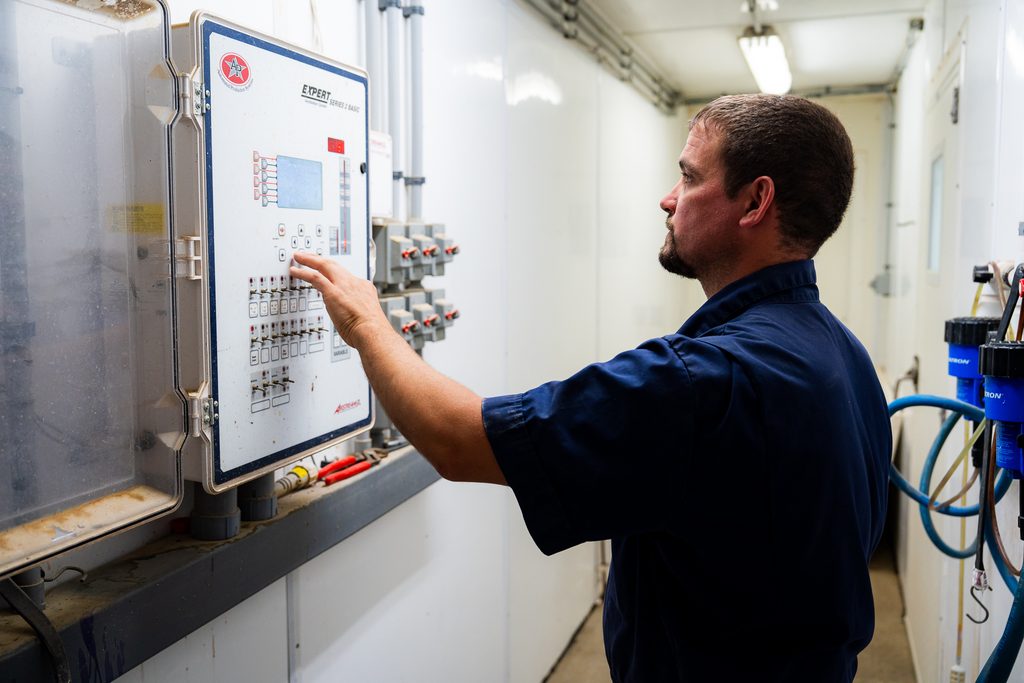
While you’re in there, review your controller settings. Fan staging and bandwidth settings that worked fine in the summer often need adjusting for winter, and it’s worth double checking thermostat accuracy too. A controller that’s slightly off can cost you more than you’d think once the heat’s running around the clock.
Check your inlet settings as well. Make sure the right ones are open, and that they’re actually opening to what the controller is calling for. If it’s set for 50% and the inlets really sitting at 25% or 75%, that’s a problem worth catching now instead of mid-winter.
A few more things worth doing before the cold hits:
- Drain your cool cell tanks
- Test heaters before you actually need them
- Protect water lines from freezing by insulating or heat taping exposed lines, especially anywhere pipe passes through soffits, exterior hallways or along exterior walls on its way to the pens
- Clean or wash fans and fan louvers (the shutters on your exhaust fans) which can get gummed up with dust and debris over summer. Clean fan louvers allow them to seal tightly, preventing cold air leaks, and clean blades allow the fan to run more efficiently all winter
- Clear building soffits of dust, spider webs or anything else blocking winter ventilation
One more thing to plan for, preheating rooms before pigs arrive. Two hours ahead of time isn’t long enough to heat the room and floors once it’s cold outside. It’s not something that matters as much in the summer, but it matters a lot more with young pigs in January.
Feed and Nutrition
New crop corn brings energy value questions every fall, and this year also brings mycotoxin risk, especially in regions where harvest has been delayed. Now’s a good time to review diets, since energy values shift with every new crop of corn. Pay attention to where your inputs are sourced from too, since mycotoxin pressure and quality can vary quite a bit by region.
It’s also worth remembering that seeing mold doesn’t automatically mean you have a mycotoxin problem, and not seeing mold doesn’t mean you’re in the clear either. Testing is the only way to know for sure.
Ralco offers mycotoxin testing and free diet reviews to help you stay ahead of problems before they hit performance. Call 1 (800) 533-5306 to schedule yours today.
Biosecurity and Access
Fall and winter are historically higher-risk periods for PRRS, making this an important time to revisit routine biosecurity practices. (1) Biosecurity matters year-round, but cooler, less humid air actually helps viruses travel further and survive longer, which makes fall and winter a season to place higher focus.
Review deliveries and trucking patterns. Having an off-site location for deliveries and/or a mandatory delay on supplies prior to barn entry may prevent inadvertent disease transmission. Creating a feed delivery hierarchy by site limits the possibility of disease travelling upstream to a higher valued stage of production. Something as simple as ensuring staff members stop for gas at the end of the workday instead of before heading to the barn can matter more than you’d think.
Sow farms in particular should consider spraying tires, especially during manure hauling season when traffic in and out of the farm and on local “shared” roads picks up.
Don’t forget winter access either. Snow changes traffic patterns fast, so think through plowing and keeping walkways free of anything currently sitting where a truck or a person may need to traverse once snow starts piling up.
Operational Readiness
Winter has a way of exposing whatever didn’t get double checked in the fall. A little time spent testing equipment and stocking spare parts now, can save a lot of scrambling later.
Here’s what’s worth checking:
- Fill propane tanks before the first cold stretch, not during it
- Routinely test auxiliary power systems
- Ensure functionality of mechanical override systems while there’s still time to fix what doesn’t work
- Keep spare parts on hand, especially heater and brooder parts
- Make sure semen drop off and storage areas are protected from freezing
Stock Up Before Winter
Cold temperatures and delayed deliveries can make it harder to get what you need when you need it. Consider keeping key water applied products like EC-110, ProsperEO, Essential-Lyte and Regano on hand before winter sets in.
Questions about getting your barn ready for the season? Give us a call at 1 (800) 533-5306 to talk to a swine specialist today!
References:
- Swine Health Information Center. “SHIC Wean-to-Harvest Program Supports PRRS Biosecurity Enhancement for Fall Season.”