
• Skip to main content
  • Skip to header right navigation
  • Skip to site footer
  • Careers
  • Contact Us
Logo for Ralco featuring a stylized green letter "R" with a leaf inside a yellow circle, next to the text "RALCO Nature Elevated by Science" in green letters.

Ralco Agriculture

  • Home
  • About
    • History
    • News
    • Sustainability
  • Our Science
    • Microfused® Essential Oils
    • Actifibe®
    • Microbial Catalyst®
  • Products
        • All Products
        • Swine
          • Nursery / Grow-Finish Health
          • Gestation / Lactation Health
          • Nursery Nutrition
          • Grow-Finish Nutrition
          • Specific Health Challenges
        • Poultry
        • Beef
          • Cow/Calf Health
          • Cow/Calf Nutrition
          • Feedlot Health
          • Feedlot Nutrition
        • Dairy
          • Calf
          • Cow
        • Crops & Forage
          • Crops
          • Forage
        • More Solutions
          • Aquaculture
          • Equine
          • Feed Mill
          • Organic
          • Show Animals
          • Small Ruminants
  • Resources
    • FAQs
    • Videos
    • Podcast
    • Ralco Reader Blog
  • Shop
  • Careers
  • Contact Us
Search Search
Search
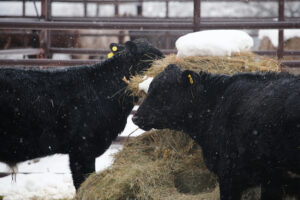
Two black cows with yellow ear tags eat hay from a round bale with a pile of snow on top. Snowflakes are falling, and a metal fence and snowy ground are visible in the background.

3 Tips for Reducing Hay Waste this Winter

August 17, 2022 | Beef

Reducing hay waste is the winter goal, especially in years with drought and hay shortages. As supply continues shrinking and demand increases, hay is more expensive than ever.

Here are three ways farmers and ranchers can reduce hay waste and help save on hay prices this year.

3 Tips to Reduce Hay Waste:

1. Limit Feeding Hay

A popular method for winter feeding is to roll bales out and feed loose hay on the ground. The University of Missouri finds that this method can result in around 40% waste. Instead, cattlemen should limit feed hay, which means only putting out enough hay for about 8-10 hours. Roll out part of the bale and portion a section for the day. This will force cattle to eat the restricted amount of hay and reduce sorting and waste.

2. Use a Cone Hay Feeder

Hay feeders help reduce waste and costs associated with harvested forages. Researchers at Oklahoma State University compared common hay feeders and measured the amount of waste. Results showed that hay waste was lowest for cone feeders, while the sheet ring and poly feeders had the highest waste percentage. Waste was 5.3% for cone feeders, 20.5% for ring feeders and 21% for poly feeders.

The hay waste value was calculated using the following assumptions: a producer with 30 cows will feed 180 bales of hay that weigh 1,200 pounds each for six months. The study concluded that at $70 per bale, the cone feeder would annually waste $667.80 worth of hay, while the sheet ring and poly feeders would waste $2,583 and $2,646 worth of hay, respectively. These prices would be substantially higher this year.

3. Process Hay

Grinding or chopping hay can also help reduce waste. Ground hay prevents cattle from trampling and sorting. Grinding hay also helps make lower-quality feed more palatable. This way cattlemen can mix the long-stemmed hay cattle usually refuse to eat into a ration they will consume. When grinding hay, make sure to feed in bunks or turned tires to minimize losses from wind. Grinding hay does require an investment in equipment or contracting custom tub grinders.

How a Central South Dakota Rancher Preserves & Grinds Hay Easier
https://www.agnition.com/justbale

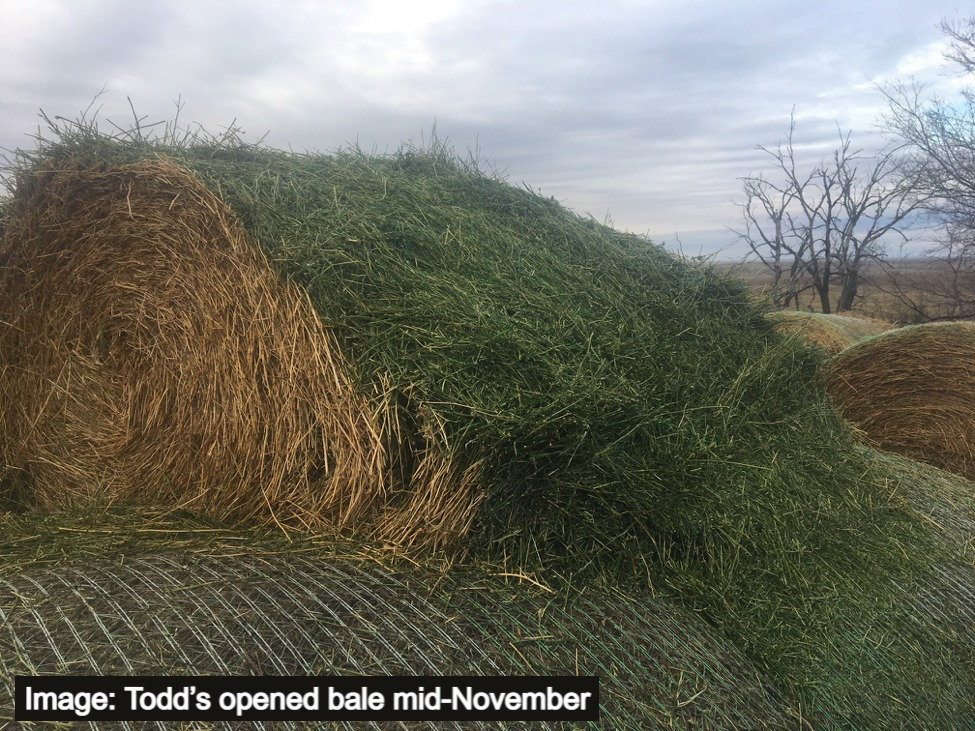
Todd, a Central South Dakota rancher, tried a dry granular hay preservative to help save more bales and reduce spoilage. This image and testimonial were his results.

“Treated bales were so much greener when I rolled them out or ground them, and they grind way easier. I applied Anchor for Hay at 18% moisture in August and opened the bales in mid-November to green alfalfa. Anchor is a great product. It doesn’t rust my baler and the Valmar applicator is easy to use.”

To learn more, contact Ralco’s forage experts at 507-337-6929.
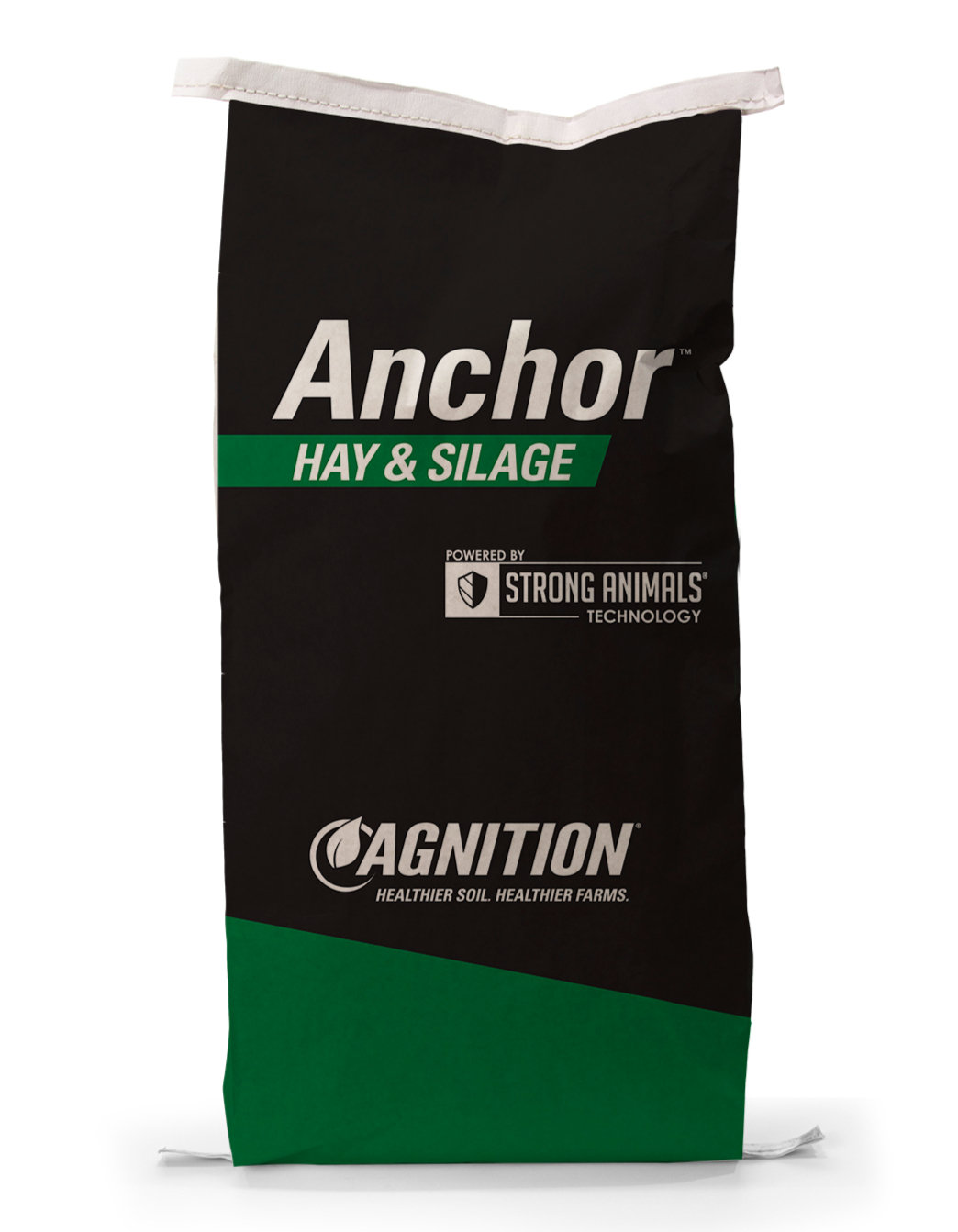
Anchor for Hay packaging

Anchor for Hay – Dry Granular Preservative Anchor for Hay is a dry granular product that preserves higher moisture hay and maintains hay quality over time while reducing the risk of heating and spoilage.

Learn More

Share this post

Sidebar

Categories

  • News
  • Beef
  • Dairy
  • Poultry
  • Swine

Let’s Tackle Your Toughest Challenge

If there’s a problem holding your operation back, we’re here to help you solve it. If you’re ready for products that bring together nature and science, let’s talk!

Ralco News

A large group of yellow chicks stand and walk on wood shavings inside a brightly lit indoor poultry farm. The environment appears crowded with many chicks in the background.

Keep Coccidiosis from Disrupting Flock Performance

Coccidiosis remains one of the most common and costly digestive challenges in poultry production, …
Read moreKeep Coccidiosis from Disrupting Flock Performance
A gloved hand holds a test tube containing a yellow liquid and green leaves, suggesting a scientific experiment with plants.

Are All Oregano Essential Oils the Same in Poultry Production?

In commercial poultry production, oregano essential oil is often treated like a commodity …
Read moreAre All Oregano Essential Oils the Same in Poultry Production?
Several young pink pigs stand closely together on a slatted floor inside a barn or indoor pen, looking towards the camera. The environment appears clean but industrial.

New Research on When Essential Oils Deliver the Most Value in Swine Production

For years, essential oils have lived in a gray area within livestock production. They’re talked …
Read moreNew Research on When Essential Oils Deliver the Most Value in Swine Production
Ralco logo with a green vertical bar and a leaf inside a yellow circle, next to the word "RALCO" in white, and the tagline "Nature Elevated by Science" below.
Four faded certification logos in a row, including HALAL, RMPP, GMP+, and FAMIQS, on a light background. Text and images within the seals are barely visible.

Subscribe for news and updates

Home
About
Our Science
Shop
Resources
Careers
Contact Us
Call 1 (800) 533-5306

  • Facebook
  • Instagram
  • YouTube
  • LinkedIn

Copyright © 2026 · Ralco Agriculture · All Rights Reserved · Privacy Policy

We use cookies to enhance your browsing experience, serve personalized ads or content, and analyze our traffic. By accepting, you agree to our use of such cookies. Privacy Policy