
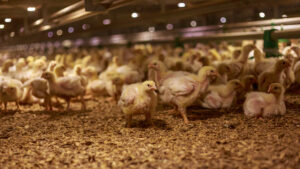
Coccidiosis remains one of the most common and costly digestive challenges in poultry production, with global losses estimated to exceed $10 billion annually and U.S. losses estimated at $2.8 billion. (1) But the conversation around coccidiosis control is changing.
As organic and conventional production continues to grow and resistance concerns increase around traditional tools, more producers are reevaluating how they manage enteric challenges.
The goal is no longer just controlling coccidia, it’s protecting gut health and maintaining performance in commercial poultry systems with fewer intervention options.
Understanding how coccidiosis develops and how prevention strategies are evolving can help producers better protect both bird health and profitability.
What is Coccidiosis?
Coccidiosis is a protozoan infection caused by Eimeria species that invade and replicate within the intestinal lining of poultry. Unlike bacterial pathogens, coccidia multiply inside the bird and are then shed into the environment as oocysts, which can infect other birds and continue the cycle. (2)
Once ingested, these oocysts damage intestinal tissue as they replicate, reducing the gut’s ability to digest and absorb nutrients. Because the organism cycles between the bird and the environment, coccidiosis is rarely a one-time event. It’s an ongoing pressure producers must actively manage.
How to Recognize Coccidiosis
One of the most recognizable signs of coccidiosis is bloody droppings, but by the time that appears, intestinal damage is already underway.
Externally, producers may notice:
- Bloody or watery stools
- Uniformity within the flock
- Poor weight gain
- Increased mortality
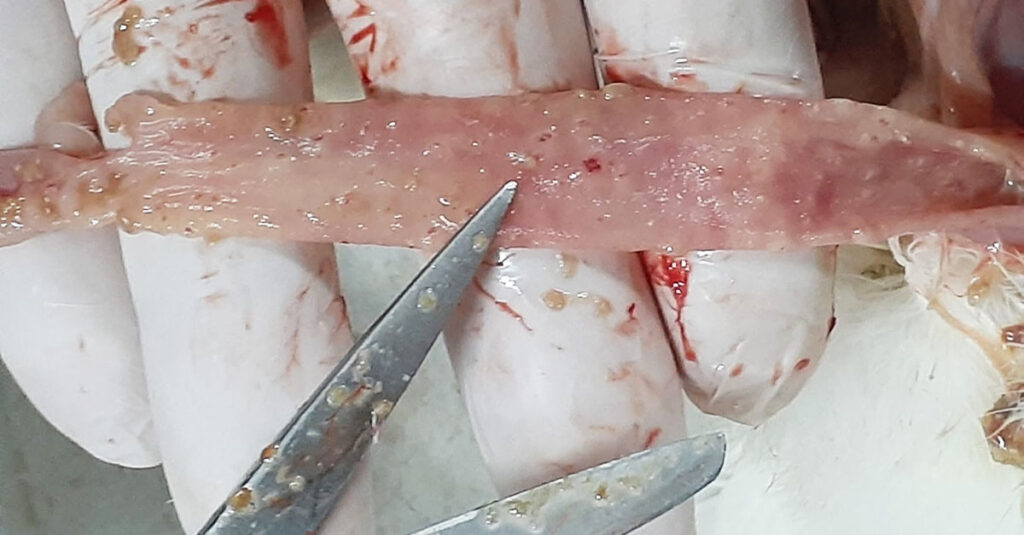
Internally, coccidiosis creates lesions (see image below) along the intestinal tract that impair digestion and nutrient absorption. And when the digestive system is impacted performance losses are never far behind.
Why Young Birds Are Most Vulnerable
Coccidiosis most commonly affects young birds with immature immune systems, typically between 3–6 weeks of age. (3) Broilers are often considered a high-risk group due to their rapid growth and short production cycle, though birds of any type can be affected.
Many flocks follow a predictable coccidiosis cycling pattern. Initial exposure commonly occurs around day 7, followed by a second cycle near day 14. The most significant challenge often emerges around day 21, when birds may experience the greatest impact. Without prior exposure or vaccination, birds simply haven’t developed the intestinal resilience and immunity needed to manage that pressure.
Production system also plays a major role. Birds raised on litter or with ground access are naturally exposed to higher oocyst loads, while cage systems typically experience lower recycling of the organism.
In many commercial operations, litter is reused across multiple flocks, sometimes two to three times or more. While this helps reduce costs and maintain beneficial microbial populations, it also allows coccidia oocysts to accumulate if litter conditions aren’t carefully managed.
Moisture, temperature and ventilation all influence how long oocysts remain viable. Without proper litter management, organisms can persist between flocks and increase early exposure pressure for incoming chicks.
Over time, that buildup can intensify cycling patterns and raise the likelihood of performance losses, particularly during those early life stages when birds are most vulnerable.
How Coccidiosis Impacts Performance
The biggest losses from coccidiosis often happen inside the gut.
Damage to intestinal cells reduces nutrient absorption, weakens the gut barrier and disrupts microbial balance. This creates a ripple effect where birds not only lose performance but also become more vulnerable to secondary challenges.
One of the most well-known downstream effects is necrotic enteritis. When coccidia damage the intestinal lining, it creates an entry point for opportunistic pathogens like Clostridium perfringens, compounding both health and economic losses. (4)
In many operations, it’s these secondary challenges that drive the greatest economic impact.
Traditional Coccidiosis Control Strategies
Most producers rely on a layered approach to coccidiosis that includes vaccination, feed additives and management.
Vaccination
Live coccidiosis vaccines are widely used in the United States to help young birds build early immunity. Because they are live vaccines, birds receive a controlled, low-level exposure to coccidia, typically cycling around days 7 and 14, with the goal of preventing a severe break later on in the grow out.
Like most coccidiosis strategies, vaccination is a tradeoff. Birds may experience mild performance dips during cycling, and some operations report roughly 2–3 points of feed conversion loss early in life. However, the payoff is risk reduction. Without control, severe coccidiosis challenges can result in much larger efficiency losses and even double-digit mortality.
Vaccine success also depends heavily on management. Immunity relies on oocyst recycling through the litter, so dry conditions or low litter moisture can limit exposure and reduce effectiveness. That’s why litter management remains a critical part of any vaccination program.
Coccidiostats
Coccidiostats have been a long-standing tool for managing coccidiosis in poultry production. These compounds work by interfering with the life cycle of coccidia, either slowing replication or preventing the organism from completing its development in the intestine. Instead of eliminating coccidia entirely, they help keep cycling at a manageable level.
A common point of confusion is whether coccidiostats are antibiotics. Some are, and some aren’t. Ionophores, one of the most widely used classes, are technically classified as antibiotics but they are not used in human medicine. Other coccidiostats are synthetic anticoccidials that are not antibiotics but still function as targeted parasite-control tools.
Effective, long-term use has raised concerns around resistance and shifting market expectations. In some regions and production systems, reduced sensitivity to certain drugs has been documented, leading producers to rotate programs or explore alternative strategies. (5)
Where Challenges Still Exist
Even with vaccines and coccidiostats, many operations still experience performance reductions associated with coccidiosis.
A major reason is that controlling the organism doesn’t always prevent gut damage. Once the intestinal lining is compromised, birds are more susceptible to secondary infections and long-term performance losses.
That shift in thinking has led more producers to focus not just on controlling coccidia, but on strengthening the gut itself.
The Shift Toward Gut Resilience
As poultry production evolves, more attention is being placed on strategies that support gut integrity and immune function alongside traditional coccidiosis programs.
Instead of focusing solely on eliminating coccidia, many producers are shifting toward managing how birds respond to enteric pressure. The goal is to build a stronger intestinal environment that can better tolerate predictable cycling events without major performance losses.
Nutritional tools like organic acids, prebiotics, probiotics and essential oils are gaining attention for their ability to support microbial balance and reinforce the intestinal barrier. In coccidiosis-challenged systems, this gut-first approach can help birds stay more stable during early-life pressure windows.
Emerging research also suggests some gut-supporting natural solutions, including essential oils, can help reduce oocyst shedding and add weight gain during challenges. That means these strategies may not only support the bird but also help moderate the challenge level within the environment.
Where Essential Oils Fit into Modern Cocci Programs
Among natural tools, essential oils have drawn increased interest for their ability to influence both gut resilience and cocci cycling dynamics.
Unlike traditional anticoccidials, essential oils are not designed to eliminate coccidia directly. Instead, they support intestinal integrity, immune signaling and microbial balance, factors that play a major role in how birds handle cocci exposure. Basically, making the gut a less favorable environment for oocysts to attach or thrive.
This makes essential oils especially relevant in programs already using vaccines.
Coccidiosis vaccines work by introducing controlled oocyst exposure so birds can develop immunity. While effective, this process can temporarily impact early growth performance as birds cycle through mild intestinal stress.
Ralco’s research evaluating essential oils alongside coccidiosis vaccination has shown:
- Reduced early growth losses during cocci pressure
- Improved body weight gain when essential oils were included
- Reduced intestinal lesion severity during direct cocci challenge
In practical terms, vaccines help build immunity, while essential oils can help support performance and gut stability during that immune development window.
A Complementary Approach
One of the most important takeaways from recent research is that natural solutions are not necessarily replacements for traditional coccidiosis tools, they’re complements.
This is especially relevant in:
- No-antibiotics-ever production
- Organic systems where coccidiostats are restricted
- Programs focused on resistance management
By supporting gut integrity and immune readiness, essential oils can help stabilize performance during known cocci pressure points, particularly in early life stages.
Ultimately, coccidiosis isn’t going away. It remains a natural part of poultry production, especially in litter-based operations.
While many producers already use vaccines as a preventive tool, the broader strategy is evolving. More operations are building on that foundation by pairing traditional prevention with gut-focused, natural approaches that support resilience and more consistent performance.
Because when it comes to coccidiosis, prevention still delivers the greatest return.
Want to go deeper on coccidiosis? Check out this Wing it Wisely podcast, where Dr. Tim Broderick and the Ralco poultry team share real-world insights on coccidiosis strategies, field observations and what’s working today.
Looking to support your coccidiosis program with research-backed essential oil solutions? Call 1-800-533-5306 or email PoultryHelp@RalcoAgriculture.com to connect with our poultry team.
References:
- Blake, D. P. et al. (2020). Re-calculating the cost of coccidiosis in chickens. Trends in Parasitology.
- Penn State Extension. Avian Coccidiosis. Pennsylvania State University Extension.
- Shirley, M. W., Smith, A. L., & Blake, D. P. (2005). Challenges in the successful control of the avian coccidia. International Journal for Parasitology.
- Timbermont et al. (2011). Necrotic enteritis and coccidiosis interaction. Veterinary Research.
- Peek & Landman (2011). Resistance to anticoccidial drugs. Veterinary Quarterly.