

Mineral nutrition is critical for cow-calf performance and breeding season, as it can impact milk production, fertility and immunity.
However, most mineral supplements miss the mark with improper levels and ratios. They don’t account for forage mineral levels or the bioavailability of that mineral to the animal.
Forage Sampling Can Be Deceiving
Let’s say this spring you go out and conduct a forage sampling on your pasture. The results say the magnesium levels are adequate, so you decide not to supplement mineral to your herd.
Turns out, only 15% of the magnesium level of that forage is available to the animal. Minerals can be bound-up in forages and pass through the animal without being utilized. So, now your cows are on the verge of being deficient in magnesium.
Worse, the excess potassium in lush spring forages interferes with magnesium absorption in the cow further. Now, your cows are at risk of severe magnesium deficiency, causing grass tetany.
Not Just Any Mineral Will Do
Beyond forage availability, the source of mineral also matters.
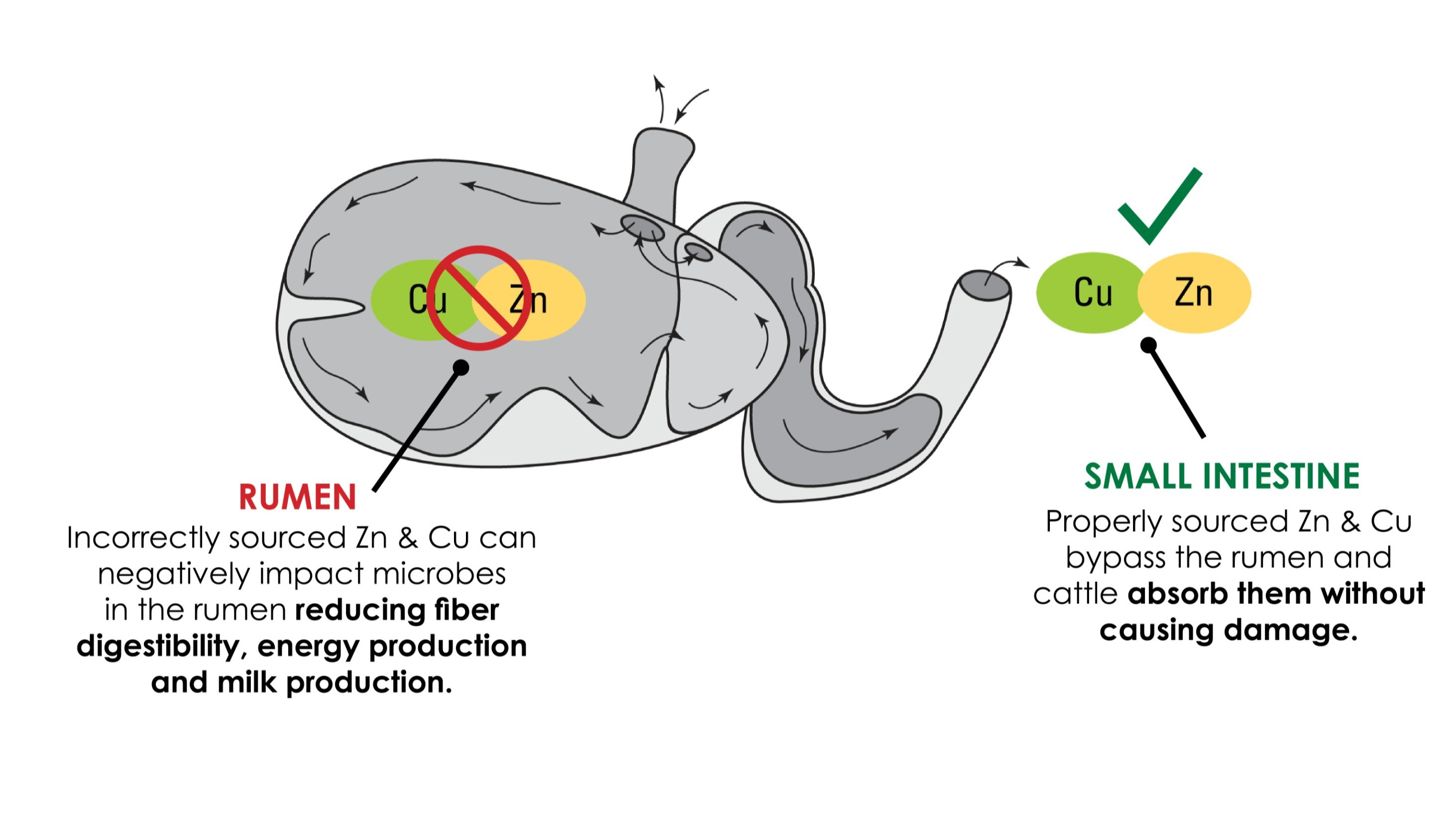
For example, if trace mineralslike zinc (Zn) and copper (Cu) are incorrectly sourced, their antimicrobial properties will negatively impact the microbe population in the rumen. The rumen is made up of over 1 trillion microbes. Antimicrobial properties and microbes do not mix.
Instead, zinc and copper need to break down later in the digestive tract, to bypass the rumen and minimize antimicrobial activity while increasing their bioavailability to the animal. Tricky, isn’t it?
What Minerals Impact Cattle Reproduction?
Macro and micro trace minerals, including phosphorus, copper, manganese, zinc and selenium, all play a vital role in reproduction for the cow and the calf.
According to Oklahoma State University, the following minerals should be monitored and supplemented for reproduction.
Phosphorus is a macro mineral and a major component of bone structure, but it also plays an important role in cell growth, energy utilization and cell membrane structure. Phosphorus deficiencies in cattle look like weak and brittle bones, infertility, reduced feed intake and feed efficiency and reduced milk production.
Manganese is a trace mineral that is needed for bone growth and fertility in cows. Signs of deficiencies include skeletal abnormalities in young cattle, such as stiffness, twisted legs and reduced bone strength. Another indicator is low reproductive performance, with abortions, stillbirths and low birth weights.
Copper is an important trace mineral and cofactor in many enzyme systems, including those involved in iron absorption, connective tissue metabolism and immune function. Signs of copper deficiency in cattle include anemia, reduced growth rate, dulling of the hair and rough coat, diarrhea, reduced fertility, increased abomasum ulcers in newborn calves and increased bacterial infections.
Zinc and selenium are both required for specific enzyme processes in the cow and play a significant role in reproduction. Zinc deficiencies include reduced testicular growth, swollen and cracked hooves, skin lesions, slow wound healing and reduced fertility in cows and bulls. Selenium deficiencies include white muscle disease, reproductive failure, increased incidence of retained placentas, increased calf mortality and reduced calf weaning weights.
It’s recommended that a well-balanced mineral be given to cows year-round. At a minimum, mineralmust be given to cows 30 days before calving and up to the breeding season. Always consult with a nutritionist before implementing a new mineral program.
Don’t Forget Mineral For Your Calves
Often beef producers think mineral is just for the cows. However, calves will start to consume mineral as early as 2 months old so that should be factored into your intake measurements.
“2-to-5-month-old calves need mineral,” said Dr. Jeff Hill, ruminant nutritionist for Ralco. “A well-balanced properly formulated mineral is good for a calf’s immune system and actually helps prepare them for weaning stress.”

Trace Mineral Differences and Calves
The three most common trace mineral sources are organic, sulfate and hydroxychloride. Trace minerals are the micronutrients like zinc, copper, selenium, manganese, etc.
Sulfate trace minerals tend to be very water soluble allowing them break down in the rumen and cause antimicrobial activity to occur.This can impact forage digestibility, energy production, body condition scores, performance and more.
Hydroxychloride and organic trace minerals have unique bond structures that cannot easily be broken down by microbes in the rumen or dissolved in rumen fluid. This way they bypass the rumen and get absorbed more preferentially by the animal.
Furthermore, sulfate and organic minerals tend to not be as appetizing to calves, resulting in lower intakes or avoidance
Research shows that if calves are given a choice in mineral mixes that are identical in everything besides trace minerals, they will choose sources of lower solubility like hydroxychloride and organic trace minerals. The thought being that soluble minerals like sulfate minerals react with the saliva in the mouth, producing a metallic taste animals do not like where hydroxychloride and organic trace minerals do not.
Like Dr. Hill stated before, it is recommended that calves consume mineral at 2 to 5 months old and that their needs and preferences be considered in the selection of a mineral. Always consult with a ruminant nutritionist before implementing a mineral program.
Bottom line, mineral doesn’t have to be complicated. Let us help you build a custom Rumatec mineral program specific to your ranch and forage availability with correctly sourced minerals for your herd’s reproduction success.
Schedule a FREE consultation with a ruminant nutritionist today by calling 507-337-6916 or emailing RuminantHelp@RalcoAgriculture.com

Rumatec – Cow/Calf Mineral
The Rumatec line of cow/calf mineral supplements provides the needed nutrients commonly deficient in forages to help ensure optimum performance and reproductive efficiency.