
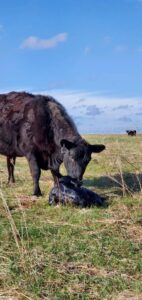
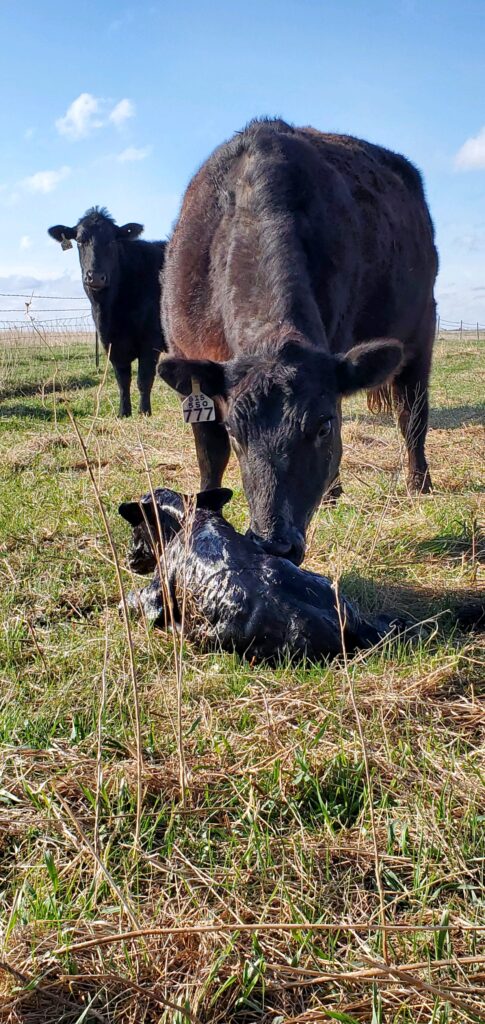
Fall calving brings plenty to keep an eye on. Due to the emergence of New World screwworm (NWS), producers need to pay extra attention to something that can be easy to overlook – newborn navels and wounds throughout the herd.
In 2026, USDA confirmed New World screwworm in a Texas calf. Larvae were found in the umbilical area, a common site for screwworm infestation in newborn calves. (1)
However, not every irritated or infected navel should be considered a sign of screwworm. Navel infections remain a concern on their own and should be addressed appropriately. Knowing what to look for and taking a closer look at calves when flies are active can help producers respond quickly if something doesn’t look right.
What’s New World Screwworm?
NWS is a parasitic fly that can infest livestock and other warm-blooded animals. Unlike many maggots that feed primarily on dead tissue, NWS larvae feed on living tissue. (3)
Interestingly, it’s not new to the U.S. livestock industry. It was once a significant livestock pest across parts of the country before being eradicated from the United States in 1966. NWS briefly returned during an outbreak in the Florida Keys in 2016, but that outbreak was eliminated in 2017. (1)
The NWS lifespan starts when an adult female fly lays eggs on or near an open wound or body opening. Eggs can hatch within 12 to 24 hours, and larvae burrow into the tissue and feed for approximately five to seven days before dropping to the ground to pupate. Depending on temperature and humidity, the entire life cycle can be completed in as little as two to three weeks. (5, 8)
NWS Doesn’t Typically Spread Directly from One Animal to Another
NWS is not contagious and doesn’t spread directly from one animal to another. Larvae remain on the animal they infest until they’re ready to drop to the ground. However, the wound they create can attract additional adult NWS flies, which may lay more eggs and make the infestation progressively worse. Once a new generation of adult flies emerges, those flies can seek wounds on other animals and continue the cycle. (8)
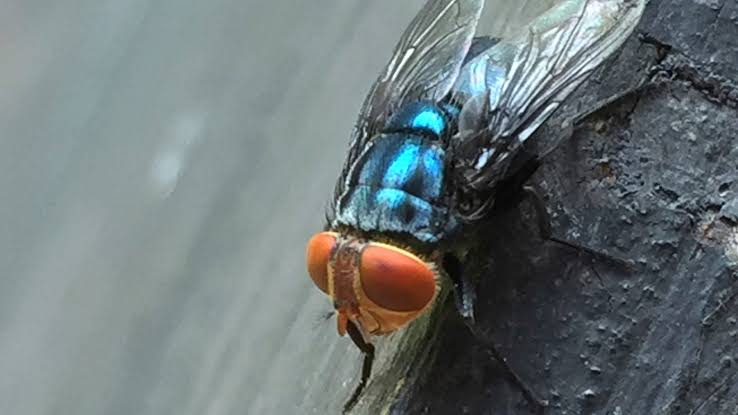
NWS Fly
Picture credit: NBC 5 Dallas Fort Worth
Adult NWS flies are about the size of a common housefly or slightly larger. They have orange eyes, a metallic blue or green body and three dark stripes along their backs. (1)
Why Newborn Calves Can Be Vulnerable
A newborn calf enters the world with exactly what a NWS fly is looking for: a fresh wound. In this case, an umbilical opening.
USDA lists newborn navels as a common site of infestation, along with wounds caused by injuries, ticks, fighting and management procedures such as castration, dehorning and ear tagging. (2)
The navel also creates a separate bacterial infection risk. Until it dries and heals, the umbilical cord can provide bacteria a direct route into the calf’s abdomen and bloodstream. For fall calving herds, the challenge is that calves may arrive while flies are still active.
What Should You Look For?
A screwworm infestation may not start with an obvious, dramatic wound. Sometimes a change in animal behavior is the first thing you notice.
Watch closely for:
- A calf standing or lying away from the herd
- Increased attention from the cow toward the calf’s navel or another wound
- Animals licking, biting or showing discomfort around a wound
- Irritated behavior, lethargy or depression
- A wound or sore that becomes larger or deeper over a short period of time
- Bloody, weeping or other drainage from a wound
- A noticeable foul or decaying odor
- Fly eggs or visible maggots in a wound
- Signs of a secondary bacterial infection
Affected animals may show discomfort, lethargy and depression or separate themselves from the herd. Infested wounds may have drainage, blood, a distinctive odor and secondary bacterial infection.
Deep wounds can be especially easy to miss. In some cases, USDA notes that movement inside a small wound opening may be one of the only visible indications that larvae are present. (2)
Is it a Navel Infection or Screwworm?
A close inspection is necessary. A bacterial navel infection may cause navel to become swollen, warm and painful. Calves may become less interested in nursing or appear lethargic, and some infections can progress to an abscess or systemic illness. (4)
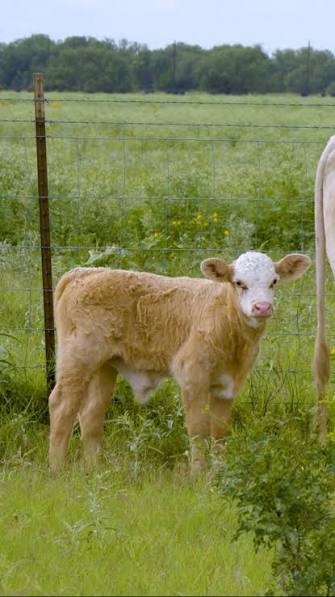
3-day old calf in Texas with navel swelling due to screwworm
Picture credit: Texas Farm Bureau
Screwworm infestation should raise concern when the navel or another wound begins getting larger or deeper, develops a strong odor, produces bloody or purulent drainage or contains visible larvae.
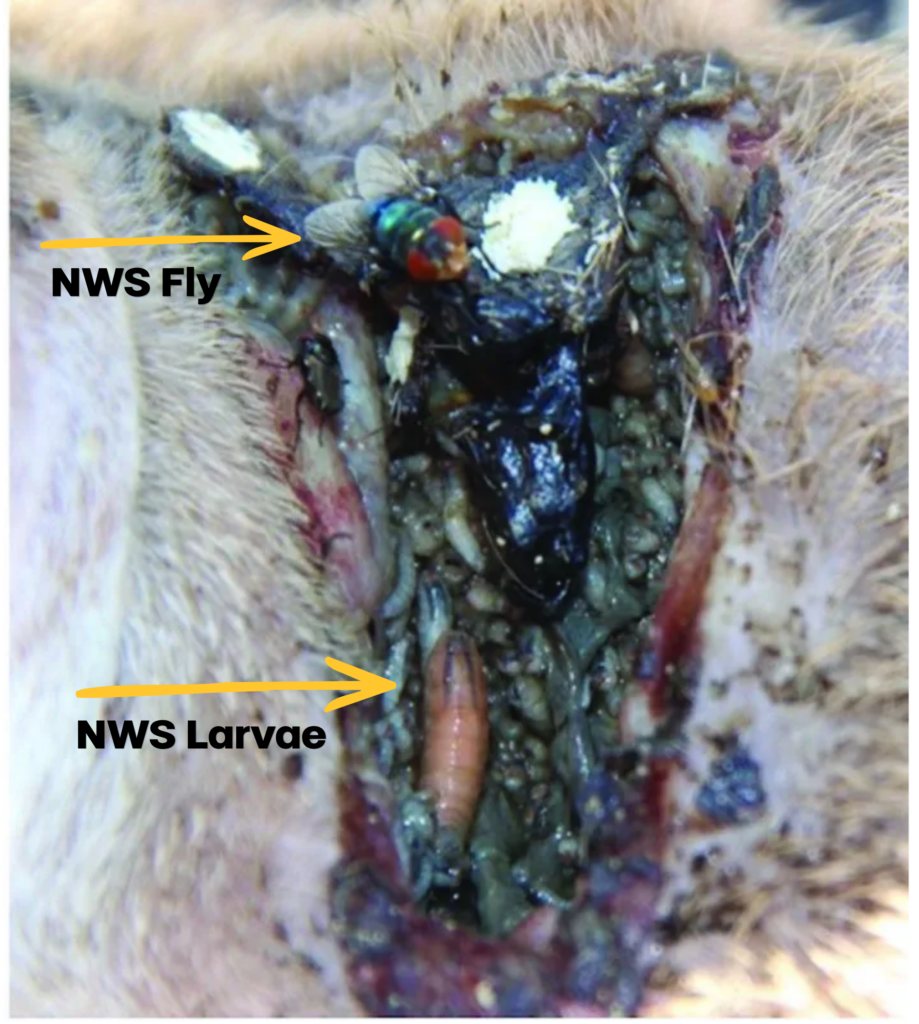
Animal wound with NWS eggs, larvae, and an adult.
Photo credit: Samantha Gibbs, U.S. Fish and Wildlife Service and Penn State
The two problems can also overlap because bacterial infections may develop in wounds already infested with NWS larvae.
Most importantly, maggots are not indicative of NWS. Other fly larvae can be present in wounds, and official identification requires laboratory examination. If you find maggots in a suspicious wound, treat it as something that needs to be reported rather than trying to identify the species yourself.
Fall Doesn’t Mean Fly Season is Over
One of the biggest management factors with NWS is temperature. Texas A&M categorizes NWS activity this way:
- Higher risk: Temperatures of 80°F or higher with 30-70% relative humidity. The life cycle may be completed in approximately two to three weeks.
- Moderate risk: Temperate weather, with the life cycle taking approximately three to four weeks.
- Lower risk: Temperatures below 59°F, when the life cycle may take two to three months and fly activity is much lower. (5)
These are general seasonal guidelines not an exact risk forecast for every operation, but they highlight an important point: the calendar may say fall before the flies agree.
Warm fall weather can keep fly activity going longer than producers might expect. If your operation has flexibility in its breeding and calving windows, cooler periods may help reduce exposure. Likewise, elective management practices (dehorning, castrating, branding, etc.) that create wounds can be scheduled during cooler periods when practical.
Of course, changing an entire calving season isn’t realistic for every operation. If calves arrive while flies are active, the answer is simply more vigilance.
Make Navel Checks Part of the Calving Routine
When checking that a calf is up, nursing and staying close to the cow, take a moment to inspect the navel. Continue monitoring the navel as it dries and heals, paying extra attention during periods of high fly pressure.
USDA recommends immediately treating newborn umbilical cords and wounds with an approved pesticide as part of NWS prevention. Producers should work with their veterinarian and follow current federal and state guidance to select products that are appropriate for the animal and intended use. (1)
FDA maintains current information on products that are approved, conditionally approved or authorized for NWS prevention and treatment. Because those options have continued to change during 2026, producers should use the most current guidance rather than relying on older product lists. (3)
What Should You Do if You Find Maggots?
If you find maggots in a calf’s navel or another suspicious wound, don’t simply treat the wound and move on.
Contact your veterinarian, your State Animal Health Official or the USDA APHIS Area Veterinarian in Charge for your state immediately. New World screwworm is a reportable foreign animal disease, and suspected cases need to be investigated. (6)
USDA specifically advises producers not to collect or submit samples on their own before consulting animal health officials. In most situations, a Foreign Animal Disease Diagnostician or another designated animal health professional will collect the appropriate samples for identification by the National Veterinary Services Laboratories. (6)
If NWS is suspected or confirmed, the official response may include quarantine, treatment of the affected animal, removal of larvae and eggs, wound care, treatment and cleaning of the premises and continued fly monitoring. (6)
The biggest thing a producer can do is report it quickly and follow the direction of animal health officials.
A Simple Screwworm Biosecurity Checklist
- Add navel checks to your newborn calf routine.
- Increase livestock checks when flies are active.
- Continue checking calves after castration, tagging or other procedures until wounds are healed.
- Treat injuries promptly and monitor healing.
- Keep chutes, alleys, fences and other equipment in good repair to reduce accidental wounds.
- Monitor cattle for ticks and other external parasites.
- Pay close attention to newly purchased or transported animals.
- Have a plan for safely isolating an animal if NWS is suspected.
- Make sure everyone checking cattle knows that suspicious wounds or maggots need to be reported quickly.
- Contact your veterinarian, State Animal Health Official and USDA APHIS if you find a suspicious wound.
How Sterile Flies Help Fight Screwworm
One of USDA’s primary tools for controlling New World screwworm is the sterile insect technique. NWS pupae are exposed to gamma radiation, producing adult flies that can still survive and mate but cannot reproduce. These sterile flies are then released into areas where NWS is present or at risk of spreading. When a wild female mates with a sterile fly, the resulting eggs do not hatch. Because female NWS flies generally mate only once, releasing large numbers of sterile flies can reduce the wild population over time. (7)
Sterile flies may be released by aircraft or through ground release chambers. USDA uses surveillance and confirmed detections to help determine where those releases and other response measures are needed. Following detections in Texas in 2026, USDA expanded sterile fly releases in and around affected areas as part of its eradication response. (7)
That makes early reporting extremely important beyond the individual animal. If you find maggots in a suspicious wound, contact your veterinarian or animal health officials so the case can be properly investigated and, if necessary, incorporated into broader surveillance and control efforts.
Preventing Navel Infections
A strong health program starts before the calf hits the ground. Clean calving conditions, adequate colostrum and early navel dipping can all help reduce the risk of infection.
1. Make Colostrum a Priority
- Make sure calves are up and nursing as soon as possible after birth. If a calf is slow to stand or nurse, intervene early.
- Start Strong for Calves can be given to calves orally after birth to support newborn energy and get them up and nursing fast during this critical transition.
- Support cows through late gestation and calving with a sound nutrition program so they’re prepared to produce quality colostrum.
- IntegraMOS can be included in the cow’s diet 90 days prior to birth to help her through periods of stress while supporting colostrum quality.
2. Have a Consistent Navel Care Program
- Treat the navel stump soon after birth and make sure entire stump is covered. Dipping generally provides more complete coverage than spraying.
- While 7% iodine has traditionally been used, availability can be limited. Other options may contain chlorhexidine, alcohol or other approved navel care ingredients. Work with your veterinarian to determine the best protocol for your operation.
- Avoid clamping the navel stump, which can trap moisture and bacteria.
- Look at the navel when checking that a newborn calf is standing, nursing and staying with the cow.
3. Keep Calving Areas as Clean and Dry as Possible
- Reduce manure buildup and excessive moisture in heavily used calving areas.
- Move pairs to cleaner ground when conditions become muddy or contaminated.
- Clean equipment used to assist with deliveries between animals.
- During fly season or in areas where NWS is a concern, increase newborn calf checks and monitor navels closely for moisture, swelling, discharge, odor, egg masses or larvae. Work with your veterinarian on appropriate fly control and wound protection protocols.
Bottom line, NWS doesn’t change the fundamentals of a good fall calving program. Keep calving areas as clean as possible, pay attention to newborn navels, reduce unnecessary wounds, watch calves closely, treat wounds quickly and when something looks different than a normal injury or navel infection, take a closer look.
Questions? Contact the Ralco beef team at 1-800-533-5306.
References
- USDA Animal and Plant Health Inspection Service. New World Screwworm Prevention for Animals and USDA 2026 detection updates.
- USDA Animal and Plant Health Inspection Service. New World and Old World Screwworm Myiasis Case Definition.
- U.S. Food and Drug Administration. Animal Drugs for New World Screwworm.
- South Dakota State University Extension. Health Considerations for Baby Beef Calves and Calf Health Following Calving.
- Texas A&M AgriLife Extension. Livestock Management Considerations for New World Screwworm.
- USDA Animal and Plant Health Inspection Service Veterinary Services. Standard Operating Procedure for Possible Detections of New World Screwworm in Animals.
- USDA Animal and Plant Health Inspection Service. Using Sterile Insect Technique to Fight Screwworm.
- USDA Animal and Plant Health Inspection Service. New World Screwworm: What You Need to Know.