
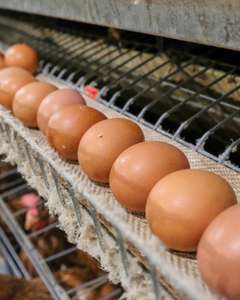
After last year’s avian influenza losses, the Ralco poultry team encouraged producers to keep surviving hens in the barn out toward 115 weeks, well past the usual 80 to 90. Right now, some cage-free flocks are headed the other direction and are being depopulated in the high 60 to 70 weeks because shell quality ran out. The decisions are opposite, but shell quality is part of both.
Shells are easy to take for granted in a young flock and hard to hold onto in an old one. Here’s what matters most for anyone managing a layer or breeder flock into late lay.
Shell Quality Depends on Where the Egg Is Going
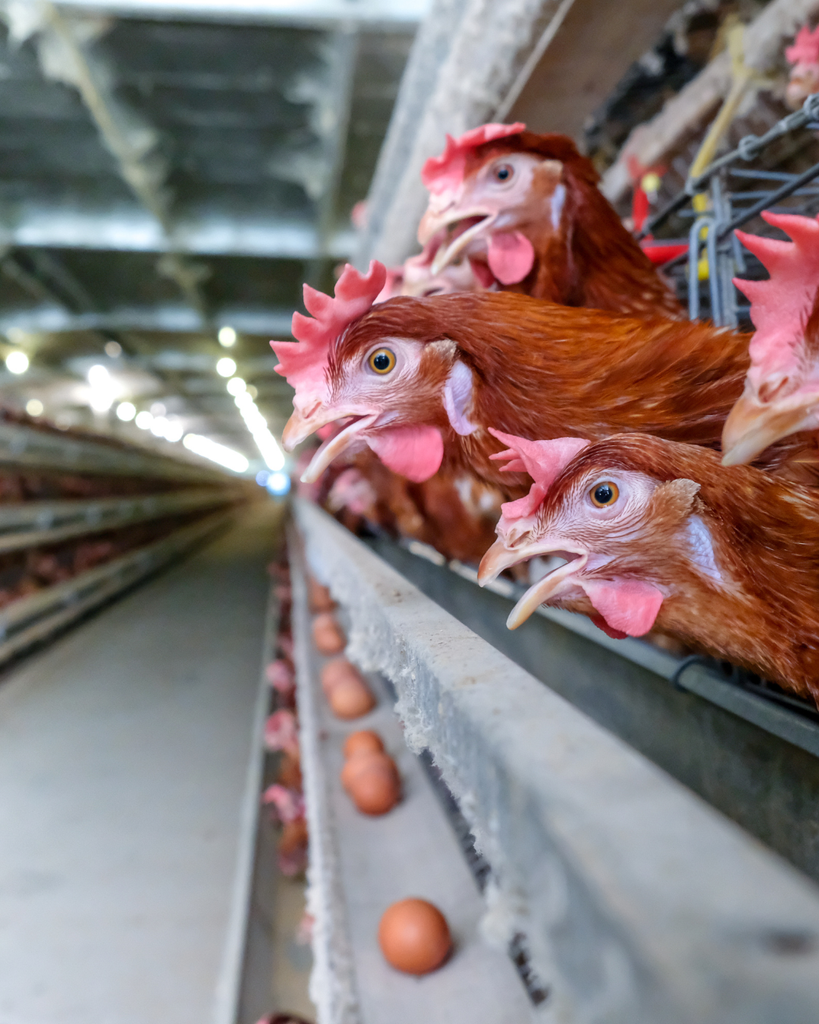
Table egg and breeder operations have different definitions of a good shell. A table egg has to survive the truck and still look right when a shopper opens the carton, because a cracked egg means a carton that won’t sell. A breeder egg has to be set and hatch, and a cracked egg is unlikely to hatch. (1) Either way, the shell has to hold up against the respective challenges it faces in either scenario.
The Shell Gets Built in the Dark
It takes 26 hours for a hen to release a yolk, fully develop, and lay an egg with a majority of this process spent in the shell gland. Shell formation occurs during the final 19 to 20 hours, mostly while hens are in the dark part of the day. (2)
Calcium takes a longer route to the shell than protein takes to muscle. The pathway for protein is simply consumption of the diet and metabolized into muscle. Calcium and phosphorus are also consumed in the diet, but then have to pass through the blood to enter into bone, then be transported out of bone to develop the shell. Since hens aren’t eating while most of the shell forms, they pull an estimated 20 to 40% of the shell’s calcium from their bones. (2)
That’s why calcium particle size comes up so often. Coarse limestone is retained in the gizzard (2) and breaks down slowly, so it keeps releasing calcium after the flock has gone to roost.
A Bigger Egg Doesn’t Come with a Proportionally Bigger Shell
As a flock ages, egg weight increases and the shell component is stretched thinner as it uses the same amount of calcium to cover these larger eggs. (3) An increase in egg size is a normal part of the laying curve, and nutrition can add to it as the same amount of shell calcium ends up spread over a larger surface area.
The size gap also matters once eggs are packed and moved. Pallets are standardized, so one jumbo sitting taller than its neighbors takes the weight of other cartons stacked above it. With a proportionally thinner shell, it also increases the chances for the egg to crack and spill onto everything around it. Keeping a flock uniform protects more than the one egg.
Egg size isn’t the whole story, though. In a trial done by the University of Manitoba, hen age was the biggest driver in the number of thin shelled eggs, and egg weight accounted for only about 5% of the increase between 36 and 66 weeks. (4) Older hens need extra nutritional support whether or not the eggs are big.
Match the Diet to the Hen’s Age
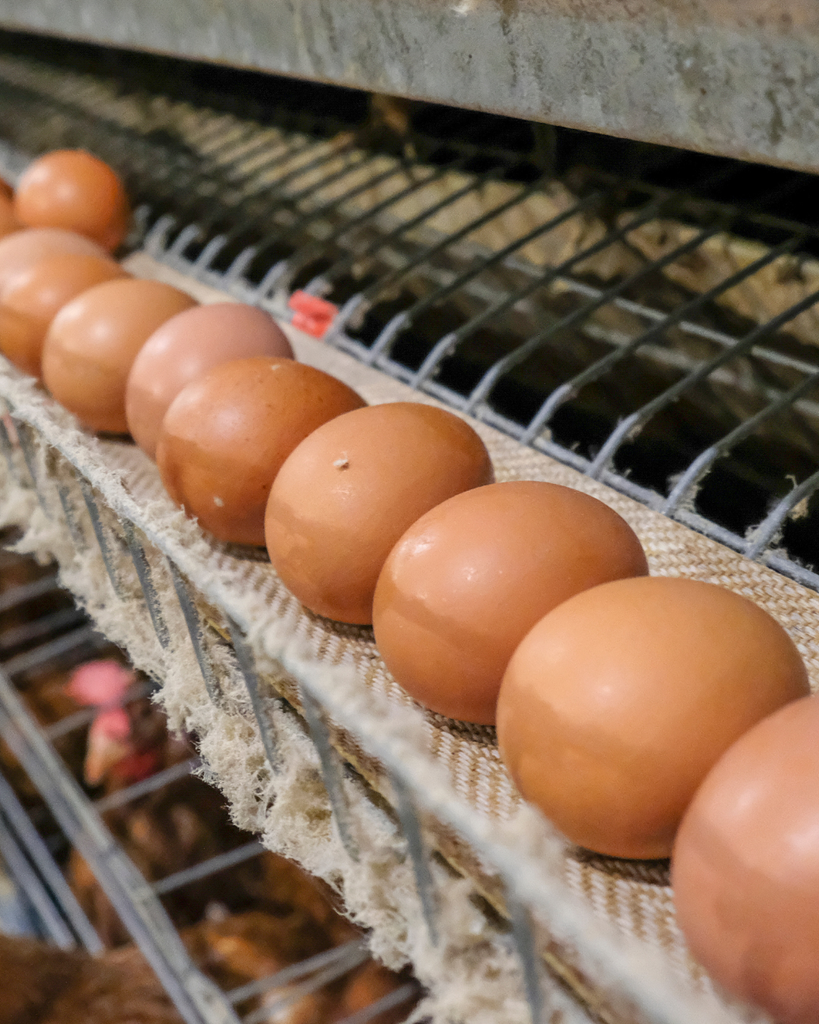
Layer and breeder production runs on curves. There’s a nutrition curve, an egg production curve and an egg size curve, and they don’t always align. The Ralco poultry team has seen producers stay on a peak diet until birds are 50 to nearly 60 weeks old because production is high and intake looks steady. That’s an easy call to make when the numbers look good. The challenge is that not updating a diet can leave a flock on calcium amounts and particle sizes built for a younger hen.
Older birds generally need more coarse limestone that often starts near 60% coarse and 40% fine in earlier lay, then shifts to 75% coarse and as high as 80% coarse later on. Exact ratios depend on your flock’s genetics and your nutritionist’s recommendation.
The amount of calcium is only part of it. Calcium, phosphorus and vitamin D depend on each other to perform normal cell functions and processes, and changing the inclusion of one of these components effect how well the hen uses another. That’s why calcium to phosphorus ratios matter, and why a shell quality problem rarely has a single-nutrient fix.
When early shell trouble shows up, Ralco suggests looking at vitamin D first. It helps regulate calcium, and can be supplemented through the water on top of what’s already in the feed. Both the inclusion level and the form matter, so confirm what’s in the ration before adding more.
Trace minerals matter too. Organic or chelated manganese, zinc and copper help the shell matrix form. In one late lay trial, hens fed lower levels of proteinated organic trace minerals had better eggshell strength than hens fed the same lower levels of inorganic minerals. (5) Electrolytes can also be useful during heat stress, which can throw off the blood’s acid-base balance and affect shell formation.
Track Shell Defects Over Time
Shell defects are a quality issue, and they can also be a clue to what’s happening in the flock. Wrinkled, ridged, sandpaper, soft shelled and shell-less eggs can signal a health issue, a nutrition issue or both. Infectious bronchitis is one example of a health issue known to cause thin, rough or oddly shaped shells. (6)
Ralco suggests tracking cracked eggs closely. How many eggs are flagged on each load, and is the amount rising, falling or holding steady compared with past flocks? Are the defects all one type? If rough shells are the pattern, ask what changed recently. A recent vaccination can cause rough or misshapen eggs for a short time, which is an expected response.
Keep single eggs in perspective too. In a barn of 100,000 hens, a one in a million egg turns up about once every week or two. A few odd eggs don’t mean a flock problem. The trend does.
Make Sure the Diet on Paper Reaches the Hen
A well-formulated diet only pays off if the hen can absorb what she eats. Ralco points to gut health as the base for any nutrition or management change. A gut that isn’t absorbing well limits what added nutrients can do for the shell.
Water belongs in this conversation as well. High salt or high chlorine in drinking water can contribute to shell quality problems. (1) That’s one more reason to share water test results with your nutritionist, as we covered in our post on water quality and nutrition.
Feed delivery is the easiest issue to fix, and it’s usually obvious once it happens. An empty bin, chains that didn’t run or the wrong feed delivered to a house all mean the nutrients on paper never reached the bird. Feed form matters too. When it deteriorates, hens can start sorting, picking out the corn and leaving trace minerals behind. Feeder levels and chain levels are part of making sure what’s formulated is what’s eaten.
Late Flock Shell Checklist
- Review the diet against flock age. A peak diet may be due for a change.
- Ask your nutritionist about calcium. Cover inclusion level, particle size and calcium to phosphorus ratio for the flock’s age.
- Confirm vitamin D inclusion level and form before supplementing through the water.
- Track cracked and defective eggs on every load. Compare type and share against past flocks.
- Note recent vaccinations. They can change shell texture for a short time.
- Watch egg size distribution. The largest eggs are usually the first to fail.
- Check feed form and delivery. Look at feeder levels and chain levels.
- Test water for salt. Share the results with your nutritionist.
Shell quality is easy to take for granted early and costly to lose late. Whether the plan is stretching a flock toward 115 weeks or protecting a cage-free flock through its final weeks, the work looks the same. Match the diet to the hen she is now, make sure it gets into her, and watch the trend.
Want to Hear More? Listen to Season 7, Episode 28 of Wing It Wisely, where Carmen Paulsen talks with Dr. Tim Broderick and Alea Gigliotti from the Ralco Poultry Team about egg formation, what causes shell defects, and the nutrition and management strategies that help support stronger, more consistent shells.
Questions about eggshell quality in your flock? Connect with the Ralco poultry team. Call 1-800-533-5306 or email PoultryHelp@RalcoAgriculture.com.
References
- Peters, B. Hatching egg quality. Hendrix Genetics Laying Hens. layinghens.hendrix-genetics.com/en/articles/hatching-egg-quality (accessed November 17, 2026). Industry source.
- Sinclair-Black, M., Garcia, R. A., & Ellestad, L. E. (2023). Physiological regulation of calcium and phosphorus utilization in laying hens. Frontiers in Physiology, 14, 1112499.
- Sirri, F., Zampiga, M., Berardinelli, A., & Meluzzi, A. (2018). Variability and interaction of some egg physical and eggshell quality attributes during the entire laying hen cycle. Poultry Science, 97(5), 1818-1823.
- Guenter, W., Golian, A., & Bennett, C. (2008). Effect of egg size on shell thickness. Manitoba Agriculture, Food and Rural Initiatives (republished on Engormix, November 10, 2008). Extension source.
- Qiu, J. L., Zhou, Q., Zhu, J. M., Lu, X. T., Liu, B., Yu, D. Y., Lin, G., Ao, T., & Xu, J. M. (2020). Organic trace minerals improve eggshell quality by improving the eggshell ultrastructure of laying hens during the late laying period. Poultry Science, 99(3).
- Manitoba Agriculture. Shell texture problems associated with infectious bronchitis. gov.mb.ca/agriculture/livestock/poultry/pubs/bba01s37.pdf. Extension source.