

A broiler flock can look normal on day 15 and still be behind in production by day 30, often because of a gut challenge that was easy to miss. Gut challenges in broilers rarely show up at random. They tend to follow the production calendar, and days 17 to 24 are when several risks often overlap.
When investigating necrotic enteritis, the Ralco Poultry Team starts with two key questions: are there areas in the house that could expose the flock to risk and what else is already happening on those same days?
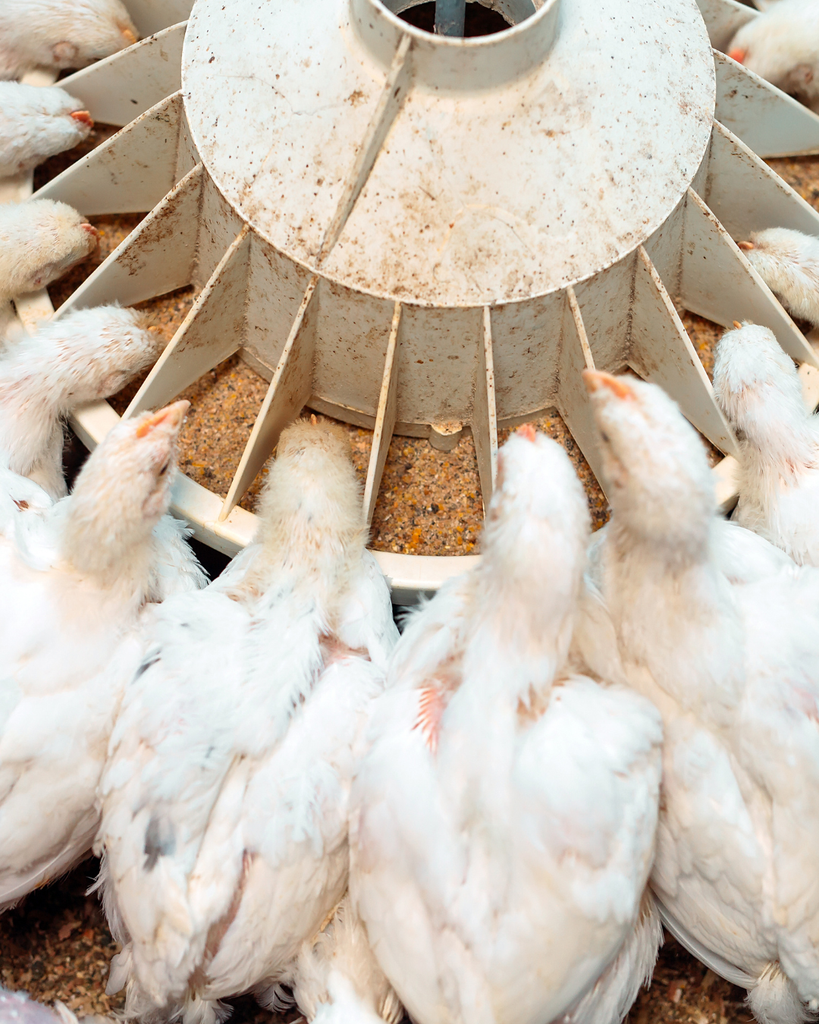
Gut Challenges Rarely Have a Single Cause
Necrotic enteritis is a gut condition that causes cell death and inflammation in the small intestine. The bacterium behind it is a normal resident of the poultry gut, and also found in feed, litter, dust and soil. (1)
One bacterial cell consumed by a bird won’t cause an outbreak, even if it comes from a strain of the causative bacteria that carries the genes for toxins associated with more severe disease. Usually for the opportunistic pathogen to multiply to a dangerous level, it takes several stressors to occur at once. Each stressor on their own may not be enough to cause necrotic enteritis to occur, but when enough of them overlap, the bacterium gets the opening it needs to multiply.
Coccidiosis is the best-known predisposing factor, though a flock can develop necrotic enteritis without it. (1) Other stressors include wheat-heavy diets, proteins that don’t digest well, and abrupt feed changes. (1) Calcium and trace mineral balance can also play a part. Anything that disrupts the normal balance of the gut gives the bacterium a place to multiply and cause disease.
Where the Calendar Gets Crowded
A review of 372 cases in one US broiler company found the earliest case at day 11 and the latest at day 28, with a median onset of 16.3 days. (2) Ralco’s field experience points to the same window, with most cases showing up between day 17 and 24.
Two routine events tend to occur in that same stretch.
The first is the coccidiosis program. Vaccinated flocks go through oocyst cycling, a controlled exposure that builds immunity, but can irritate the gut simultaneously. In a University of Arkansas trial, vaccinated broilers showed lower nutrient digestibility at day 12, especially for fat. By day 20, they also had lower feed intake and weight gain than birds on an in-feed coccidiosis control program, which served as the trial’s comparison group. (3) Flocks on other programs have their own cycling timelines, so it’s worth knowing which one applies in your barn.
The second event is feed change. Diets are often switched from starter to grower around day 17 or 18, also in the window that outbreaks commonly appear. (1) Depending on the program, a pre-starter diet shifting to a grower one, then grower two diet can land right around day 21 while a cycling event is underway.
None of this points to a mistake. Vaccinating and changing feed are normal, sound parts of production. Each one simply puts a small load on the gut, and when they share the same few days, the gut has less margin to work with.
What a Crowded Calendar Costs the Bird
A healthy intestine works like a tube that absorbs nutrients. A damaged one behaves more like a sieve. Feed goes in, but less of it gets used, which makes this a nutrition problem as much as a health problem.
Every bird works from a fixed supply of nutrients and energy. When the gut can’t absorb its share, growth is where the shortfall lands.
One Arkansas trial investigated how long nutrient digestibility in vaccinated birds impacted performance showing that a flock had largely recovered by day 20. However, at days 28 and 36 their feed conversion was still higher than that of birds on an in-feed coccidiosis control program, so it took more feed to produce the same gain. (3) The authors noted that a broiler’s short lifespan may not leave enough time to fully make up the difference. (3) This trial examined coccidiosis vaccination rather than a necrotic enteritis challenge, but it shows how a gut disruption in the middle of grow-out can follow a flock to the end.
Spotting Subclinical Cases
The clinical form of necrotic enteritis is hard to miss. Mortality is usually the first sign, and published estimates run as high as 1% per day and 10 to 40% of an affected flock. (1) Lesions in the small intestine are easy to find on a field post, though photos, documentation, and a call to your veterinarian for a sure diagnosis.
The subclinical form is harder to see with the naked eye. Birds may show no obvious lesions and mortality may look normal, yet performance slips. Extension research notes that this quiet form often goes undetected and affects performance and profitability more than the clinical form. (1) Even subclinical cases can swing feed conversion by several points, according to the Ralco team.
- Catching it comes down to data.
- Compare the flock to your own historical performance records at the same age.
- Check results against the breed standard.
- Ask what neighbors are seeing.
- Note the day performance dipped and what else changed that week.
When a problem looks like it could be multiple different things, a relationship with a diagnostic lab or university that tests samples is worth having before you need it. Litter oocyst counts can show how heavy the coccidiosis load is, and typing the bacterial strains can help confirm if more severe strains are present and causing the issue.
Why the Back Third Is Worth Protecting
The last third of a grow-out is only a portion of the total production period, yet it accounts for more than half of the total feed intake. According to Australian reference data, cumulative feed intake in male broilers averages2,020 grams at four weeks and 4,500 grams at six weeks. The amount of feed in the last two weeks adds up to~55% of feed consumed by a flock in the grow-out period, also contributing to a large expense during this time. (4)
This changes the perspective on how a day 21 problem appears considering how much production a flock still has, and even with 10 days left after hitting day 30according to the Ralco team. How much of that late feed the birds can eat and use matters, even for a flock that’s behind.
Birds that survive a necrotic enteritis challenge can still be carrying lesions, even after the worst of the challenge is over. The intestine has been damaged and absorbs nutrients less efficiently, leaving birds more open to secondary challenges, according to the Ralco team. This is why it’s important to treat recovery as its own phase. The goal is to support recovery and rebuild the gut efficiently so late-term intake and conversion are as optimal given the conditions.
Building Your Flock’s Gut Health Calendar
The first step is an audit of where a flock is exposed, willingly or unwillingly. Here’s a simple way to start:
- Put placement, feed changes, and any vaccination dates on one timeline.
- Add the cycling window for your coccidiosis program.
- Circle every spot where two or more conditions overlap. Day 17 to 24 is a good place to look first.
- Add the season. Spring and fall bring temperature swings and ventilation changes while coccidiosis is often cycling, and heat stress can shift feed intake patterns.
- Decide where gut support fits. Probiotics and prebiotics are often placed around feed changes to help support gut stability for a few days. Administering through water gives a quicker start and an easy way to adjust the dose, while a product in feed can take a day or two longer to show up.
The right plan depends on the operation. The most useful conversation starts with questions about the barn, such as bird age, feed and water intake, whether water or feed is the better route, and compatibility for a liquid or dry product. For operations working with a smaller toolbox, placing each tool at the right time matters even more.
Overall, gut challenges in broilers tend to follow the calendar, allowing for careful planning and better preparation. Knowing which events share the same few days, watching the data for the quiet version of signs of issues, and protecting late-term feed intake all help a flock finish stronger.
Want to Hear More?
Listen to Season 7, Episode 27 of Wing It Wisely, where Carmen Paulsen talks with Dr. Tim Broderick and Alea Gigliotti from the Ralco Poultry Team about necrotic enteritis, what makes flocks susceptible and how to build a gut health program that fits your operation.
Questions about your gut health program? Connect with the Ralco poultry team. Call 1-800-533-5306 or email PoultryHelp@RalcoAgriculture.com.
References
- Tabler, T. (2019). Intestinal health and necrotic enteritis in broilers. Mississippi State University Extension Service, Publication P2771. (Extension publication, secondary source.)
- Smith, J.A. (2011). Experiences with drug-free broiler production. Poultry Science, 90(11), 2670-2678.
- Gautier, A.E., Latorre, J.D., Matsler, P.L., & Rochell, S.J. (2020). Longitudinal characterization of coccidiosis control methods on live performance and nutrient utilization in broilers. Frontiers in Veterinary Science, 6, 468.
- Poultry CRC. Body weight and cumulative feed consumption for male and female broilers (Table 1). Poultry Hub Australia, Nutrition requirements of meat chickens (broilers). Australian figures; the 55% is calculated from the cumulative values.