
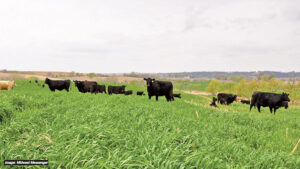
Developing a fall and winter grazing plan can help you save money on winter feed costs. The less you spend on harvested forages, the better, right?
But crops that aren’t corn, soybeans and wheat feel a little unknown. It can be challenging to know what winter forages to plant, or when and how to plant them. So, you might be thinking, where do I even begin?
To make it simple, here’s some easy-to-understand winter forage information to get you started.
What Forages Are Best for Winter Grazing?
The best winter forages are cool-season crops such as wheat, cereal rye, clover, winter pea, triticale, vetch, turnips, radishes, annual ryegrass, oats, kale and winter lentils.
Winter forages can vary by geography and be impacted by rainfall, time of planting, fertilization, seed depth, soil texture and pH. So, selecting the right variety is critical when choosing your forages. It’s essential to pick a variety of species that best fit your operational goals, rainfall, economics and region.
For the Midwest, the best winter forages are cover crops such as cereal rye, radishes, turnips, annual ryegrass, oats and triticale. The Natural Resources Conservation Service (NRCS) follows the Rule of Three principles for cover crop diversity. Each variety should include three primary plant groups – grasses, legumes and forbs (broadleaves) with two to three species from each group. That means six to eight plants would be included in each cover crop mix.
To select the suitable varieties for your area and goals, use a cover crop calculator, such as this one from the Midwest Cover Crop Councils, or contact your local NRCS office to choose which crops best fit your operation.
Where and When to Plant Winter Forages?
If you’re planting winter cover crops as you’re combining row crops, you’ll plant early or late September. In this case, it’s important to understand your cover crop mix’s carbon (C) to nitrogen (N) ratio when you’re planting into existing fields. You don’t want the cover crop to impact the nutrients in the soil for the following cash crop rotation.
According to NRCS, a good rule of thumb is that cover crop mixes with a C:N ratio greater than 24:1 will make N less available to plants and decompose more slowly. Mixes with a C:N ratio of less than 24:1 will make N more available for plants and will decompose more rapidly.
If you’re planting winter forages by over-seeding existing pastures, follow the planting dates on the mixes. Planting dates for each winter forage will vary but most can be planted from early August to early September.
The NRCS states that planting cover crops varies by moisture. If you have irrigation or plenty of moisture where you live, aerial or broadcast seeding is best. Some species of cover crops, such as peas, soybeans, and mung beans, will do better if they are drilled into the soil.
Is Mineral Needed with Cool Season Grasses?
Winter forages are high in protein and contain a lot of energy; however, they can be low in calcium and magnesium. In this case, grass tetany or wheat pasture poisoning (winter tetany) is the most significant risk for your herd.
Grass tetany is caused by low magnesium levels in cattle blood. It occurs when cattle begin grazing on grasses that are high in potassium. High levels of potassium decrease the absorption of magnesium and calcium, causing reduced levels in cattle.
Treatment of tetany typically includes an IV injection of calcium-magnesium and a mineral supplement containing a high level of magnesium (10%) and calcium (15-20%). For prevention, provide minerals containing highly available magnesium and calciumwith daily intake ranging from 2-4 ounces. Take note that when dealing with macro-minerals like calcium and magnesium, cattle will need to consume closer to the 4-ounce mark to ensure enough calcium and magnesium are ingested.
Another possible issue with winter cover crop mixes that include legumes is bloating. Rumensin® and Bloat Guard® can help with bloat or frothy bloat, which is common in this scenario.
Plan for Success with Winter Forages
Developing a well-thought-out fall and winter grazing plan can be a game-changer for your operation, helping you save significantly on winter feed costs. By selecting the right winter forages, understanding when and where to plant them and managing your herd’s mineral intake, you can maximize the benefits of winter grazing.
Remember, the key to success lies in choosing the right mix of cool-season crops that align with your regional conditions and operational goals. Whether you’re planting in the Midwest or another region, tools like cover crop calculators and guidance from your local NRCS office can help you make informed decisions.
As you prepare for the winter grazing season, keep in mind the importance of mineral supplementation such as Ralco’s Rumatec cow/calf mineral to prevent issues like grass tetany and bloat. By being proactive, you can ensure your herd remains healthy and productive throughout the colder months!
Have any other questions about winter forages? Talk to a Ralco ruminant specialist today by calling 507-337-6916 or emailing RuminantHelp@RalcoAgriculture.com

Rumatec – Cow/Calf Mineral
The Rumatec line of cow/calf mineral supplements provides the needed nutrients commonly deficient in forages to help ensure optimum performance and reproductive efficiency.