
Picture credit: Poultry Network
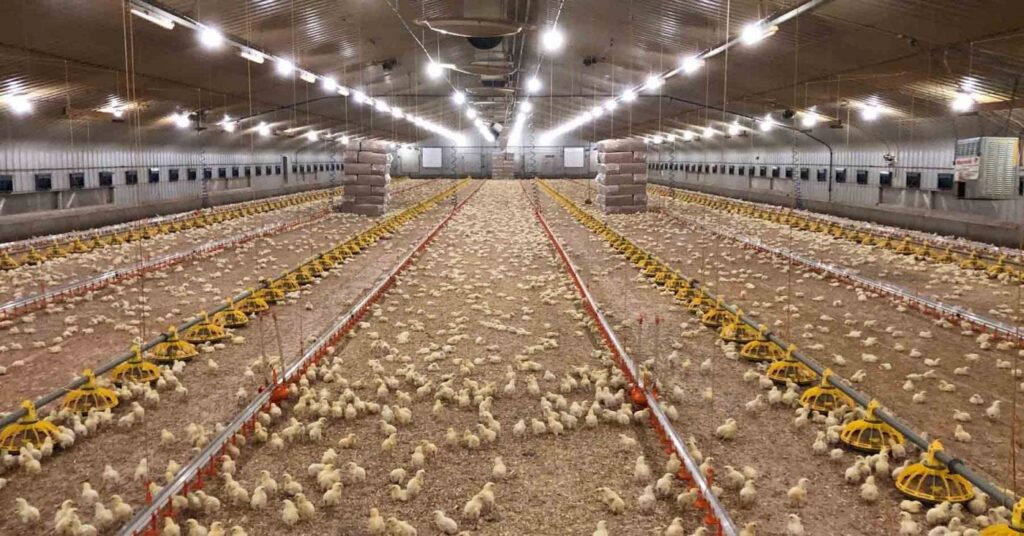
Lighting sounds simple in a poultry house. Turn the lights on in the morning, turn them off at night and repeat tomorrow, but there’s a lot more to lighting in a poultry barn than what meets the eye.
Birds perceive light differently than people do. They can see a wider spectrum of light, including some ultraviolet light, and they respond to changes in light intensity and duration in ways that can affect activity, feed intake, behavior, growth and reproduction.
That makes lighting one of the most practical management tools producers have, but how do you know if your lighting program is actually working?
Your Lighting Goals Change as Birds Grow
Early in life, the priority is getting birds established. Chicks and poults need enough light to explore the house and quickly find feed and water. Higher light intensity and longer periods of light help encourage early activity.
Once birds are established, the priorities begin to change. For broilers, that means gradually introducing more darkness and reducing light intensity to allow the birds to rest and their bodies to prepare for rapid growth. For pullets, lighting eventually becomes a tool for managing reproductive development and egg production.
Before changing a lighting program, ask a simple question: What do I need the birds to do right now? Get settled, grow, lay, etc. Whatever the answer, lighting should follow the bird, not just the calendar.
Don’t Judge Lighting with Your Own Eyes
A barn that looks bright enough to you may not be giving the birds what they need. For example, birds perceive both light intensity and color differently than people, so simply standing in the house and deciding it “looks good” doesn’t always tell you enough.
Too little light can reduce activity and make it harder for birds to find feed and water. Too much light can increase activity and energy expenditure and may contribute to aggressive behaviors such as pecking or cannibalism.
For broilers, lighting may start near 30-40 lux early in life before gradually stepping down toward approximately 5 to 10 lux as birds grow. Management guides usually provide a recommended lux range that should be observed at bird level depending on breed, age and production system. It’s important to use a light meter at bird level and check several areas of the house rather than relying on bulb output or how bright the barn looks to you.
The objective isn’t just to hit the right lux reading under one fixture, it’s to create a more consistent lighting environment across the entire house.
Remember That Darkness Has a Job Too
More hours of light may mean more time for birds to eat and grow, but darkness isn’t lost production time. It’s a critical rest period for birds that allows for skeletal development so the birds have a strong frame to support rapid weight gain. Most programs provide 4 to 8 hours of darkness a day to support performance, depending on company guidelines and market objectives. Birds eat and move when the lights come on, rest during darkness and begin the cycle again when the lights return.
That doesn’t mean the same schedule fits every operation. Housing style, breed, age and production system all affect what’s practical. The bigger point is that darkness needs to be managed just as intentionally as light.
For Layers, Light Timing is Everything
Lighting takes on an entirely different role with layers. During pullet development, producers generally reduce day length and then hold it steady while birds build frame and reach the appropriate stage of development.
When it’s time to bring the birds into lay, day length is increased to stimulate egg production. An initial 90-120 minute light increase is the most important step that provides a strong signal to stimulate lay, which should be followed by a more gradual increase daily until you reach the recommended day length for your operation. Optimal lighting schedules and recommendations can be found in breed management guides.
While determining a lighting schedule for your flock, age alone shouldn’t determine when light stimulation happens. Two pullet flocks may be the same age but not equally prepared to enter production. Before light stimulating a flock, producers should evaluate age, body weight, frame development, body condition and flock uniformity. If a flock is underweight or has poor uniformity, light stimulation should be delayed.
Once hens have come into production, producers shouldn’t decrease day length. Birds naturally associate shortening days with a changing season, which can adversely affect the same hormonal system you’re using lighting to manage.
Use Sunrise and Sunset to Your Advantage
Flipping from complete darkness to full light instantly may not be the best fit for every housing system.
Many modern cage free and aviary facilities implement sunrise and sunset periods in their lighting program. This may look like a 30-minute period of 30% light intensity before and after lights come on at 100% during the day. These simulated sunrise and sunset periods help decrease stress to the birds and encourage adjustment to either daytime or nighttime behaviors.
Build a Program That Fits Your Barn
The right lighting program on paper still has to work within the housing system you have. A solid sidewall barn may provide more control over the lighting environment, while an open sidewall barn may receive more natural daylight throughout the day. A facility with outdoor access brings another consideration because natural day length changes by location and season. That means lighting programs have to account for more than just bird type and age.
Breed management guides provide a valuable starting point to building these programs, but the final program still needs to fit the birds and the facility. Housing design, natural light exposure, geography and equipment capabilities can all influence what your lighting program looks like.
Want to Hear More About Poultry Lighting?
Listen to Season 6, Episode 23 of Wing It Wisely as Carmen Paulsen sits down with Dr. Tim Broderick and Alea Gigliotti to discuss lighting intensity, dark periods, broiler and layer programs, light distribution and how birds respond to the environment around them.
Questions About Poultry Lighting?
Connect with the Ralco poultry team to talk through lighting considerations for your flock. Call 1-800-533-5306 or email PoultryHelp@RalcoAgriculture.com!