
• Skip to main content
  • Skip to header right navigation
  • Skip to site footer
  • Careers
  • Contact Us
Logo for Ralco featuring a stylized green letter "R" with a leaf inside a yellow circle, next to the text "RALCO Nature Elevated by Science" in green letters.

Ralco Agriculture

  • Home
  • About
    • History
    • News
    • Sustainability
  • Our Science
    • Microfused® Essential Oils
    • Actifibe®
    • Microbial Catalyst®
  • Products
        • All Products
        • Swine
          • Nursery / Grow-Finish Health
          • Gestation / Lactation Health
          • Nursery Nutrition
          • Grow-Finish Nutrition
          • Specific Health Challenges
        • Poultry
        • Beef
          • Cow/Calf Health
          • Cow/Calf Nutrition
          • Feedlot Health
          • Feedlot Nutrition
        • Dairy
          • Calf
          • Cow
        • Crops & Forage
          • Crops
          • Forage
        • More Solutions
          • Aquaculture
          • Equine
          • Feed Mill
          • Organic
          • Show Animals
          • Small Ruminants
  • Resources
    • FAQs
    • Videos
    • Podcast
    • Ralco Reader Blog
  • Shop
  • Careers
  • Contact Us
Search Search
Search
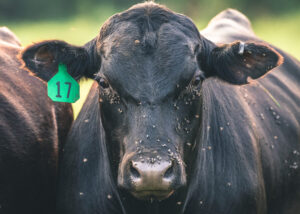
A black cow with a green ear tag labeled "17" stands facing the camera, surrounded by small flies on its face and head, with another cow partially visible beside it. The background is blurred greenery.

How to Control Flies in Cattle with Garlic

February 25, 2022 | Beef

As a beef producer, you battle face flies, house flies, horn flies and stable flies every spring and summer. These pests are estimated to cost U.S. producers up to $2 billion annually, according to the Journal of Economic Entomology.

Types of Flies That Affect Cattle

There are four major types of flies that impact cattle health and productivity:

  1. Horn Flies: Small, black, blood-sucking flies that stay on cattle day and night. During peak summer, there can be 1,000 – 4,000 horn flies per cow, causing serious harm. Just 1,000 horn flies can bite a cow 30,000 times a day, draining up to a half-pint of blood daily.

  2. Face Flies: Larger than horn flies, face flies don’t bite but feed on blood from cuts or wounds. They can transmit diseases such as pinkeye and infectious bovine rhinotracheitis (IBR).

  3. Stable Flies: Painful, blood-feeding flies that usually attack cattle’s front legs. Unlike horn flies, stable flies rip the skin, causing blood to flow. As few as 4-6 stable flies per cow can have an economic impact.

  4. House Flies: These flies irritate cattle and spread diseases, including bovine viral diarrhea (BVD), IBR, E. coli, pinkeye and mastitis.

Fly Control Methods for Cattle

The goal of fly control is to keep populations below the economic threshold, ideally under 200 horn flies per cow.

Various fly control methods include:

  • Ear Tags: Convenient and effective for some producers.

  • Sprays and Insecticides: Offer quick results but need regular application.

  • Oilers and Dust Bags: Help apply insecticides evenly as cattle rub against them.

  • Pour-on Dewormers: Can kill flies and other parasites.

  • Dung Beetles and Parasitic Wasps: Natural predators that reduce fly populations.

  • Vet Guns: Shoots insecticide capsules directly onto cattle.

  • Feedthrough Additives: Mixes with feed and passes through the cattle’s system to target fly larvae in manure.

Unfortunately, flies can develop resistance to some chemical methods, making it essential for producers to use a combination of fly control strategies to achieve the best results.

Below is an in-depth look at each fly control method in a webinar by nutritionist, Dr. Jeff Hill.

https://youtu.be/Yqi9XnAgo20

Garlic for Fly Control in Cattle

Garlic is an increasingly popular tool in the fight against flies. Recent studies show it can be effective as part of cattle mineral mixes, helping reduce fly populations.

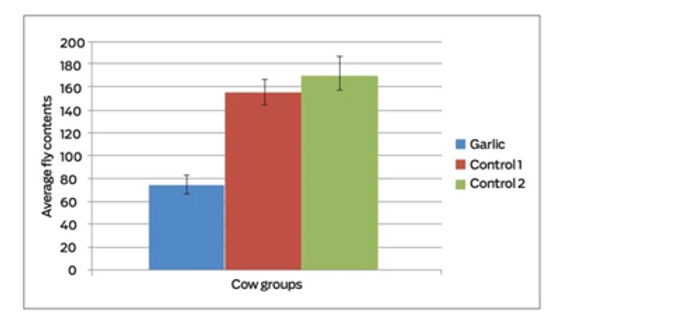
A Canadian study in Saskatchewan found that adding garlic to mineral feed cut fly populations by up to 50% in cow-calf herds. Three herds were tested, with two receiving a salt-mineral mix and one receiving a garlic-enriched mix. The garlic-fed herd averaged just 75 flies per cow throughout the summer.

Average Fly Counts By Cow-Calf Group in Canadian Study
study on fly control in cattle Canada

Chart: Canadian Cattlemen

Why Garlic Works as a Fly Repellent

Garlic contains sulfur compounds that give it a strong odor and flavor. When cattle consume garlic, these compounds are excreted through their skin and respiratory system, naturally repelling flies. Garlic has also been shown to help repel ticks and improve gut health in ruminants.

It’s recommended to add garlic to cattle mineral in the spring and continue through fall for the best results.

Add Garlic to Rumatec Minerals for Enhanced Fly Control

Interested in adding garlic to your mineral program? Ralco’s Rumatec Cow/Calf Mineral line can be customized with garlic to help give your herd a natural defense against flies. By incorporating garlic, Rumatec minerals also help repel ticks, making it easier to keep pests at bay throughout the grazing season.

Learn More About Fly Control for Cattle

To learn more about how garlic and other fly control methods can benefit your cattle, watch Dr. Jeff Hill’s webinar on fly management or contact a ruminant nutritionist at 507-337-6916 or RuminantHelp@RalcoAgriculture.com.

Rumatec Mineral Nutrition Logo

Rumatec Cow/Calf Mineral

The Rumatec line of cow/calf mineral supplements provides the needed nutrients commonly deficient in forages to help ensure optimum performance and reproductive efficiency.

Learn More

Share this post

Sidebar

Categories

  • News
  • Beef
  • Dairy
  • Poultry
  • Swine

Archives

  • July 2026
  • June 2026
  • May 2026
  • February 2026
  • January 2026
  • December 2025
  • November 2025
  • October 2025
  • September 2025
  • August 2025
  • July 2025
  • June 2025
  • May 2025
  • April 2025
  • March 2025
  • February 2025
  • January 2025
  • December 2024
  • November 2024
  • October 2024
  • August 2024
  • June 2024
  • May 2024
  • March 2024
  • February 2024
  • January 2024
  • December 2023
  • September 2023
  • August 2023
  • July 2023
  • June 2023
  • March 2023
  • February 2023
  • January 2023
  • December 2022
  • November 2022
  • October 2022
  • August 2022
  • July 2022
  • June 2022
  • May 2022
  • April 2022
  • March 2022
  • February 2022
  • December 2021
  • August 2021
  • July 2021
  • June 2021
  • April 2021
  • March 2021
  • January 2021
  • December 2020
  • October 2020
  • August 2020
  • July 2020
  • June 2020
  • May 2020
  • April 2020
  • March 2020
  • February 2020
  • December 2019
  • October 2019
  • July 2019
  • June 2019
  • May 2019
  • April 2019
  • February 2019
  • June 2018
  • March 2018
  • February 2018
  • December 2017
  • August 2017
  • May 2017
  • March 2017
  • December 2016
  • November 2016
  • October 2016
  • August 2016
  • July 2016
  • June 2016
  • January 2016
  • December 2015

Categories

  • News
  • Beef
  • Dairy
  • Poultry
  • Swine

Let’s Tackle Your Toughest Challenge

If there’s a problem holding your operation back, we’re here to help you solve it. If you’re ready for products that bring together nature and science, let’s talk!

Ralco News

Holstein dairy calf in a fenced in hutch

Heat Stress in Dairy Calves Starts Before You See It

Heat stress is usually talked about in terms of the milking herd. Lower dry matter intake, reduced …
Read moreHeat Stress in Dairy Calves Starts Before You See It
Two white broiler chickens stand close to a water dispenser; one chicken drinks from a red nozzle above, while the other looks on with its beak slightly open. The background shows more chickens out of focus.

How to Use Poultry Production Data to Make Better Flock Decisions

Production data is one of the most powerful tools in commercial poultry operations, but the biggest …
Read moreHow to Use Poultry Production Data to Make Better Flock Decisions
A group of black and white dairy cows stand in a circular milking parlor, attached to milking machines, inside a bright, modern barn.

Mastitis in Dairy Cows and Heifers: How to Manage Risk Before Production Loss

Mastitis remains one of the most costly and complex diseases in dairy production. The National …
Read moreMastitis in Dairy Cows and Heifers: How to Manage Risk Before Production Loss
Ralco logo with a green vertical bar and a leaf inside a yellow circle, next to the word "RALCO" in white, and the tagline "Nature Elevated by Science" below.
Four faded certification logos in a row, including HALAL, RMPP, GMP+, and FAMIQS, on a light background. Text and images within the seals are barely visible.

Subscribe for news and updates

Home
About
Our Science
Shop
Resources
Careers
Contact Us
Call 1 (800) 533-5306

  • Facebook
  • Instagram
  • YouTube
  • LinkedIn

Copyright © 2026 · Ralco Agriculture · All Rights Reserved · Privacy Policy

We use cookies to enhance your browsing experience, serve personalized ads or content, and analyze our traffic. By accepting, you agree to our use of such cookies. Privacy Policy