
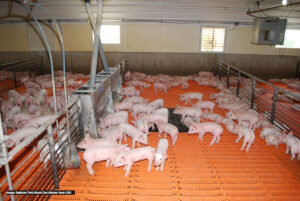
A pig’s first step into the nursery can be a stressful one. These young pigs are in a new place, with new food and no milk to fall back on. With all this transition stress, many pigs will start in their new barn by going off feed.
If you’re wondering where fall-behind pigs occur, here is a place to start noticing. Based on the data shown in the chart below, more than 20% of pigs are considered non-eaters after the first 24 hours in the nursery. Pigs that start here often see slower growth and continue to sit in the lower third of a herd.
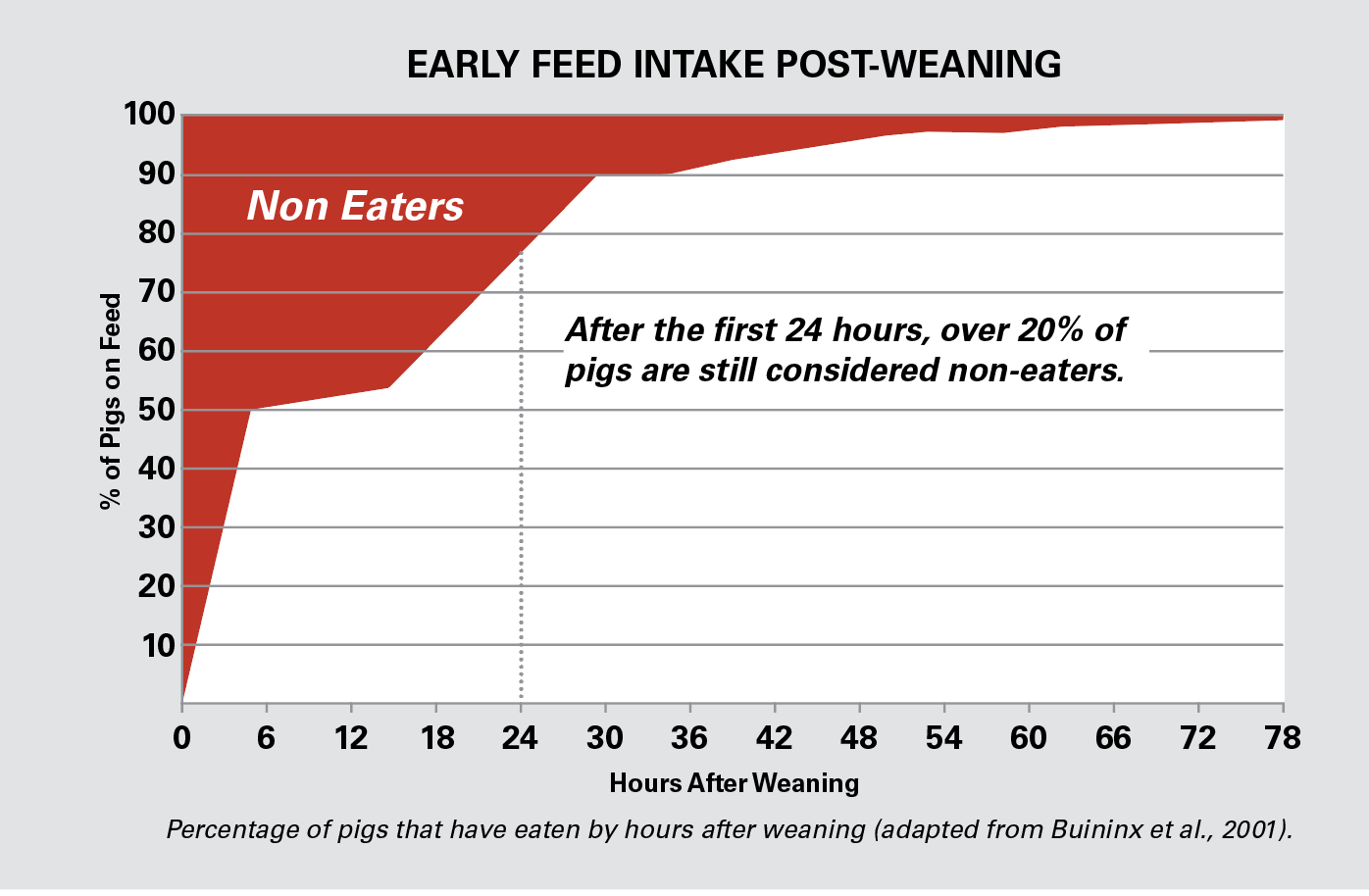
If producers can get good intake in that first week – 0.25 lb average daily gain (ADG) or greater – they can reduce days to market by up to 15 days. It’s important to get your pigs eating as quickly and efficiently as possible, so they don’t fall into that bottom tier of your herd.
What Do Early Fall Behind Pigs Look Like?
Pigs don’t start with a lot of fat on them. So when a pig stops eating, they often get cold. You might notice them crowded in a corner or piling on top of each other. They also start to grow hair very quickly, so a hairy pig could be an animal compensating for its cold temperature due to lack of eating. You’ll also notice droopier ears and just an overall unhealthy look.
What Does Nursery Success Look Like?
In the nursery phase, it is easy to know if your pigs are eating. Thriving piglets are moving around with full bellies. They look comfortable and are growing, making it easy to see how healthy they are. They don’t pile up or look like they’re struggling.
There will always be some fall behinds, but the goal is to limit those to as few as possible.
How Do We Get Weaner Pigs to Start Eating Faster?
Here are a few tips to make your pigs more likely to eat in those first few days in the nursery:
1. Mat Feeding
Pigs are natural foragers, so mat feeding is an excellent way to encourage them to start eating. This method is great for the entire nursery but is perfect for smaller pigs. Mat feeding three to four times a day for seven to 10 days after the nursery transition can help bring smaller pigs up more quickly. Studies have shown that while mat feeding didn’t lead to a difference in pig weight, it did lead to a 3.9% decrease in mortality. The increased activity in the barn with mat feeding has a positive impact on pigs that might otherwise be less likely to get up and, thus, more likely to fall behind.
2. Gruel Feeding
When pigs enter the nursery, they’re used to liquid food. So, mixing water with their feed in a gruel feeder may entice them to try it and help them move on to dry feed faster.
3. Improve Water Intake
Another significant way to get pigs to start eating is to encourage them to start drinking. Ralco’s Essential-Lyte™ is a water additive that provides vital vitamins, electrolytes, essential oils and a strawberry flavoring that encourages pigs to drink. It has a sweet taste without sugar that might otherwise satiate the pig and cause them not to feel the need to eat as much as they should.
Why is it so Important to Reduce the Bottom 30% of Pigs?
Dr. John Dean says the most significant increase in production profitability can be found in the bottom 30% of pigs. If we want to have more profitable operations, we need to find out what’s dragging that 30% down and how we can bring more of them up to a higher level of productivity. Producers don’t make any money on culls or mortality. Even if slow starters don’t reach the top of the herd, they’ll still bring greater success in the long run.
Try Ralco’s Essential-Lyte™ for FREE
Essential-Lyte™ can help quickly get weaner pigs drinking and eating while supporting gut health and providing the nutrients they need to stay healthy and thrive.
The unique blend of natural ingredients includes essential oils, a prebiotic, vitamins E and D, a water acidifier and electrolytes to help:
Ease nursery transitions
Rehydrate and restore nutrients
Promote immunity
Significantly lower gut pH
Manage disease pressure