
• Skip to main content
  • Skip to header right navigation
  • Skip to site footer
  • Careers
  • Contact Us
Logo for Ralco featuring a stylized green letter "R" with a leaf inside a yellow circle, next to the text "RALCO Nature Elevated by Science" in green letters.

Ralco Agriculture

  • Home
  • About
    • History
    • News
    • Sustainability
  • Our Science
    • Microfused® Essential Oils
    • Actifibe®
    • Microbial Catalyst®
  • Products
        • All Products
        • Swine
          • Nursery / Grow-Finish Health
          • Gestation / Lactation Health
          • Nursery Nutrition
          • Grow-Finish Nutrition
          • Specific Health Challenges
        • Poultry
        • Beef
          • Cow/Calf Health
          • Cow/Calf Nutrition
          • Feedlot Health
          • Feedlot Nutrition
        • Dairy
          • Calf
          • Cow
        • Crops & Forage
          • Crops
          • Forage
        • More Solutions
          • Aquaculture
          • Equine
          • Feed Mill
          • Organic
          • Show Animals
          • Small Ruminants
  • Resources
    • FAQs
    • Videos
    • Podcast
    • Ralco Reader Blog
  • Shop
  • Careers
  • Contact Us
Search Search
Search
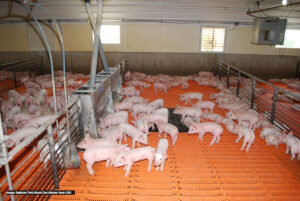
Dozens of piglets in a clean indoor pen with orange slatted flooring and metal railings, under artificial lighting. The room has a window and ventilation equipment on the ceiling.

How to Help the Bottom 30% of Nursery Pigs

March 27, 2023 | Swine

A pig’s first step into the nursery can be a stressful one. These young pigs are in a new place, with new food and no milk to fall back on. With all this transition stress, many pigs will start in their new barn by going off feed.

If you’re wondering where fall-behind pigs occur, here is a place to start noticing. Based on the data shown in the chart below, more than 20% of pigs are considered non-eaters after the first 24 hours in the nursery. Pigs that start here often see slower growth and continue to sit in the lower third of a herd.
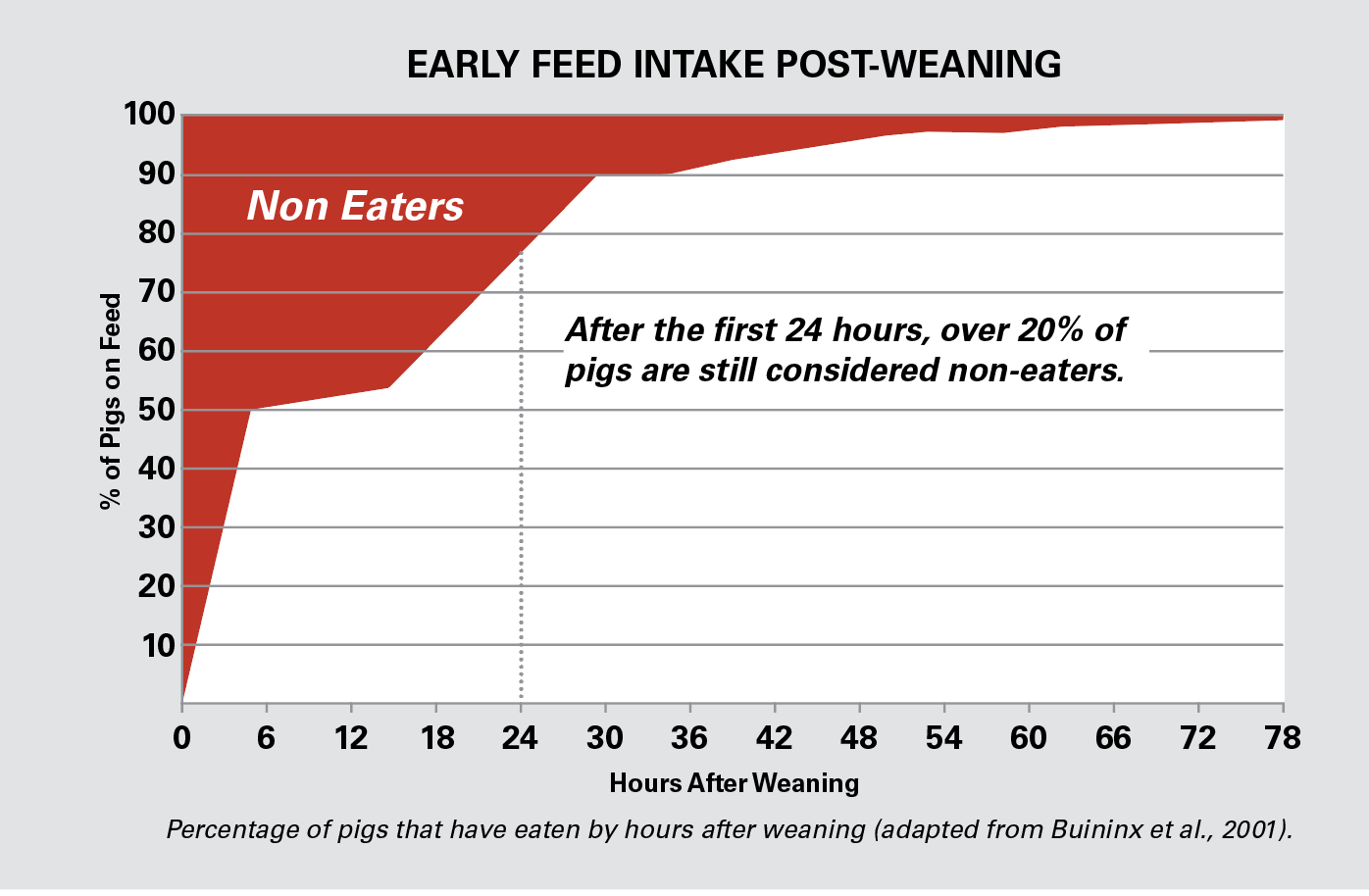
How to Help your Bottom 30% of Nursery Pigs

If producers can get good intake in that first week – 0.25 lb average daily gain (ADG) or greater – they can reduce days to market by up to 15 days. It’s important to get your pigs eating as quickly and efficiently as possible, so they don’t fall into that bottom tier of your herd.

What Do Early Fall Behind Pigs Look Like?

Pigs don’t start with a lot of fat on them. So when a pig stops eating, they often get cold. You might notice them crowded in a corner or piling on top of each other. They also start to grow hair very quickly, so a hairy pig could be an animal compensating for its cold temperature due to lack of eating. You’ll also notice droopier ears and just an overall unhealthy look.

What Does Nursery Success Look Like?

In the nursery phase, it is easy to know if your pigs are eating. Thriving piglets are moving around with full bellies. They look comfortable and are growing, making it easy to see how healthy they are. They don’t pile up or look like they’re struggling.

There will always be some fall behinds, but the goal is to limit those to as few as possible.

How Do We Get Weaner Pigs to Start Eating Faster?

Here are a few tips to make your pigs more likely to eat in those first few days in the nursery:

1. Mat Feeding

Pigs are natural foragers, so mat feeding is an excellent way to encourage them to start eating. This method is great for the entire nursery but is perfect for smaller pigs. Mat feeding three to four times a day for seven to 10 days after the nursery transition can help bring smaller pigs up more quickly. Studies have shown that while mat feeding didn’t lead to a difference in pig weight, it did lead to a 3.9% decrease in mortality. The increased activity in the barn with mat feeding has a positive impact on pigs that might otherwise be less likely to get up and, thus, more likely to fall behind.

2. Gruel Feeding

When pigs enter the nursery, they’re used to liquid food. So, mixing water with their feed in a gruel feeder may entice them to try it and help them move on to dry feed faster.

3. Improve Water Intake

Another significant way to get pigs to start eating is to encourage them to start drinking. Ralco’s Essential-Lyte™ is a water additive that provides vital vitamins, electrolytes, essential oils and a strawberry flavoring that encourages pigs to drink. It has a sweet taste without sugar that might otherwise satiate the pig and cause them not to feel the need to eat as much as they should.

Why is it so Important to Reduce the Bottom 30% of Pigs?

Dr. John Dean says the most significant increase in production profitability can be found in the bottom 30% of pigs. If we want to have more profitable operations, we need to find out what’s dragging that 30% down and how we can bring more of them up to a higher level of productivity. Producers don’t make any money on culls or mortality. Even if slow starters don’t reach the top of the herd, they’ll still bring greater success in the long run.

Try Ralco’s Essential-Lyte™ for FREE

Essential-Lyte™ can help quickly get weaner pigs drinking and eating while supporting gut health and providing the nutrients they need to stay healthy and thrive.

The unique blend of natural ingredients includes essential oils, a prebiotic, vitamins E and D, a water acidifier and electrolytes to help:

  • Ease nursery transitions

  • Rehydrate and restore nutrients

  • Promote immunity

  • Significantly lower gut pH

  • Manage disease pressure

Sign up for your FREE sample of Essential Lyte today!

Share this post

Sidebar

Categories

  • News
  • Beef
  • Dairy
  • Poultry
  • Swine

Archives

  • July 2026
  • June 2026
  • May 2026
  • February 2026
  • January 2026
  • December 2025
  • November 2025
  • October 2025
  • September 2025
  • August 2025
  • July 2025
  • June 2025
  • May 2025
  • April 2025
  • March 2025
  • February 2025
  • January 2025
  • December 2024
  • November 2024
  • October 2024
  • August 2024
  • June 2024
  • May 2024
  • March 2024
  • February 2024
  • January 2024
  • December 2023
  • September 2023
  • August 2023
  • July 2023
  • June 2023
  • March 2023
  • February 2023
  • January 2023
  • December 2022
  • November 2022
  • October 2022
  • August 2022
  • July 2022
  • June 2022
  • May 2022
  • April 2022
  • March 2022
  • February 2022
  • December 2021
  • August 2021
  • July 2021
  • June 2021
  • April 2021
  • March 2021
  • January 2021
  • December 2020
  • October 2020
  • August 2020
  • July 2020
  • June 2020
  • May 2020
  • April 2020
  • March 2020
  • February 2020
  • December 2019
  • October 2019
  • July 2019
  • June 2019
  • May 2019
  • April 2019
  • February 2019
  • June 2018
  • March 2018
  • February 2018
  • December 2017
  • August 2017
  • May 2017
  • March 2017
  • December 2016
  • November 2016
  • October 2016
  • August 2016
  • July 2016
  • June 2016
  • January 2016
  • December 2015

Categories

  • News
  • Beef
  • Dairy
  • Poultry
  • Swine

Let’s Tackle Your Toughest Challenge

If there’s a problem holding your operation back, we’re here to help you solve it. If you’re ready for products that bring together nature and science, let’s talk!

Ralco News

Holstein dairy calf in a fenced in hutch

Heat Stress in Dairy Calves Starts Before You See It

Heat stress is usually talked about in terms of the milking herd. Lower dry matter intake, reduced …
Read moreHeat Stress in Dairy Calves Starts Before You See It
Two white broiler chickens stand close to a water dispenser; one chicken drinks from a red nozzle above, while the other looks on with its beak slightly open. The background shows more chickens out of focus.

How to Use Poultry Production Data to Make Better Flock Decisions

Production data is one of the most powerful tools in commercial poultry operations, but the biggest …
Read moreHow to Use Poultry Production Data to Make Better Flock Decisions
A group of black and white dairy cows stand in a circular milking parlor, attached to milking machines, inside a bright, modern barn.

Mastitis in Dairy Cows and Heifers: How to Manage Risk Before Production Loss

Mastitis remains one of the most costly and complex diseases in dairy production. The National …
Read moreMastitis in Dairy Cows and Heifers: How to Manage Risk Before Production Loss
Ralco logo with a green vertical bar and a leaf inside a yellow circle, next to the word "RALCO" in white, and the tagline "Nature Elevated by Science" below.
Four faded certification logos in a row, including HALAL, RMPP, GMP+, and FAMIQS, on a light background. Text and images within the seals are barely visible.

Subscribe for news and updates

Home
About
Our Science
Shop
Resources
Careers
Contact Us
Call 1 (800) 533-5306

  • Facebook
  • Instagram
  • YouTube
  • LinkedIn

Copyright © 2026 · Ralco Agriculture · All Rights Reserved · Privacy Policy

We use cookies to enhance your browsing experience, serve personalized ads or content, and analyze our traffic. By accepting, you agree to our use of such cookies. Privacy Policy