
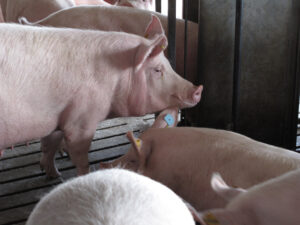
Ensuring sows and gilts get the nutrition they need in gestation is the best way to reduce problems during farrowing and lactation. But how do you know if your sows’ needs are being met?
Here are 5 considerations for feeding in gestation:
1. Body condition
One of the most important feeding goals during gestation is keeping sows in ideal body condition. Simply put, a sow needs to be in healthy condition to have the most potential success at farrowing. If she’s over-conditioned, you’re more likely to see an increase in stillborns and farrowing problems. Today, it’s common to see a sow farrow a litter of 15 pigs. If she’s overweight, she has a higher likelihood of running out of energy before she is done farrowing. She’ll also be prone to eat less during lactation, so not only will her pigs not get all the energy and nutrients they need, but there’s a possibility she will actually come out of the farrowing room under-conditioned, which could have implications for breeding back.
On the flip side, if she’s under-conditioned in gestation, her pigs will most likely not be as good quality, and, as she will likely come out of lactation thinner, she will also struggle to breed back. A good practice is to body condition score your sows two or three times during gestation and adjust the sows’ feed accordingly.
2. Fiber
Research shows that having a higher fiber ration in gestation can improve the number of pigs weaned and the litter wean weight. This happens because by increasing the amount of fiber in the sow diet, we increase the capacity of their digestive tract. This means that they have a higher capacity for intake during lactation, which leads to higher milk production. More milk means healthier, heavier pigs at weaning.
Another benefit of fiber is decreasing sow constipation. This means that she’s not struggling against that added stressor during farrowing. Added fiber also means sows feel fuller, which makes them less aggressive and more content.
Like any ingredient, when prices increase, fiber can sometimes be first on the chopping block. But remember that it’s more than just a filler – research shows it is a highly valuable part of the sow diet.
3. Mycotoxins
Quality feed is important for sows, but watching out for mycotoxin in feed is essential. Mycotoxinsare produced from molds that occur in grain in the field, during harvest and in storage. These mycotoxins can be more common in years with extreme weather. Although not all molds produce toxins, the most significant mycotoxins affecting swine are aflatoxin, vomitoxin, zearalenone, fumonisin and ochratoxin produced by molds in the Aspergillus, Fusarium and Penicillium genera. When consumed by sows in high amounts, zearalenone has been shown to lead to abortions and an increase in mummies. This can significantly impact an operation, so watching and testing for mycotoxin is vital to ensure that you don’t have issues.
A mycotoxin binder can help limit the impact of mycotoxin in your feed.
4. Nutrients
A key nutrient to make sure sows are getting in gestation is adequate amino acids. Early in gestation, while the embryos are developing, a low level of amino acids will suffice. The pigs aren’t actually growing much at that point. However, around 90 days of gestation, higher levels of amino acids are needed to support the now quickly-growing litter.
Here is where it is vital to know how much sows are eating to balance the amino acid content in the diet. While some may say the standard number of 5.5 lbs., a more accurate number can help keep those sows in a state of ideal nutrition and body condition.
5. Essential oils
A study from the University of Minnesota looked at feeding Regano® EX, a Ralco essential oil product, to sows in gestation. As they followed the sows into lactation, they saw that sows fed Ralco essential oils in gestation had an overall improvement in colostrum quality.
This is important because sows can’t increase the amount of colostrum they produce. They can only increase the quality, so by feeding Regano and improving quality, we are essentially getting those piglets off to a better start. Feeding the essential oil blend to the sows leads the suckling pigs to show an increase in immunoglobulins (IgGs), which holds all the way to market, with higher levels of insulin-like growth factor (IGF) from wean to finish. It’s a great way to see how feeding sows well from the start can impact their litters all the way to finish.
How Ralco can help save more piglets
Once piglets are born, try Ralco’s fast-acting natural oral drench that gets baby pigs up and eating quickly by stimulating appetite and supporting a healthy immune function.