
• Skip to main content
  • Skip to header right navigation
  • Skip to site footer
  • Careers
  • Contact Us
Logo for Ralco featuring a stylized green letter "R" with a leaf inside a yellow circle, next to the text "RALCO Nature Elevated by Science" in green letters.

Ralco Agriculture

  • Home
  • About
    • History
    • News
    • Sustainability
  • Our Science
    • Microfused® Essential Oils
    • Actifibe®
    • Microbial Catalyst®
  • Products
        • All Products
        • Swine
          • Nursery / Grow-Finish Health
          • Gestation / Lactation Health
          • Nursery Nutrition
          • Grow-Finish Nutrition
          • Specific Health Challenges
        • Poultry
        • Beef
          • Cow/Calf Health
          • Cow/Calf Nutrition
          • Feedlot Health
          • Feedlot Nutrition
        • Dairy
          • Calf
          • Cow
        • Crops & Forage
          • Crops
          • Forage
        • More Solutions
          • Aquaculture
          • Equine
          • Feed Mill
          • Organic
          • Show Animals
          • Small Ruminants
  • Resources
    • FAQs
    • Videos
    • Podcast
    • Ralco Reader Blog
  • Shop
  • Careers
  • Contact Us
Search Search
Search
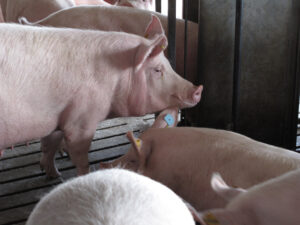
Several pink pigs stand and lie close together in a pen with slatted floors and metal bars. Some pigs have yellow ear tags, and the lighting suggests they are indoors.

Feeding Sows for Success During Gestation

November 18, 2022 | Swine

Ensuring sows and gilts get the nutrition they need in gestation is the best way to reduce problems during farrowing and lactation. But how do you know if your sows’ needs are being met?

Here are 5 considerations for feeding in gestation:

1. Body condition

One of the most important feeding goals during gestation is keeping sows in ideal body condition. Simply put, a sow needs to be in healthy condition to have the most potential success at farrowing. If she’s over-conditioned, you’re more likely to see an increase in stillborns and farrowing problems. Today, it’s common to see a sow farrow a litter of 15 pigs. If she’s overweight, she has a higher likelihood of running out of energy before she is done farrowing. She’ll also be prone to eat less during lactation, so not only will her pigs not get all the energy and nutrients they need, but there’s a possibility she will actually come out of the farrowing room under-conditioned, which could have implications for breeding back.

On the flip side, if she’s under-conditioned in gestation, her pigs will most likely not be as good quality, and, as she will likely come out of lactation thinner, she will also struggle to breed back. A good practice is to body condition score your sows two or three times during gestation and adjust the sows’ feed accordingly.

2. Fiber

Research shows that having a higher fiber ration in gestation can improve the number of pigs weaned and the litter wean weight. This happens because by increasing the amount of fiber in the sow diet, we increase the capacity of their digestive tract. This means that they have a higher capacity for intake during lactation, which leads to higher milk production. More milk means healthier, heavier pigs at weaning.

Another benefit of fiber is decreasing sow constipation. This means that she’s not struggling against that added stressor during farrowing. Added fiber also means sows feel fuller, which makes them less aggressive and more content.

Like any ingredient, when prices increase, fiber can sometimes be first on the chopping block. But remember that it’s more than just a filler – research shows it is a highly valuable part of the sow diet.

3. Mycotoxins

Quality feed is important for sows, but watching out for mycotoxin in feed is essential. Mycotoxinsare produced from molds that occur in grain in the field, during harvest and in storage. These mycotoxins can be more common in years with extreme weather. Although not all molds produce toxins, the most significant mycotoxins affecting swine are aflatoxin, vomitoxin, zearalenone, fumonisin and ochratoxin produced by molds in the Aspergillus, Fusarium and Penicillium genera. When consumed by sows in high amounts, zearalenone has been shown to lead to abortions and an increase in mummies. This can significantly impact an operation, so watching and testing for mycotoxin is vital to ensure that you don’t have issues.

A mycotoxin binder can help limit the impact of mycotoxin in your feed.

4. Nutrients

A key nutrient to make sure sows are getting in gestation is adequate amino acids. Early in gestation, while the embryos are developing, a low level of amino acids will suffice. The pigs aren’t actually growing much at that point. However, around 90 days of gestation, higher levels of amino acids are needed to support the now quickly-growing litter.

Here is where it is vital to know how much sows are eating to balance the amino acid content in the diet. While some may say the standard number of 5.5 lbs., a more accurate number can help keep those sows in a state of ideal nutrition and body condition.

5. Essential oils

A study from the University of Minnesota looked at feeding Regano® EX, a Ralco essential oil product, to sows in gestation. As they followed the sows into lactation, they saw that sows fed Ralco essential oils in gestation had an overall improvement in colostrum quality.

This is important because sows can’t increase the amount of colostrum they produce. They can only increase the quality, so by feeding Regano and improving quality, we are essentially getting those piglets off to a better start. Feeding the essential oil blend to the sows leads the suckling pigs to show an increase in immunoglobulins (IgGs), which holds all the way to market, with higher levels of insulin-like growth factor (IGF) from wean to finish. It’s a great way to see how feeding sows well from the start can impact their litters all the way to finish.

How Ralco can help save more piglets

Once piglets are born, try Ralco’s fast-acting natural oral drench that gets baby pigs up and eating quickly by stimulating appetite and supporting a healthy immune function.

Sign up for a free sample of First PulseⓇ D now!

Share this post

Sidebar

Categories

  • News
  • Beef
  • Dairy
  • Poultry
  • Swine

Archives

  • July 2026
  • June 2026
  • May 2026
  • February 2026
  • January 2026
  • December 2025
  • November 2025
  • October 2025
  • September 2025
  • August 2025
  • July 2025
  • June 2025
  • May 2025
  • April 2025
  • March 2025
  • February 2025
  • January 2025
  • December 2024
  • November 2024
  • October 2024
  • August 2024
  • June 2024
  • May 2024
  • March 2024
  • February 2024
  • January 2024
  • December 2023
  • September 2023
  • August 2023
  • July 2023
  • June 2023
  • March 2023
  • February 2023
  • January 2023
  • December 2022
  • November 2022
  • October 2022
  • August 2022
  • July 2022
  • June 2022
  • May 2022
  • April 2022
  • March 2022
  • February 2022
  • December 2021
  • August 2021
  • July 2021
  • June 2021
  • April 2021
  • March 2021
  • January 2021
  • December 2020
  • October 2020
  • August 2020
  • July 2020
  • June 2020
  • May 2020
  • April 2020
  • March 2020
  • February 2020
  • December 2019
  • October 2019
  • July 2019
  • June 2019
  • May 2019
  • April 2019
  • February 2019
  • June 2018
  • March 2018
  • February 2018
  • December 2017
  • August 2017
  • May 2017
  • March 2017
  • December 2016
  • November 2016
  • October 2016
  • August 2016
  • July 2016
  • June 2016
  • January 2016
  • December 2015

Categories

  • News
  • Beef
  • Dairy
  • Poultry
  • Swine

Let’s Tackle Your Toughest Challenge

If there’s a problem holding your operation back, we’re here to help you solve it. If you’re ready for products that bring together nature and science, let’s talk!

Ralco News

Holstein dairy calf in a fenced in hutch

Heat Stress in Dairy Calves Starts Before You See It

Heat stress is usually talked about in terms of the milking herd. Lower dry matter intake, reduced …
Read moreHeat Stress in Dairy Calves Starts Before You See It
Two white broiler chickens stand close to a water dispenser; one chicken drinks from a red nozzle above, while the other looks on with its beak slightly open. The background shows more chickens out of focus.

How to Use Poultry Production Data to Make Better Flock Decisions

Production data is one of the most powerful tools in commercial poultry operations, but the biggest …
Read moreHow to Use Poultry Production Data to Make Better Flock Decisions
A group of black and white dairy cows stand in a circular milking parlor, attached to milking machines, inside a bright, modern barn.

Mastitis in Dairy Cows and Heifers: How to Manage Risk Before Production Loss

Mastitis remains one of the most costly and complex diseases in dairy production. The National …
Read moreMastitis in Dairy Cows and Heifers: How to Manage Risk Before Production Loss
Ralco logo with a green vertical bar and a leaf inside a yellow circle, next to the word "RALCO" in white, and the tagline "Nature Elevated by Science" below.
Four faded certification logos in a row, including HALAL, RMPP, GMP+, and FAMIQS, on a light background. Text and images within the seals are barely visible.

Subscribe for news and updates

Home
About
Our Science
Shop
Resources
Careers
Contact Us
Call 1 (800) 533-5306

  • Facebook
  • Instagram
  • YouTube
  • LinkedIn

Copyright © 2026 · Ralco Agriculture · All Rights Reserved · Privacy Policy

We use cookies to enhance your browsing experience, serve personalized ads or content, and analyze our traffic. By accepting, you agree to our use of such cookies. Privacy Policy