
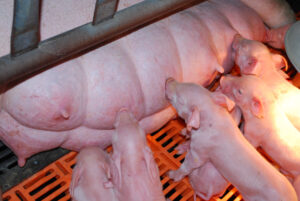
The main goal of any sow farm is to maintain healthy sows that can farrow and wean healthy, high-performing piglets. Healthy piglets need to be fed well from the start to reach their highest potential and provide the greatest ROI for the farm. So, if all their nutrition comes from the sow, it makes sense that the key to a thriving nursery is to start with sows that provide well for their piglets.
Sows can only provide as good of colostrum and milk as the feed they take in. So understanding your sow diet is vital for raising quality pigs.
Three things to consider when feeding lactating sows:
1. Feed management
Feed management is a vital part of feeding sows to reach their fullest potential during lactation. A sow can’t eat what’s not there, so keeping fresh, dry feed in front of her is the first piece of the puzzle in maintaining healthy sows. Fresh is the most important word there. Feed spoilage can occur, especially in the heat of the summer months, so producers should monitor and clean out feeders, if needed, at least once a day.
During lactation, sows use a lot of energy to keep their piglets well-fed, so a goal is to get the sow to eat as much as she can. Everything that she takes in is going to milk production. However, if feed intake is limited, she’ll still produce milk. That energy is just coming directly off her back – causing her to lose too much body condition and impacting her ability to breed back. Keeping sows in ideal body condition throughout their reproductive cycles means healthier animals with fewer health issues and overall better production.
2. Energy
Not only are we feeding sows in lactation ad libitum, but we are also trying to provide them with the most energy-rich diet we can. The best way to add energy is in the form of fat. In lactation, any energy improvements we can make go directly into the sow’s milk and to the litter – helping them gain weight faster. Higher quality milk means higher quality pigs.
Another way we can increase energy in the diet is by running a net energy diet. Here’s a quick way to think about it:
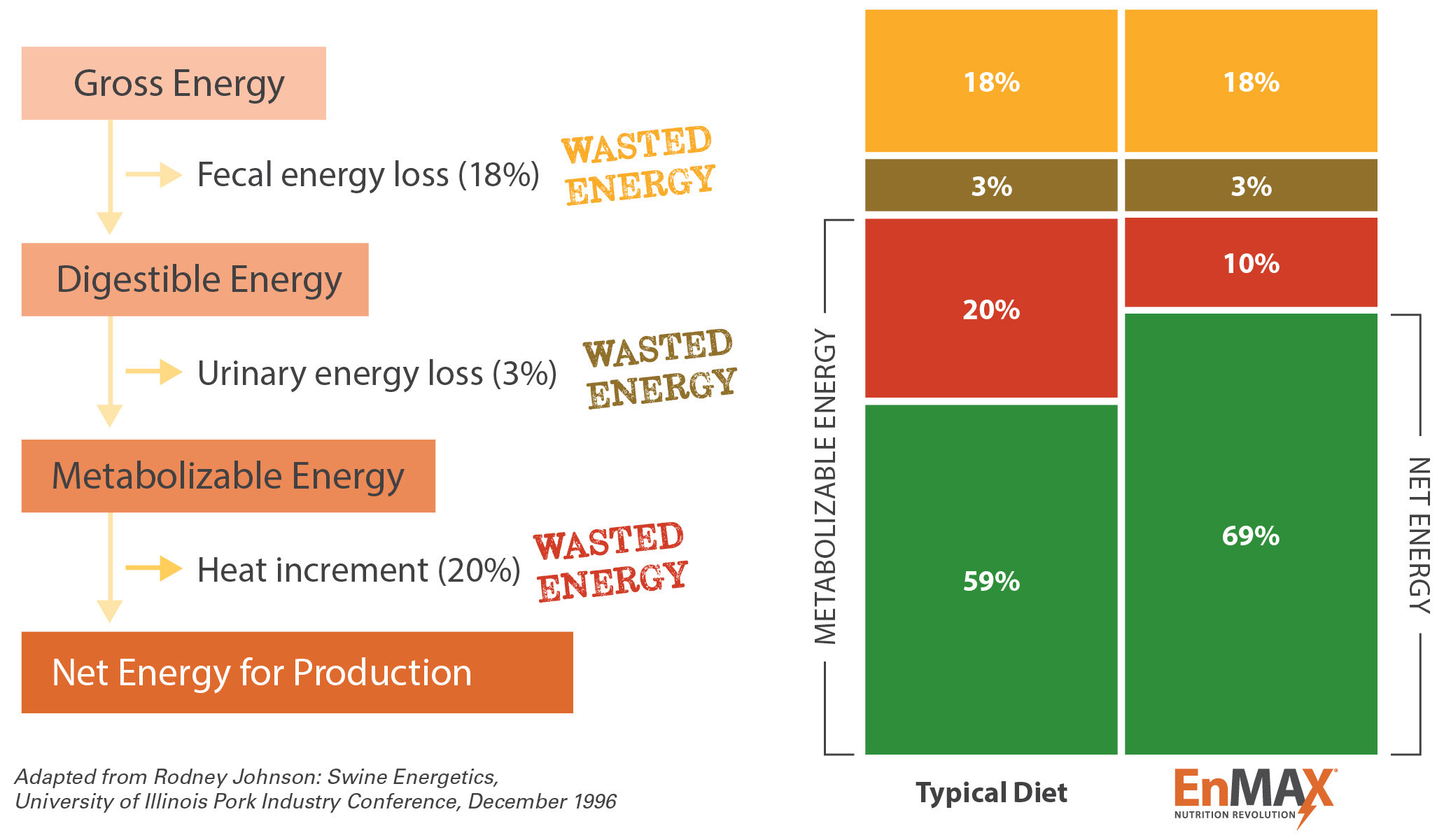
Start with gross energy. That’s the total amount of energy in the diet.
Then, consider the digestible energy. That’s the actual energy minus the energy lost through feces.
Next, evaluate what’s lost through urine and gas – about 3%.
What’s left is the metabolizable energy.
Once we understand metabolizable energy, we consider our actual energy source. While corn and soybean energy are very similar on a metabolizable basis, the way they react in the body can be different. The added protein in a soybean energy source takes a lot of energy to digest, leading to more energy lost in digestion in the form of heat.
So, in sow diet formulations, when we use net energy formulation, we reduce soy meal and use more corn, so the pigs are less hot, stay on their feed and put all their energy into lactation.
3. Feed intake
The third piece of the puzzle is feed intake. If you’re offering fresh, quality feed, the hope is that the sow will want to eat. But another important thing to know is what your sow is actually eating. Many producers will use the standard number of 15 lbs. a day when thinking through that decision process. However, it is essential to use as much actual data as possible to find out what your sows are eating and adjust as needed.
An easy way to get a close number is to look at the amount of feed delivered to the farm and the number of days it takes to go through it. It is essential that producers work with their nutritionist to ensure that the amount of amino acids the sows are getting is adequate for the amount of feed they’re taking in. Many times lysine may also need to be increased or decreased as well. From a financial and a sow health standpoint, the key is to ensure that every bit of nutrient or energy the sow is taking in is balanced and used efficiently to help your farm operate at peak performance levels.
Ralco’s Regano® EX is an essential oil-based product that helps on all of these fronts. It has been seen to increase sow feed intake and is a natural yeast and mold inhibitor that helps keep feed fresher for longer.
How Ralco can help save more piglets
Once piglets are born, try Ralco’s fast-acting natural oral drench that gets baby pigs up and eating quickly by stimulating appetite and supporting a healthy immune function.