
• Skip to main content
  • Skip to header right navigation
  • Skip to site footer
  • Careers
  • Contact Us
Logo for Ralco featuring a stylized green letter "R" with a leaf inside a yellow circle, next to the text "RALCO Nature Elevated by Science" in green letters.

Ralco Agriculture

  • Home
  • About
    • History
    • News
    • Sustainability
  • Our Science
    • Microfused® Essential Oils
    • Actifibe®
    • Microbial Catalyst®
  • Products
        • All Products
        • Swine
          • Nursery / Grow-Finish Health
          • Gestation / Lactation Health
          • Nursery Nutrition
          • Grow-Finish Nutrition
          • Specific Health Challenges
        • Poultry
        • Beef
          • Cow/Calf Health
          • Cow/Calf Nutrition
          • Feedlot Health
          • Feedlot Nutrition
        • Dairy
          • Calf
          • Cow
        • Crops & Forage
          • Crops
          • Forage
        • More Solutions
          • Aquaculture
          • Equine
          • Feed Mill
          • Organic
          • Show Animals
          • Small Ruminants
  • Resources
    • FAQs
    • Videos
    • Podcast
    • Ralco Reader Blog
  • Shop
  • Careers
  • Contact Us
Search Search
Search
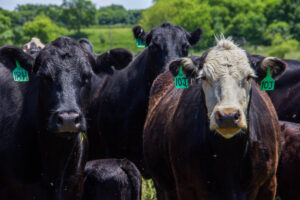
A group of black and brown cows with green ear tags stand closely together in a grassy field with trees in the background. One cow has a white face, and flies are visible around them.

5 Things to Know About Grass Tetany in Cattle

February 25, 2022 | Beef

As spring arrives and fresh pasture becomes available, it’s time to consider an important question: could your cattle be at risk for grass tetany? Here’s what you need to know to help protect your herd this season.

What is Grass Tetany in Cattle?

Grass tetany is a condition caused by low magnesium levels in a cow’s blood, and it’s especially common in the spring. This issue arises when cattle graze on young, lush grasses high in potassium. Excess potassium in these grasses blocks the absorption of magnesium, leading to dangerously low magnesium levels in your cattle.

To help prevent grass tetany, make sure your cattle have easy access to magnesium-rich mineral supplements during the spring grazing season.

5 Important Facts About Grass Tetany in Cattle

Understanding these five key points can help you protect your cattle from grass tetany this spring.

1. Cool-Season Grasses Increase Grass Tetany Risk

Certain grasses can put your cattle at risk for grass tetany. Cool-season grasses—like crested wheatgrass, bromegrass, bluegrass and timothy grass—are particularly high in potassium, which limits magnesium absorption and increases the chance of grass tetany.

Cereal grasses like wheat grass, rye and oats can also contribute to tetany. In Texas and Oklahoma, “wheat pasture poisoning” is a form of tetany caused by low magnesium and calcium levels in cattle grazing on high-potassium wheat grasses.

If your pastures are fertilized with nitrogen and potassium, be cautious, as these can further reduce magnesium availability.

Experts recommend allowing grasses to grow to 8-10 inches before grazing, as potassium levels decrease as grasses mature. It’s a simple yet effective way to protect your herd.

2. Lactating Cows Are Most at Risk

Grass tetany is particularly dangerous for older lactating cows and those in late pregnancy. These cows already have lower magnesium reserves, and lactation or gestation further increases the magnesium deficit. Monitor these cows closely and provide them with high-magnesium mineral supplements to reduce the risk of tetany.

3. Grass Tetany Can Be Fatal

Grass tetany is a silent threat that can be fatal if left untreated. Often, the first sign of tetany is finding a deceased animal, but other symptoms may include excitability, muscle twitching, lack of coordination, convulsions, excessive salivation and coma.

Cool, cloudy days between 40-60°F can increase the likelihood of symptoms, so watch your herd closely in these conditions.

4. Salt Plays a Role in Preventing Grass Tetany

Studies from the 1930s showed that sodium (salt) plays a role in magnesium absorption in cattle. Sodium is essential for magnesium absorption in the rumen, but a sudden freeze or frost can reduce sodium levels in forage. For best results, provide free-choice salt in each pasture during the spring.

However, plain salt blocks aren’t enough—cattle won’t consume the necessary amount of salt from a block alone. Opt for a mineral mix with high salt and readily available magnesium to prevent grass tetany effectively.

5. Treat Grass Tetany with Magnesium-Calcium Injections; Prevent with High-Quality Mineral Supplements

If you suspect grass tetany, consult your veterinarian immediately. Treatment usually involves an IV injection of magnesium and calcium and a mineral supplement with high magnesium (10%) and calcium (15-20%) levels.

To prevent grass tetany, provide a mineral supplement with highly available magnesium, calcium and salt. Aim for 2-4 ounces of mineral supplement per cow per day. Even if your forage has adequate magnesium levels, a mineral supplement is still recommended, as the magnesium in pasture may not always be accessible to cattle.

Starting a mineral program in February or March allows cattle to build up mineral reserves, helping them avoid grass tetany when spring grazing begins.

Prevent Grass Tetany Before Spring Grazing Starts

Before turning your cows out to graze on fresh spring grass, make sure they’re getting enough magnesium and calcium. This proactive step can prevent the risk of grass tetany in your herd.

To learn more about grass tetany prevention or to find the best mineral supplements for your herd, give us a call at 507-337-6916 or email us at RuminantHelp@RalcoAgriculture.com.
Rumatec Mineral Nutrition Logo

Rumatec – Cow/Calf Mineral

The Rumatec line of cow/calf mineral supplements provides the needed nutrients commonly deficient in forages to help ensure optimum performance and reproductive efficiency.

Learn More

Share this post

Sidebar

Categories

  • News
  • Beef
  • Dairy
  • Poultry
  • Swine

Archives

  • July 2026
  • June 2026
  • May 2026
  • February 2026
  • January 2026
  • December 2025
  • November 2025
  • October 2025
  • September 2025
  • August 2025
  • July 2025
  • June 2025
  • May 2025
  • April 2025
  • March 2025
  • February 2025
  • January 2025
  • December 2024
  • November 2024
  • October 2024
  • August 2024
  • June 2024
  • May 2024
  • March 2024
  • February 2024
  • January 2024
  • December 2023
  • September 2023
  • August 2023
  • July 2023
  • June 2023
  • March 2023
  • February 2023
  • January 2023
  • December 2022
  • November 2022
  • October 2022
  • August 2022
  • July 2022
  • June 2022
  • May 2022
  • April 2022
  • March 2022
  • February 2022
  • December 2021
  • August 2021
  • July 2021
  • June 2021
  • April 2021
  • March 2021
  • January 2021
  • December 2020
  • October 2020
  • August 2020
  • July 2020
  • June 2020
  • May 2020
  • April 2020
  • March 2020
  • February 2020
  • December 2019
  • October 2019
  • July 2019
  • June 2019
  • May 2019
  • April 2019
  • February 2019
  • June 2018
  • March 2018
  • February 2018
  • December 2017
  • August 2017
  • May 2017
  • March 2017
  • December 2016
  • November 2016
  • October 2016
  • August 2016
  • July 2016
  • June 2016
  • January 2016
  • December 2015

Categories

  • News
  • Beef
  • Dairy
  • Poultry
  • Swine

Let’s Tackle Your Toughest Challenge

If there’s a problem holding your operation back, we’re here to help you solve it. If you’re ready for products that bring together nature and science, let’s talk!

Ralco News

Holstein dairy calf in a fenced in hutch

Heat Stress in Dairy Calves Starts Before You See It

Heat stress is usually talked about in terms of the milking herd. Lower dry matter intake, reduced …
Read moreHeat Stress in Dairy Calves Starts Before You See It
Two white broiler chickens stand close to a water dispenser; one chicken drinks from a red nozzle above, while the other looks on with its beak slightly open. The background shows more chickens out of focus.

How to Use Poultry Production Data to Make Better Flock Decisions

Production data is one of the most powerful tools in commercial poultry operations, but the biggest …
Read moreHow to Use Poultry Production Data to Make Better Flock Decisions
A group of black and white dairy cows stand in a circular milking parlor, attached to milking machines, inside a bright, modern barn.

Mastitis in Dairy Cows and Heifers: How to Manage Risk Before Production Loss

Mastitis remains one of the most costly and complex diseases in dairy production. The National …
Read moreMastitis in Dairy Cows and Heifers: How to Manage Risk Before Production Loss
Ralco logo with a green vertical bar and a leaf inside a yellow circle, next to the word "RALCO" in white, and the tagline "Nature Elevated by Science" below.
Four faded certification logos in a row, including HALAL, RMPP, GMP+, and FAMIQS, on a light background. Text and images within the seals are barely visible.

Subscribe for news and updates

Home
About
Our Science
Shop
Resources
Careers
Contact Us
Call 1 (800) 533-5306

  • Facebook
  • Instagram
  • YouTube
  • LinkedIn

Copyright © 2026 · Ralco Agriculture · All Rights Reserved · Privacy Policy

We use cookies to enhance your browsing experience, serve personalized ads or content, and analyze our traffic. By accepting, you agree to our use of such cookies. Privacy Policy