
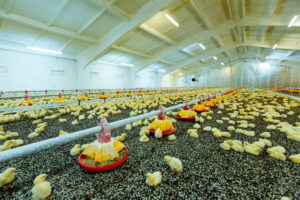
The period between when broilers go to market and when the next flock comes into the barn is referred to as downtime. However, this is far from a period of inactivity as managing a broiler flock does not begin when the first chick is placed but instead right after the previous flock ends.
Fixing feeders, flushing water lines and checking fan belts are all important parts of preparing to receive chicks, but few measures can affect an incoming flock as much as litter management.
Properly managed litter allows producers to provide a flock with adequate bedding materials that can absorb water, dilute fecal material and cushion birds from the dirt or concrete floor below.
Broiler litter in the United States is often reused over multiple flocks due to challenges and costs associated with acquiring bedding material and litter disposal. These challenges vary by region and result in multiple methods of litter management that make bedding reusable from three flocks to three years. Whether producers are partially cleaning out houses or windrowing, litter management is critical to ensure pathogens, parasites and other diseases do not carry over from one flock to the next.
Care must be taken with reused litter to ensure optimal performance of the next flock. Areas of focus include litter condition, litter moisture, ammonia levels and litter treatments.
Monitor Poultry Litter Condition
Between flocks, it is helpful to evaluate the condition of litter to determine the effect your current management strategy had on the litter.
If litter is too wet, clumpy, crusted or full of insects – litter must be de-caked, tilled and windrowed to return it to a usable consistency. Interventions for darkling beetles or other insects should also occur.
When animals press into high moisture litter, it can become caked. De-caking and tilling are the processes of breaking up litter into smaller chunks to return it to its original form to reduce pathogens and aerate litter, or release trapped ammonia. Housekeeping machines or de-caking machines help improve the efficiency of this process.
Windrowing is similar to composting. By pushing litter into piles, producers allow bacteria to undergo their natural processes and generate heat. This heat helps destroy pathogenic bacteria and harmful components in litter between flocks.
Darkling beetles, or lesser mealworms, are high-cost bugs to the poultry industry. Darkling beetles can be a source of disease transmission. Most commonly, Salmonella, E. coli, Marek’s Disease, Bursal Disease, Newcastle Disease, Clostridium and numerous other diseases.
Before a new flock is added to the house, insecticides should be used to control beetles and insects.
Control Moisture
Moisture control within a house is a significant contributor to litter quality. Ensuring all drinkers and any foggers lines are working as intended is critical to monitoring the moisture input of a house.
Dietary factors such as salt content may also affect litter moisture. Salt causes chickens to consume excess water and increases the moisture of litter.
Although excessive moisture may lead to a deterioration in litter quality or increases in ammonia, litter that is too dry may become dusty and cause respiratory challenges or interfere with cocci vaccine cycling. If litter is too dry, coccidiosis vaccines may not cycle effectively. If litter is too wet, there may be too much challenge for the birds. Simply put, improper litter management can lower the effectiveness of vaccines.
Ideally, moisture levels should be 20-25%. To test the moisture level of your litter, try the squeeze test. Pick up a handful of litter and squeeze it. Your litter should slightly clump but not form into a tight ball. If your litter completely breaks apart – it’s too dry. If it forms into a ball and doesn’t fall apart – it’s too wet.
Reduce Ammonia Levels
Chickens excrete nitrogen in their manure in the form of urea and uric acid. As these droppings mix into the bedding, they become a component of litter. This natural nitrogen excretion is part of why used litter is often applied to crops as fertilizer.
However, this nitrogen can also become ammonia when combined with moisture, bacteria and heat.
Ammonia is a volatile compound that can be released from litter as a gas. Unfortunately, this gas can irritate the birds and ultimately lead to poor performance or, in extreme cases, blindness and severe respiratory conditions.
Ammonia levels can be impacted by a variety of factors, but especially moisture level and litter condition. Excess moisture is a primary factor of ammonia emissions. Additionally, litter management strategies such as de-caking, tilling or windrowing (and their later spread in the barn) can lead to periods of increased ammonia release from litter.
Producers need to conduct these management strategies at least four days before placement so that the excess ammonia can be vented out of the house.
Chickens are sensitive to ammonia, as are their human caretakers. High ammonia levels can cause burning eyes and heightened health risks to humans as well.
Producers who experience high ammonia levels in poultry houses may consider increasing minimum ventilation rates to 20% or more. However, this is an expensive solution, especially in cooler months. Other alternatives include litter treatments that reduce ammonia production or help mitigate ammonia release. These include products that acidify litter, bind ammonia or reduce litter moisture.
Add a Litter Treatment
Litter amendments and treatments can help manage moisture and ammonia levels to protect birds and extend the life of litter.
Ralco’s Essential Dry™ XP is a natural litter treatment used to neutralize ammonia and enhance the overall litter and air quality in poultry houses.
Essential Dry XP contains yucca schidigera, patented essential oils and diatomaceous earth to address three areas of litter ammonia formation uniquely.
Yucca schidigera helps reduce ammonia odor and prevent harmful gases from harming birds.
Essential oils have powerful antimicrobial and antibacterial properties to help reduce pathogen growth.
Diatomaceous earth also helps neutralize ammonia, absorb moisture, bind mold and repel insects.
Together, these components help producers manage moisture and ammonia levels and improve bird performance.
To learn more about litter management and Essential Dry XP, contact Ralco’s poultry nutritionist Dr. Tim Broderick at 1 (800) 533-5306 or email us at info@ralcoagriculture.com.
References:
Ritz, C. W., Fairchild, B. D., Lacy, M. P. (2017, August). Litter Quality and Broiler Performance – UGA. University of Georgia Extension. Retrieved October 4, 2022
Tabler, T, Windrow Composting Broiler Litter Between Flocks. Mississippi State University Extension Service. Retrieved October 5, 2022
Auburn University. How to Control Rats, Mice and Darkling Beetles. Auburn University, in cooperation with the U.S. Poultry Egg Association. Retrieved October 5, 2022