
• Skip to main content
  • Skip to header right navigation
  • Skip to site footer
  • Careers
  • Contact Us
Logo for Ralco featuring a stylized green letter "R" with a leaf inside a yellow circle, next to the text "RALCO Nature Elevated by Science" in green letters.

Ralco Agriculture

  • Home
  • About
    • History
    • News
    • Sustainability
  • Our Science
    • Microfused® Essential Oils
    • Actifibe®
    • Microbial Catalyst®
  • Products
        • All Products
        • Swine
          • Nursery / Grow-Finish Health
          • Gestation / Lactation Health
          • Nursery Nutrition
          • Grow-Finish Nutrition
          • Specific Health Challenges
        • Poultry
        • Beef
          • Cow/Calf Health
          • Cow/Calf Nutrition
          • Feedlot Health
          • Feedlot Nutrition
        • Dairy
          • Calf
          • Cow
        • Crops & Forage
          • Crops
          • Forage
        • More Solutions
          • Aquaculture
          • Equine
          • Feed Mill
          • Organic
          • Show Animals
          • Small Ruminants
  • Resources
    • FAQs
    • Videos
    • Podcast
    • Ralco Reader Blog
  • Shop
  • Careers
  • Contact Us
Search Search
Search
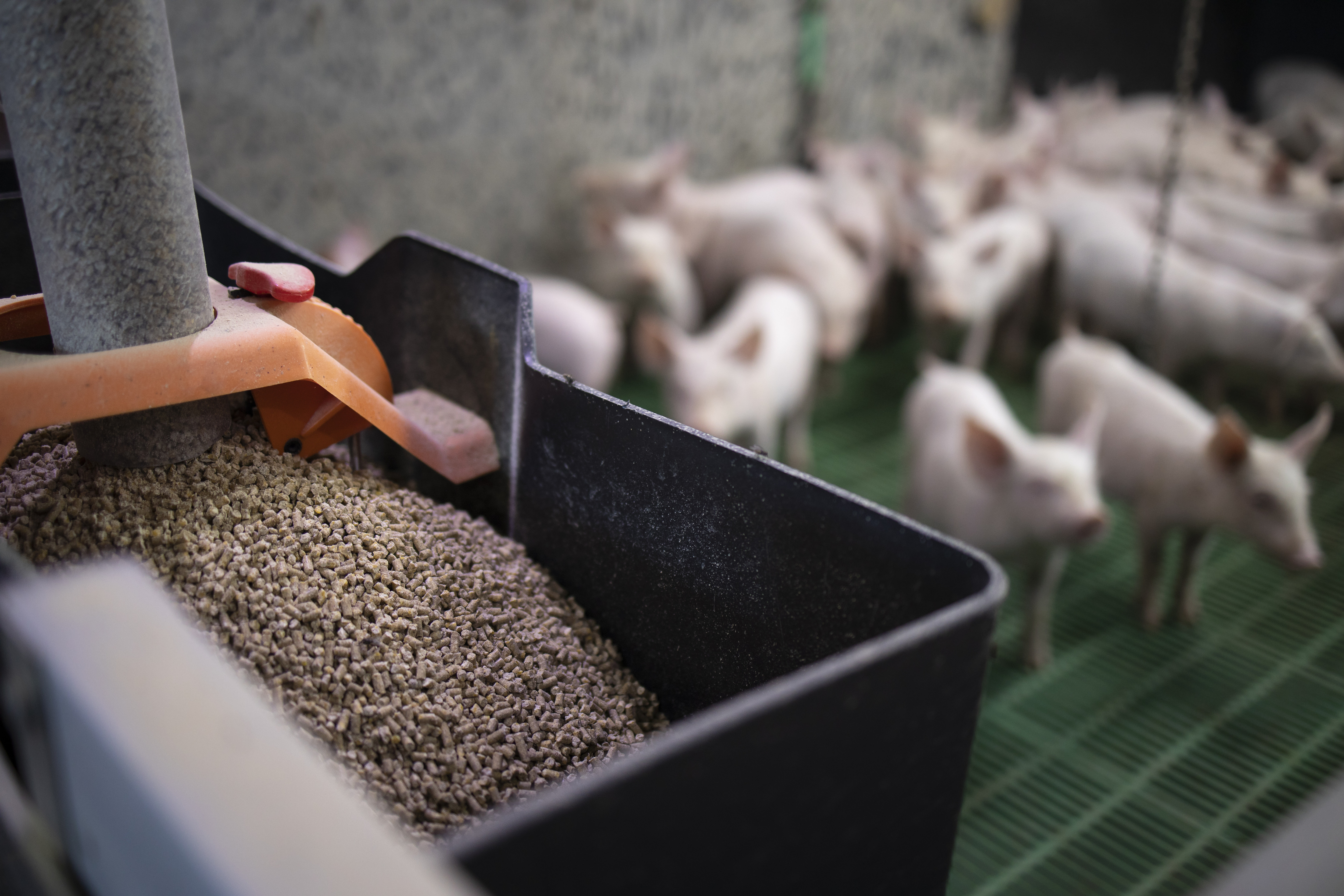
A close-up of an automatic feeder filled with pellet feed in the foreground, with several piglets standing on a green slatted floor in the blurry background inside a livestock facility.

How Mill Capabilities Can Impact Your Nutritional Plan

March 4, 2022 | Swine

Shelly Tiede, Senior Swine Nutritionist

Not all feed mills are created equal. Knowing your mill’s capabilities and restrictions can help you ensure that what is in your plan is actually getting to your pigs.
How Mill Capabilities Can Impact Your Nutritional Plan

Where to Start With Your Swine Nutrition Plan

We generally ask a few questions to understand your starting point.

1. What are your mill capabilities?

If your mill adds your vitamins and trace minerals (VTM) by hand to a base mix, it may be better to go to a base mix (only additions needed are corn and soybean meal) so you can have a more accurate blend for your herd. This could also lead to time and labor savings. Knowing what your mill can do makes it easier to create a diet plan that can be properly executed.

2. How many phases can it feed?

If the mill cannot deliver the minimum quantity of feed needed for each phase, what solutions—such as pellets or budget refinements —can we use to feed the herd.

For a diet to work, it has to be executable for the operation. Raising pigs today is a science, so any variation in the feed has to be considered, as moving too fast or too slow through the budget can lead to variation in pigs.

Identifying Your Needs—from Nursery to Finish

Getting pigs off to a healthy start is vital for the success of the animal. In a nursery environment, scours is often a tell-tale sign of a lack of nutrition. Overall variability across the nursery or a large number of fall behinds can also be a sign of a feeding issue.

The key is to look at overall culls or even variability in a finishing operation. While larger pigs will not see any detrimental issues from getting a bit of extra nutrition, smaller and medium-sized pigs can struggle. If they are not fed correctly and lack some of the nutritional essentials, a producer will often see tail biting or ear necrosis—a result of insufficient nutrients.

The mill’s ability to manufacture the balanced diet will be vital for feeding your pigs successfully. All the science and research in the world will not get you across the finish line if the plan cannot be put into place.

Ralco understands that every operation has its own unique opportunities and challenges. Let us show you the Ralco difference. Contact us to get started today!

Share this post

Sidebar

Categories

  • News
  • Beef
  • Dairy
  • Poultry
  • Swine

Archives

  • July 2026
  • June 2026
  • May 2026
  • February 2026
  • January 2026
  • December 2025
  • November 2025
  • October 2025
  • September 2025
  • August 2025
  • July 2025
  • June 2025
  • May 2025
  • April 2025
  • March 2025
  • February 2025
  • January 2025
  • December 2024
  • November 2024
  • October 2024
  • August 2024
  • June 2024
  • May 2024
  • March 2024
  • February 2024
  • January 2024
  • December 2023
  • September 2023
  • August 2023
  • July 2023
  • June 2023
  • March 2023
  • February 2023
  • January 2023
  • December 2022
  • November 2022
  • October 2022
  • August 2022
  • July 2022
  • June 2022
  • May 2022
  • April 2022
  • March 2022
  • February 2022
  • December 2021
  • August 2021
  • July 2021
  • June 2021
  • April 2021
  • March 2021
  • January 2021
  • December 2020
  • October 2020
  • August 2020
  • July 2020
  • June 2020
  • May 2020
  • April 2020
  • March 2020
  • February 2020
  • December 2019
  • October 2019
  • July 2019
  • June 2019
  • May 2019
  • April 2019
  • February 2019
  • June 2018
  • March 2018
  • February 2018
  • December 2017
  • August 2017
  • May 2017
  • March 2017
  • December 2016
  • November 2016
  • October 2016
  • August 2016
  • July 2016
  • June 2016
  • January 2016
  • December 2015

Categories

  • News
  • Beef
  • Dairy
  • Poultry
  • Swine

Let’s Tackle Your Toughest Challenge

If there’s a problem holding your operation back, we’re here to help you solve it. If you’re ready for products that bring together nature and science, let’s talk!

Ralco News

Holstein dairy calf in a fenced in hutch

Heat Stress in Dairy Calves Starts Before You See It

Heat stress is usually talked about in terms of the milking herd. Lower dry matter intake, reduced …
Read moreHeat Stress in Dairy Calves Starts Before You See It
Two white broiler chickens stand close to a water dispenser; one chicken drinks from a red nozzle above, while the other looks on with its beak slightly open. The background shows more chickens out of focus.

How to Use Poultry Production Data to Make Better Flock Decisions

Production data is one of the most powerful tools in commercial poultry operations, but the biggest …
Read moreHow to Use Poultry Production Data to Make Better Flock Decisions
A group of black and white dairy cows stand in a circular milking parlor, attached to milking machines, inside a bright, modern barn.

Mastitis in Dairy Cows and Heifers: How to Manage Risk Before Production Loss

Mastitis remains one of the most costly and complex diseases in dairy production. The National …
Read moreMastitis in Dairy Cows and Heifers: How to Manage Risk Before Production Loss
Ralco logo with a green vertical bar and a leaf inside a yellow circle, next to the word "RALCO" in white, and the tagline "Nature Elevated by Science" below.
Four faded certification logos in a row, including HALAL, RMPP, GMP+, and FAMIQS, on a light background. Text and images within the seals are barely visible.

Subscribe for news and updates

Home
About
Our Science
Shop
Resources
Careers
Contact Us
Call 1 (800) 533-5306

  • Facebook
  • Instagram
  • YouTube
  • LinkedIn

Copyright © 2026 · Ralco Agriculture · All Rights Reserved · Privacy Policy

We use cookies to enhance your browsing experience, serve personalized ads or content, and analyze our traffic. By accepting, you agree to our use of such cookies. Privacy Policy