
• Skip to main content
  • Skip to header right navigation
  • Skip to site footer
  • Careers
  • Contact Us
Logo for Ralco featuring a stylized green letter "R" with a leaf inside a yellow circle, next to the text "RALCO Nature Elevated by Science" in green letters.

Ralco Agriculture

  • Home
  • About
    • History
    • News
    • Sustainability
  • Our Science
    • Microfused® Essential Oils
    • Actifibe®
    • Microbial Catalyst®
  • Products
        • All Products
        • Swine
          • Nursery / Grow-Finish Health
          • Gestation / Lactation Health
          • Nursery Nutrition
          • Grow-Finish Nutrition
          • Specific Health Challenges
        • Poultry
        • Beef
          • Cow/Calf Health
          • Cow/Calf Nutrition
          • Feedlot Health
          • Feedlot Nutrition
        • Dairy
          • Calf
          • Cow
        • Crops & Forage
          • Crops
          • Forage
        • More Solutions
          • Aquaculture
          • Equine
          • Feed Mill
          • Organic
          • Show Animals
          • Small Ruminants
  • Resources
    • FAQs
    • Videos
    • Podcast
    • Ralco Reader Blog
  • Shop
  • Careers
  • Contact Us
Search Search
Search
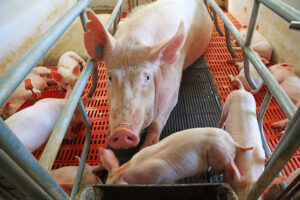
A mother pig lies in a metal enclosure on a slatted floor, surrounded by several piglets nursing and moving around her. The scene is inside a brightly lit indoor farm setting.

Lactation Feed: Keeping an Eye on the Next Litter

November 18, 2022 | Swine

As long as the pigs are healthy and weaning, it’s easy to forget that how we feed sows during lactation can impact their next reproductive cycle as well.

Feed intake is a vital part of milk production and keeping a sow in ideal body condition. The goal is to ensure she’s getting enough feed so she doesn’t lose body condition to milk production, which can impact her current litter and her potential to breed back.

Energy is essential for sow success, but studies have shown that different energy sources can affect reproductive health differently. Diet composition also plays a critical role in how well sows can breed back after lactation. Composition can also have an impact on long-term performance.

What diet composition means for the next litter

There are two primary ways to add energy to swine diets: through fat or starch. Supplemental fat sources are very energy dense. Adding supplemental fat to lactating sow diets can certainly increase the caloric density of the diet and help to maintain sow body condition. However, it doesn’t have any direct effect on the reproductive hormones of the sow.

In contrast, starch energy in corn has been shown to lead to a higher estrus cycle in sows. Sows on a starch energy source diet tend to breed back immediately, produce more ovulated eggs and have better embryo survivability. These improvements make it worthwhile to utilize technologies such as crystalline amino acids and enzymes in the lactating sow diet, resulting in a greater corn inclusion rate and more energy from starch.

One of the best ways to get the right balance for your sow diets is to work with a nutritionist to create a diet that works for your farm. EnMAX® Nutrition is Ralco’s solution for developing net energy diets that can help you ensure that none of your nutritional budget is wasted. These diets help sows reach production goals and focus energy on lactation. The nutritional program maximizes productive days and increases sow longevity.

How Ralco can help save more piglets

Once piglets are born, try Ralco’s fast-acting natural oral drench that gets baby pigs up and eating quickly by stimulating appetite and supporting a healthy immune function.

Sign up for a free sample of First PulseⓇ D now!

Share this post

Sidebar

Categories

  • News
  • Beef
  • Dairy
  • Poultry
  • Swine

Let’s Tackle Your Toughest Challenge

If there’s a problem holding your operation back, we’re here to help you solve it. If you’re ready for products that bring together nature and science, let’s talk!

Ralco News

Holstein dairy calf in a fenced in hutch

Heat Stress in Dairy Calves Starts Before You See It

Heat stress is usually talked about in terms of the milking herd. Lower dry matter intake, reduced …
Read moreHeat Stress in Dairy Calves Starts Before You See It
Two white broiler chickens stand close to a water dispenser; one chicken drinks from a red nozzle above, while the other looks on with its beak slightly open. The background shows more chickens out of focus.

How to Use Poultry Production Data to Make Better Flock Decisions

Production data is one of the most powerful tools in commercial poultry operations, but the biggest …
Read moreHow to Use Poultry Production Data to Make Better Flock Decisions
A group of black and white dairy cows stand in a circular milking parlor, attached to milking machines, inside a bright, modern barn.

Mastitis in Dairy Cows and Heifers: How to Manage Risk Before Production Loss

Mastitis remains one of the most costly and complex diseases in dairy production. The National …
Read moreMastitis in Dairy Cows and Heifers: How to Manage Risk Before Production Loss
Ralco logo with a green vertical bar and a leaf inside a yellow circle, next to the word "RALCO" in white, and the tagline "Nature Elevated by Science" below.
Four faded certification logos in a row, including HALAL, RMPP, GMP+, and FAMIQS, on a light background. Text and images within the seals are barely visible.

Subscribe for news and updates

Home
About
Our Science
Shop
Resources
Careers
Contact Us
Call 1 (800) 533-5306

  • Facebook
  • Instagram
  • YouTube
  • LinkedIn

Copyright © 2026 · Ralco Agriculture · All Rights Reserved · Privacy Policy

We use cookies to enhance your browsing experience, serve personalized ads or content, and analyze our traffic. By accepting, you agree to our use of such cookies. Privacy Policy