
• Skip to main content
  • Skip to header right navigation
  • Skip to site footer
  • Careers
  • Contact Us
Logo for Ralco featuring a stylized green letter "R" with a leaf inside a yellow circle, next to the text "RALCO Nature Elevated by Science" in green letters.

Ralco Agriculture

  • Home
  • About
    • History
    • News
    • Sustainability
  • Our Science
    • Microfused® Essential Oils
    • Actifibe®
    • Microbial Catalyst®
  • Products
        • All Products
        • Swine
          • Nursery / Grow-Finish Health
          • Gestation / Lactation Health
          • Nursery Nutrition
          • Grow-Finish Nutrition
          • Specific Health Challenges
        • Poultry
        • Beef
          • Cow/Calf Health
          • Cow/Calf Nutrition
          • Feedlot Health
          • Feedlot Nutrition
        • Dairy
          • Calf
          • Cow
        • Crops & Forage
          • Crops
          • Forage
        • More Solutions
          • Aquaculture
          • Equine
          • Feed Mill
          • Organic
          • Show Animals
          • Small Ruminants
  • Resources
    • FAQs
    • Videos
    • Podcast
    • Ralco Reader Blog
  • Shop
  • Careers
  • Contact Us
Search Search
Search
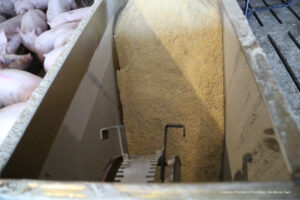
A close-up of a metal livestock feeder filled with grain, with pigs visible on the left side, ready to eat. The feeder has a gear mechanism at the bottom.

Maximize Profits with Effective Pig Feed Additives

May 24, 2024 | Swine

As the summer market quickly approaches, pig producers are looking for effective ways to maximize their profits. One key strategy is using specialized pig feed additives. These additives can play a crucial role in enhancing the growth and overall health of pigs, leading to better market performance and higher returns.

Understanding Feed Additives

Pig feed additives are supplements added to diets to boost growth, health and feed efficiency. While traditional feed additives often include antibiotics, there’s a growing shift towards more natural, non-antibiotic options. Modern feed additives are designed to enhance gut health and strengthen pigs’ immune systems, promoting growth without the risk of antibiotic resistance.

Here’s a closer look at some common types of feed additives:

  • Prebiotics and Probiotics: These beneficial bacteria and fibers promote a healthy gut flora, which is essential for nutrient absorption and overall health. Prebiotics provide food for good bacteria, while probiotics add more beneficial bacteria to the gut.

  • Acidifiers: These additives help lower the gut’s pH, inhibiting the growth of harmful bacteria.  In addition, acidifiers improve gastric enzyme activity which improves digestion for pigs.

  • Enzymes: Enzymes aid in the digestion of feed, ensuring that pigs can maximize the nutrients provided. By breaking down feed components more effectively, enzymes help pigs absorb more nutrients, promoting better growth.

  • Essential Oils: These natural extracts have various properties, including antimicrobial, antiviral, antifungal and antioxidant effects. They help manage diseases, support the immune system and improve gut health.

By incorporating these ingredients into the feed, producers can achieve healthier and more efficient growth in their pigs, ensuring better market performance and higher returns.

Real Results with Feed Additives

Research shows that the right pig feed additives can lead to significant improvements in pig performance. For instance, additives like ProsperEO™ have provided substantial benefits, including increased body weight, improved average daily gain and enhanced feed efficiency.

A field demonstration conducted with over 12,000 mixed-sex pigs across six finishing groups showed impressive results. Pigs were fed one of two dietary treatments: ProsperEO at a rate of 0.5 lbs./ton of finished feed or a control diet for the entire grow-finish period.

Here’s what the results showed:

  • Increased Body Weight: Pigs fed with ProsperEO showed an average increase of 6.9 lbs. per pig at market.

  • Improved Average Daily Gain (ADG): The average daily gain improved by 0.14 lbs.

  • Enhanced Feed Efficiency: Feed efficiency, measured as the feed-to-gain ratio (F:G), improved by 0.11.

  • Reduced Mortality and Culls: The use of ProsperEO resulted in a 1.2% reduction in mortality and culls.

  • Decreased Days on Feed: The time pigs spent on feed was reduced by five days.

  • Increased Return Over Feed Cost (ROFC): Producer experienced an increase of $3.56 in return over feed cost per pig.

  • High Return on Investment (ROI): The ROI for using ProsperEO at 0.5 lbs. per ton was 8.5:1.

The Science Behind ProsperEO

ProsperEO is a scientifically formulated feed additive that helps naturally boost pig health and growth. It leverages two key components to deliver its benefits: Microfused® Essential Oils and Actifibe® Prebiotic.

Patented Microfused Essential Oils naturally support gut health. By maintaining a healthy gut, pigs can better overcome challenges and maintain growth, especially during periods of stress.

Actifibe Prebiotic is specifically designed to feed beneficial bacteria throughout the entire gut. By fostering a healthy gut microbiome, Actifibe supports the pig’s immune system and overall gut health. A robust gut microbiome is essential for efficient digestion and nutrient absorption, leading to better growth rates.

Get a Free Swine Diet Review

If your feed program hasn’t been reviewed in the last year, you might be missing out on significant cost savings and growth opportunities. Take advantage of a free diet review from a Ralco swine nutritionist. This review can help you compare your current feed program with potential improvements, identify cost savings and boost your bottom line!

Email SwineHelp@ralcoagriculture.com or fill out the free diet review form to get started!

Share this post

Sidebar

Categories

  • News
  • Beef
  • Dairy
  • Poultry
  • Swine

Archives

  • July 2026
  • June 2026
  • May 2026
  • February 2026
  • January 2026
  • December 2025
  • November 2025
  • October 2025
  • September 2025
  • August 2025
  • July 2025
  • June 2025
  • May 2025
  • April 2025
  • March 2025
  • February 2025
  • January 2025
  • December 2024
  • November 2024
  • October 2024
  • August 2024
  • June 2024
  • May 2024
  • March 2024
  • February 2024
  • January 2024
  • December 2023
  • September 2023
  • August 2023
  • July 2023
  • June 2023
  • March 2023
  • February 2023
  • January 2023
  • December 2022
  • November 2022
  • October 2022
  • August 2022
  • July 2022
  • June 2022
  • May 2022
  • April 2022
  • March 2022
  • February 2022
  • December 2021
  • August 2021
  • July 2021
  • June 2021
  • April 2021
  • March 2021
  • January 2021
  • December 2020
  • October 2020
  • August 2020
  • July 2020
  • June 2020
  • May 2020
  • April 2020
  • March 2020
  • February 2020
  • December 2019
  • October 2019
  • July 2019
  • June 2019
  • May 2019
  • April 2019
  • February 2019
  • June 2018
  • March 2018
  • February 2018
  • December 2017
  • August 2017
  • May 2017
  • March 2017
  • December 2016
  • November 2016
  • October 2016
  • August 2016
  • July 2016
  • June 2016
  • January 2016
  • December 2015

Categories

  • News
  • Beef
  • Dairy
  • Poultry
  • Swine

Let’s Tackle Your Toughest Challenge

If there’s a problem holding your operation back, we’re here to help you solve it. If you’re ready for products that bring together nature and science, let’s talk!

Ralco News

Holstein dairy calf in a fenced in hutch

Heat Stress in Dairy Calves Starts Before You See It

Heat stress is usually talked about in terms of the milking herd. Lower dry matter intake, reduced …
Read moreHeat Stress in Dairy Calves Starts Before You See It
Two white broiler chickens stand close to a water dispenser; one chicken drinks from a red nozzle above, while the other looks on with its beak slightly open. The background shows more chickens out of focus.

How to Use Poultry Production Data to Make Better Flock Decisions

Production data is one of the most powerful tools in commercial poultry operations, but the biggest …
Read moreHow to Use Poultry Production Data to Make Better Flock Decisions
A group of black and white dairy cows stand in a circular milking parlor, attached to milking machines, inside a bright, modern barn.

Mastitis in Dairy Cows and Heifers: How to Manage Risk Before Production Loss

Mastitis remains one of the most costly and complex diseases in dairy production. The National …
Read moreMastitis in Dairy Cows and Heifers: How to Manage Risk Before Production Loss
Ralco logo with a green vertical bar and a leaf inside a yellow circle, next to the word "RALCO" in white, and the tagline "Nature Elevated by Science" below.
Four faded certification logos in a row, including HALAL, RMPP, GMP+, and FAMIQS, on a light background. Text and images within the seals are barely visible.

Subscribe for news and updates

Home
About
Our Science
Shop
Resources
Careers
Contact Us
Call 1 (800) 533-5306

  • Facebook
  • Instagram
  • YouTube
  • LinkedIn

Copyright © 2026 · Ralco Agriculture · All Rights Reserved · Privacy Policy

We use cookies to enhance your browsing experience, serve personalized ads or content, and analyze our traffic. By accepting, you agree to our use of such cookies. Privacy Policy