
• Skip to main content
  • Skip to header right navigation
  • Skip to site footer
  • Careers
  • Contact Us
Logo for Ralco featuring a stylized green letter "R" with a leaf inside a yellow circle, next to the text "RALCO Nature Elevated by Science" in green letters.

Ralco Agriculture

  • Home
  • About
    • History
    • News
    • Sustainability
  • Our Science
    • Microfused® Essential Oils
    • Actifibe®
    • Microbial Catalyst®
  • Products
        • All Products
        • Swine
          • Nursery / Grow-Finish Health
          • Gestation / Lactation Health
          • Nursery Nutrition
          • Grow-Finish Nutrition
          • Specific Health Challenges
        • Poultry
        • Beef
          • Cow/Calf Health
          • Cow/Calf Nutrition
          • Feedlot Health
          • Feedlot Nutrition
        • Dairy
          • Calf
          • Cow
        • Crops & Forage
          • Crops
          • Forage
        • More Solutions
          • Aquaculture
          • Equine
          • Feed Mill
          • Organic
          • Show Animals
          • Small Ruminants
  • Resources
    • FAQs
    • Videos
    • Podcast
    • Ralco Reader Blog
  • Shop
  • Careers
  • Contact Us
Search Search
Search
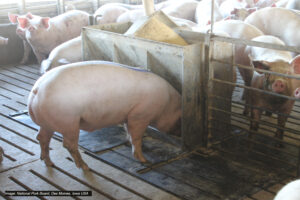
Several pigs stand in a pen, crowding around and eating from a large metal trough. The pen has metal bars and a slatted floor, with sunlight coming in from the side.

Why is Fat So Important in Swine Diets?

April 14, 2022 | Swine

Of the nutrition needed to build a pig’s diet—vitamins, minerals, protein, fat—the most energy-dense is fat. Most fat sources on the market have about two and a half times more energy than grain sources. That gives you an idea of the caloric density that fat provides. Therefore, any supplemental fat added to a swine diet will increase the overall dietary energy density of the diet.

As the pork industry focuses on lean tissue gain in pigs, they are equally as focused on increasing the market weights of pigs. As pigs grow to heavier weights, it should be done by adding lean gain, which is the most efficient gain composition. Achieving lean gain is dependent on nutrients, but predominantly energy and amino acids.

If energy is low, lean gain won’t be maximized—proving energy can be a weak link in the equation of an ideal swine diet. If we take the fat out of diets, there’s a potential that it’ll affect the gain in feed efficiency of those animals.

What’s the catch? Energy is typically the most expensive nutrient in a swine diet. So, wherever producers can get energy from economical sources, that is what they need to do. When fat prices are lower, it makes sense to use supplemental fat. But when fat prices are high, like in the current market, a producer needs to see where else they can get energy from in the diet.

Don’t Lose Sight of the Role Fat Plays in Gain and Feed Conversion

When evaluating producers’ swine diets, nutritionists should do an economic evaluation of what the appropriate energy level should be in producers’ diets for their pigs, based on the ingredients they have, the prices of those ingredients and the production situation they have at hand. This allows the producer to have a swine diet created specifically for their animal’s dietary needs and promotes a return over feed cost on those pigs. An economic evaluation of your swine diets would be a wise financial move with soaring fat prices.

Some swine producers may be feeding pigs from a fixed time standpoint, where they’re on a tight flow and pigs need to leave the finisher by a certain time. In that case, whatever they weigh on their scheduled load-out day is what they’re going to weigh for the market. The value of additional weight needs to be evaluated based on your marketing situation. The value of this extra weight determines what you can afford to pay for fat. Fat can be an important tool for those producers to get pigs the gain they need to maximize revenue on a fixed schedule.

Years ago, when genotypes of pigs used to get fatter towards the end of finishing, producers would reduce supplemental fat because the pigs were already getting fat at that point. Today, as swine genetics have changed and adapted for leaner growth, pigs will maintain that growth to the end. So we’ve gone the other way now, where we tend to keep supplemental fat in those diets until they get to market.

Want to make sure your swine diet meets your herd’s energy needs? Let our Ralco nutritionists measure how your energy sources are stacking up in your feed blends.

Contact usfor a confidential review of your diets to see how you can save money and increase your farm’s productivity. In exchange, we’ll provide you with a FREE cooler*.

Share this post

Sidebar

Categories

  • News
  • Beef
  • Dairy
  • Poultry
  • Swine

Archives

  • July 2026
  • June 2026
  • May 2026
  • February 2026
  • January 2026
  • December 2025
  • November 2025
  • October 2025
  • September 2025
  • August 2025
  • July 2025
  • June 2025
  • May 2025
  • April 2025
  • March 2025
  • February 2025
  • January 2025
  • December 2024
  • November 2024
  • October 2024
  • August 2024
  • June 2024
  • May 2024
  • March 2024
  • February 2024
  • January 2024
  • December 2023
  • September 2023
  • August 2023
  • July 2023
  • June 2023
  • March 2023
  • February 2023
  • January 2023
  • December 2022
  • November 2022
  • October 2022
  • August 2022
  • July 2022
  • June 2022
  • May 2022
  • April 2022
  • March 2022
  • February 2022
  • December 2021
  • August 2021
  • July 2021
  • June 2021
  • April 2021
  • March 2021
  • January 2021
  • December 2020
  • October 2020
  • August 2020
  • July 2020
  • June 2020
  • May 2020
  • April 2020
  • March 2020
  • February 2020
  • December 2019
  • October 2019
  • July 2019
  • June 2019
  • May 2019
  • April 2019
  • February 2019
  • June 2018
  • March 2018
  • February 2018
  • December 2017
  • August 2017
  • May 2017
  • March 2017
  • December 2016
  • November 2016
  • October 2016
  • August 2016
  • July 2016
  • June 2016
  • January 2016
  • December 2015

Categories

  • News
  • Beef
  • Dairy
  • Poultry
  • Swine

Let’s Tackle Your Toughest Challenge

If there’s a problem holding your operation back, we’re here to help you solve it. If you’re ready for products that bring together nature and science, let’s talk!

Ralco News

Holstein dairy calf in a fenced in hutch

Heat Stress in Dairy Calves Starts Before You See It

Heat stress is usually talked about in terms of the milking herd. Lower dry matter intake, reduced …
Read moreHeat Stress in Dairy Calves Starts Before You See It
Two white broiler chickens stand close to a water dispenser; one chicken drinks from a red nozzle above, while the other looks on with its beak slightly open. The background shows more chickens out of focus.

How to Use Poultry Production Data to Make Better Flock Decisions

Production data is one of the most powerful tools in commercial poultry operations, but the biggest …
Read moreHow to Use Poultry Production Data to Make Better Flock Decisions
A group of black and white dairy cows stand in a circular milking parlor, attached to milking machines, inside a bright, modern barn.

Mastitis in Dairy Cows and Heifers: How to Manage Risk Before Production Loss

Mastitis remains one of the most costly and complex diseases in dairy production. The National …
Read moreMastitis in Dairy Cows and Heifers: How to Manage Risk Before Production Loss
Ralco logo with a green vertical bar and a leaf inside a yellow circle, next to the word "RALCO" in white, and the tagline "Nature Elevated by Science" below.
Four faded certification logos in a row, including HALAL, RMPP, GMP+, and FAMIQS, on a light background. Text and images within the seals are barely visible.

Subscribe for news and updates

Home
About
Our Science
Shop
Resources
Careers
Contact Us
Call 1 (800) 533-5306

  • Facebook
  • Instagram
  • YouTube
  • LinkedIn

Copyright © 2026 · Ralco Agriculture · All Rights Reserved · Privacy Policy

We use cookies to enhance your browsing experience, serve personalized ads or content, and analyze our traffic. By accepting, you agree to our use of such cookies. Privacy Policy