
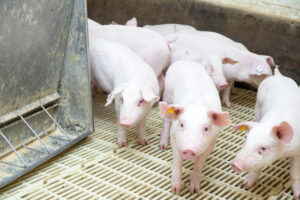
As pigs enter the nursery, the primary goal should be to get the proper nutrients into their guts. Up until this point, they’ve been on a liquid diet from the sow, and now we’re bringing them into the next stage of development, where they’ll be on their own and eating solid food. While some producers may have had their pigs creep feeding, the reality is that the amount of nutrients they get from creep feed is minimal.
They’re in a stage where they should grow fast, so getting them up and eating as quickly as possible is essential. Young pigs who go off feed will often see issues with their overall immune health, and their digestive system will shrink. As the gut shrinks, it’s unable to optimize digestion, and we have the potential for health issues and colonization of harmful bacteria.
Nursery Management and Diets Work in Tandem
In this case, management means doing anything to help get piglets to eat and drink. The first question to always ask is, “Are they drinking water?” If they aren’t drinking, they aren’t going to eat any food.
The next question is, “Can they eat/find the food”? Solid food is a new venture for any nursery pig, so making it accessible is important. Pigs are natural explorers, which is what makes mat feeding a great solution. However, mat feeding can create a lot of waste, so it isn’t a long-term solution. Giving them a gruel feeder is also an option because it makes the food easier to eat as they learn the process.
The big priority is watching the animals and doing whatever it takes to get them eating and drinking as soon as possible.
Understanding the Differences Between Simple and Complex Diets
As weaning age has increased over the years – from 14-17 days all the way to 21-25 days – many producers have found themselves looking for ways to reduce nursery feed costs. This has encouraged the idea that a simple diet is best. A simple diet is essentially just a corn and soy diet – a grain source, a protein source and a little fiber.
A simple diet makes sense later in the nursery, as the pig’s gut is more receptive to digestion. However, a simple diet doesn’t consider how much energy it takes to digest feed. A pig’s gut will start contracting when it’s not on feed, and the digestion difficulties of a simple diet will compound.
A young pig’s gut doesn’t have the enzymes necessary to digest a simple diet. Because of this, feeding a simple diet can wreak havoc on the gut – damaging the nutrient absorption capabilities and feed efficiency through production. It’s like giving solid food to a baby who is only ready to drink milk – it just doesn’t work in their digestive system yet.
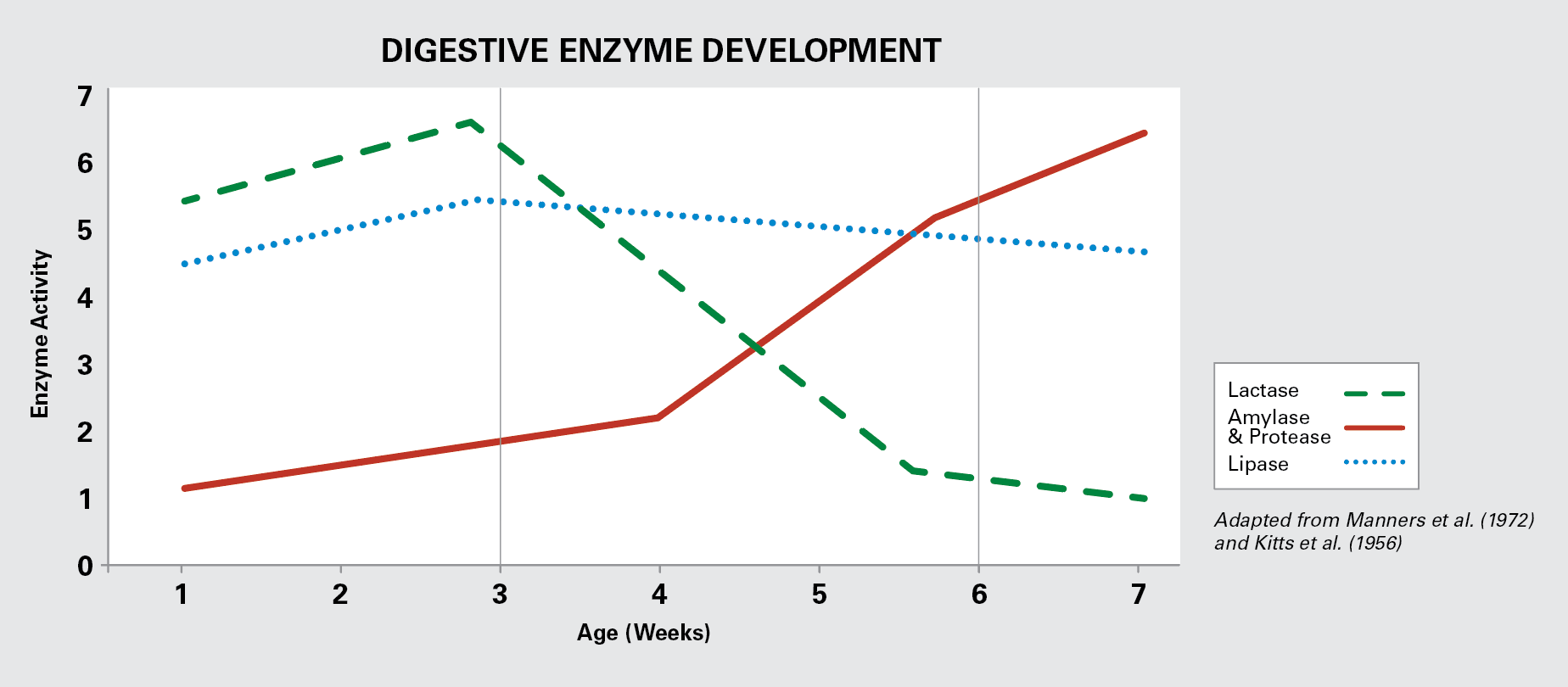
A complex diet is the better way to go in those first few days in the nursery because the immature digestive capacity can more easily digest its components. A complex diet limits the starches the animal intakes and replaces them with sugars, which are more palatable and easier to digest. A similar change is made on the protein side, replacing soy protein with a protein concentrate or other easily digestible source. These changes let the animal use fewer calories in the digestion process, allowing for a higher rate of gain.
The best way to develop a plan that optimizes a pig’s digestive health is to start with a complex diet, move to a semi-complex diet and end the nursery stay with a simple diet setup.
Selecting the Right Nursery Diet for Long-term Success
We understand the most concerning factor in a complex nursery diet is cost. While simple nursery diets are $300-$400 a ton, complex diets can cost upwards of $1,000 a ton.
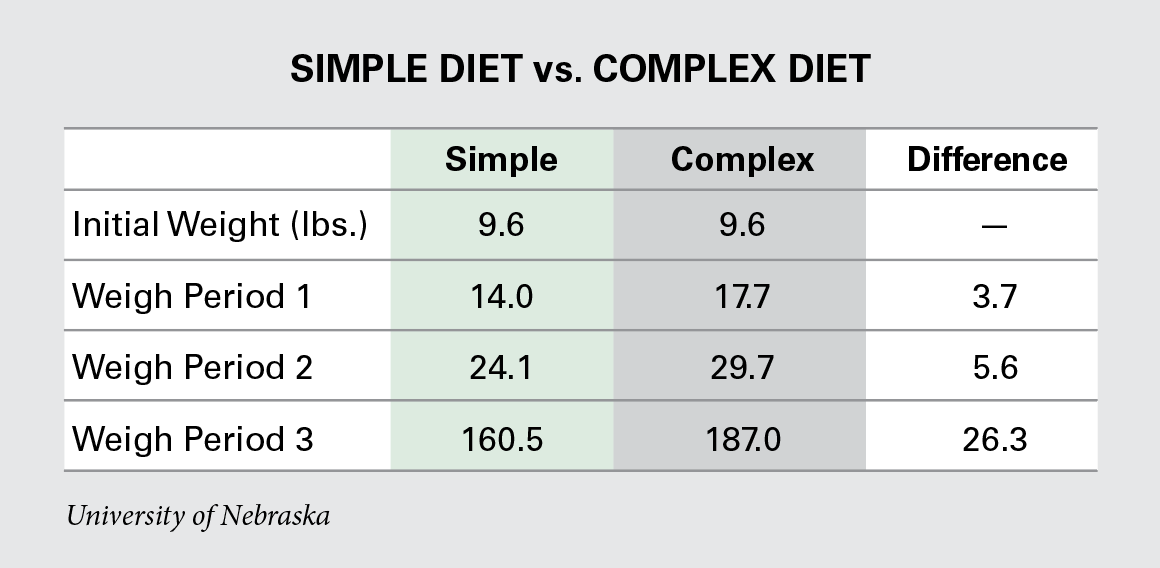
The critical thing to remember is that while the initial diet expense may be more significant in the first few days, the overall benefits of bringing lower-performing pigs up to a higher level of early performance will be felt throughout the pig’s life – in maintenance, management and market.
The chart below shows an example of the difference between pigs fed a simple nursery diet versus a complex nursery diet.
Complex Nursery Diets
Complex nursery diets you can trust—that’s what Ralco’s Tactical Start® offers. This proprietary nursery nutrition program is expertly designed to not only boost the performance of weaner pigs in the finishing barn but also ensure that every pig, especially the lightweight and opportunity ones, have a strong start.
By focusing on driving early feed intake, Tactical Start provides ultra-complex and easily digestible diets. These are specially formulated to match the digestive capacity of young pigs, helping to bring more uniform, full-value pigs to market.
The Benefits of Using Tactical Start:
It helps reduce mortality, culls and the number of lightweight pigs in the nursery.
Supports both nursery and finishing efficiency.
Aims to bring more full-value pigs to market, improving your profitability.
What makes Tactical Start stand out is its unique formulation. It includes purified amino acids and other essential nutrients that are carefully balanced to meet the specific needs of growing pigs and their digestive capacity.
Call 1 (800) 533-5306 to get a FREE consultation with a swine nutritionist and get a customized program tailored to your operation’s goals.
Get Weaner Pigs Started Faster
To get weaner pigs started on feed even faster, Ralco’s Essential-Lyte™ is a natural water additive designed to get pigs drinking and eating in the first 24 hours. It supports piglet gut health and immunity and provides the nutrients pigs need to stay healthy and thrive.
The blend of natural ingredients in Essential-Lyte – including essential oils, a prebiotic, vitamins E and D, a water acidifier and electrolytes – work together to:
Lower pathogen load
Rehydrate
Restore vital nutrients
Lower gut pH to reduce pathogens further