
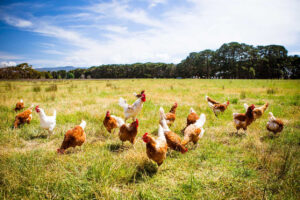
Picture: Organic Poultry Magazine
Organic is no longer a niche market, it’s a major force shaping U.S. food and agriculture. In 2021, total organic food and non-food product sales reached $57.5 billion, making organic one of the fastest-growing segments in the retail marketplace. (1)
What began with produce, dairy and staple grocery items has now extended into animal proteins like eggs and poultry, prepared meal items, personal care products and even home and cleaning products, as consumers look for simpler ingredient lists and cleaner production practices. (2,3)
Consumers aren’t just choosing organic occasionally anymore, they are integrating it into daily routines. The numbers prove it. In 2024, U.S. organic product sales grew 5.2% compared to 2.5% growth in the broader retail food marketplace, reaching $71.6 billion in total sales (4).
Within that growth, poultry has emerged as one of the most responsive and adaptable organic sectors.
Why is the Organic Market Growing?
Across organic food and lifestyle categories, the market continues to expand because of three sustained market trends:
1. Health, Wellness and Ingredient Transparency
Consumers want products that feel closer to their original form, meaning fewer synthetic inputs, fewer unknown additives and clearer origin stories. Organic aligns well with this trend because certification provides a regulated definition, not just a marketing claim.
2. Price Parity is Narrowing
As organic supply chains have matured and producers have gained efficiency, the price difference between organic and conventional goods has shrunk. For many households, organic has shifted from a premium to a reasonable preference.
3. Organic Products Are More Widely Available
What once required specialty retailers or farm-direct purchasing is now available in everyday shopping environments like grocery stores, warehouse clubs, meal kit services and online delivery platforms. As organic foods became easier to find, it also became easier to integrate into weekly meal planning, which reinforces stable, repeat purchasing and long-term demand.
Organic has moved past the era of “boutique” production. It now sits squarely inside mainstream consumer expectation, especially in categories like eggs and chicken, where daily purchase cycles drive volume. (5)
Why Poultry Became a Leader in Organic Production
Organic poultry refers to birds raised on certified organic feed, without antibiotics or growth-promoting medications and managed under a certified program that verifies standards and care practices, along with other specific regulations per species.
While produce, dairy and beef all play meaningful roles in organic agriculture, poultry has led the way because it is uniquely adaptable within commercial production systems. Compared to other livestock, poultry operations can transition to organic more efficiently and with lower biological and financial risk.
Some of the key reasons poultry has become the most scalable include:
- Faster adaptation to new feeding and management systems than cattle or swine
- Lower per-animal investment, reducing financial exposure during transition
- Strong, steady consumer demand for eggs and chicken as everyday protein sources
- Flexible facility requirements, where many barns can be modified rather than rebuilt entirely
In many cases, a conventional poultry barn can be transitioned to organic or animal welfare-certified production with adjustments, not full reconstruction. And because flock cycles turn quickly, producers receive rapid feedback, refine management decisions faster and learn in real time.
However, the growth of organic poultry has not been carried by small farms alone. It has accelerated because commercial-scale producers and integrators have invested in organic supply chains, certified processing and feed sourcing.
Examples of Large-Scale Organic Poultry Investments
| Company | Scale of Organic Strategy | Investment Details | Year(s) |
| Bell & Evans | Building full organic supply chain integration | Invested $330M to construct a 411,500 sq ft organic-certified harvesting facility. Partnered with Cargill and the Rodale Institute to source 100% U.S.-grown organic grain for feed. | Announced 2021, Facility underway through 2022–2024 |
| Tyson Foods (Smart Chicken) | Entered organic via strategic acquisition | Acquired Tecumseh Poultry (Smart Chicken) to immediately gain organic live supply, grower network and air-chill processing capability. | 2018 |
| Perdue Farms | Built multi-brand organic and No-Antibiotics-Ever product lines | Acquired Coleman Natural Foods (2011) and Draper Valley Farms (2013) to expand organic and free-range capacity. Ongoing organic product expansion continues. | 2011–Present (active expansion) |
| Shenandoah Valley Organic (Farmer Focus) | Developed an organic-only integrated producer network | Secured $15M private equity funding to expand processing capacity and grow the farmer network. | 2019 |
| Cal-Maine Foods | Scaling organic and specialty egg capacity | Increased organic and cage-free layer capacity to meet retail and foodservice demand. | 2015–2023 (staged expansions) |
The takeaway is simple: organic poultry is no longer an alternative, it’s strategic. Integrators are investing not because it is trendy, but because it has proven consumer durability.
Regulations That Define Organic Production
Regulation is the backbone of what separates organic from conventional production, and the standards are becoming clearer and more consistent than ever.
A major turning point came with the launch of the NOP in 2002, which provided national standards for what could legally be labeled as organic. (1) But even after those standards were set, inconsistencies remained, especially around animal housing and outdoor access.
For years, some laying hen operations used screened “porches” to meet outdoor access requirements. While technically allowed, this approach created confusion for both consumers and producers.
“Prior to the new rule, labeling practices weren’t always clear or consistent,” said Alea Gigliotti, poultry product specialist for Ralco. “Up to two-thirds of eggs labeled as having outdoor access were actually raised in houses with porches. These new rules are designed to make labeling clearer for consumers and expectations more uniform for producers.”
Key Updates Under the Final Organic Rule
In 2023, the USDA finalized the Organic Livestock and Poultry Standards (OLPS) rule to close these gaps and create more transparency across the supply chain. Some of the most significant changes for poultry include:
- Outdoor access: At least 75% of outdoor areas must be covered with vegetation.
- Sunlight: Birds must receive direct sunlight year-round, not just through windows.
- Dark period: Eight continuous hours of darkness are required (no midnight feeding).
- Air quality: Weekly ammonia testing at bird head height is required.
- Temperature thresholds: Outdoor access is required when ambient temperatures are between 32°F and 90°F.
These updates bring more consistency and credibility to organic labeling. But they also require producers to be more strategic.
“You have to know the rules to play the game,” said Dr. Tim Broderick, poultry nutritionist and technical manager for Ralco. “There’s flexibility inside those regulations, but you need to understand them to maximize flock performance.”
Check out our podcast on organic poultry production to understand more of these organic regulations and caveats.
Read: Full List of Guidelines for Organic Certification of Poultry
Listen to Our Podcast: Organic Poultry Production: Growth, Challenges & New Policies
“Meeting the standard doesn’t have to mean overcomplicating your setup,” Alea states. “We’ve seen producers turn their outdoor access areas into dense, unmanaged vegetation, thinking it’s required. But in reality, a well-managed pasture with low vegetation and good drainage can meet compliance and reduce disease pressure.”
In other words, the rules set the floor, not the ceiling. Great producers focus on strategic compliance that protects both birds and business.
How Ralco Supports Organic Poultry Producers
Ralco has been supporting organic and antibiotic-free poultry systems for decades using patented technology in essential oils, prebiotics and microbiome-focused nutrition strategies. Our tools help boost the bird’s natural defense systems and maintain performance under outdoor, cage-free and organic conditions.
| Regano 500 / ProsperEO | Supports healthy gut flora and immune readiness during challenges |
| Avi-Lyte | Hydration + electrolytes for support during heat stress, handling, placement, vaccination days |
| Essential Dry XP | Litter amendment to support drier floors and improved air quality in organic houses |
Our nutritionists, veterinarians and on-farm poultry specialists help producers balance compliance and performance without overcomplicating their systems.
Want to talk organic strategy?
Our Poultry Team is here to help! Give us a call at 1 (800) 533-5306 or PoultryHelp@RalcoAgriculture.com to talk about your organic production goals.
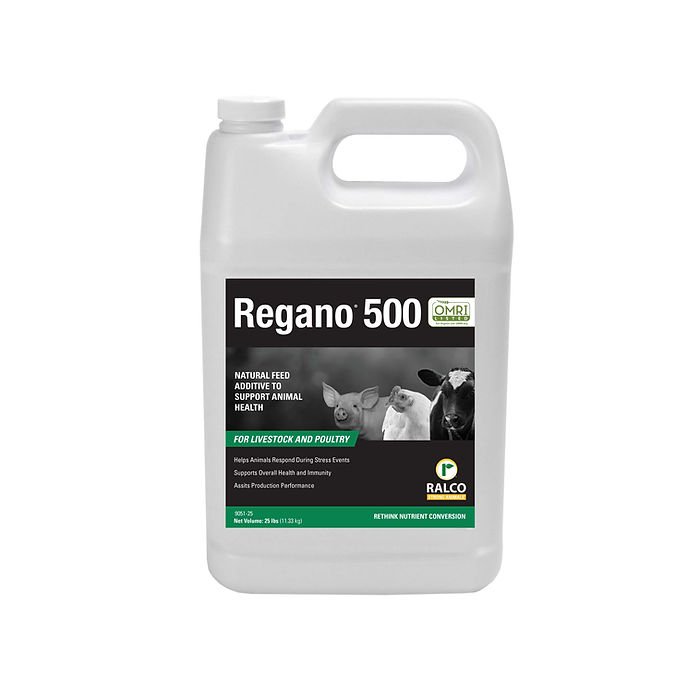
Regano 500 OMRI Listed
25 lb. Jug | 35 lb. Bag
Regano® 500 is a natural feed additive approved for organic production, formulated to support specific health challenges and maintain animal health during periods of stress.
What’s Inside:
- Microfused® Essential Oils Technology
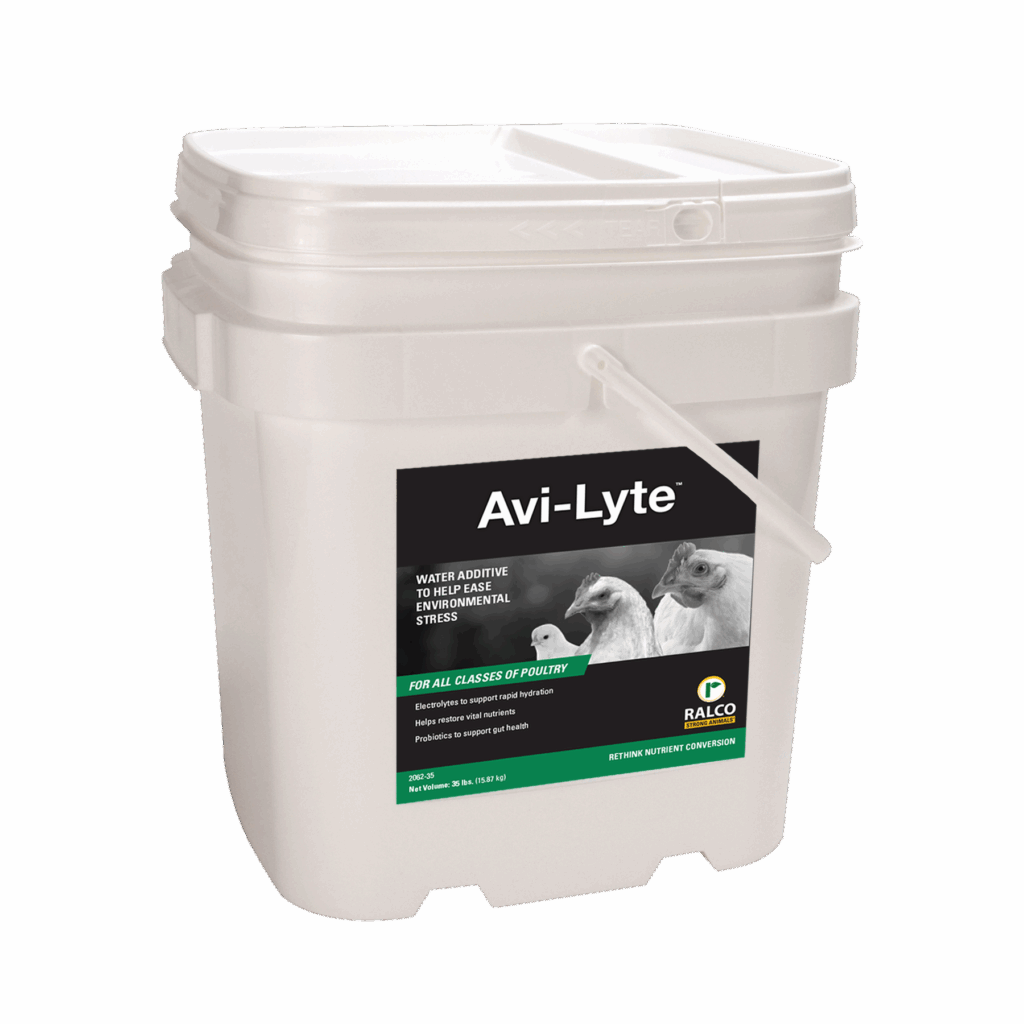
Avi-Lyte
Avi-Lyte is a natural performance pack for the water that supports hydration and nutrient balance with electrolytes, vitamins and probiotics, helping birds maintain intake during stress events like respiratory pressure or environmental changes.
Essential Dry XP
Essential Dry™ XP is a natural litter treatment used to neutralize ammonia and enhance overall litter and air quality in commercial poultry houses.
References:
- United States Department of Agriculture. “ Organic Agriculture Program.”
- Nolasco, A. et al. (2021). “Consumer Attitudes Toward Organic Foods.” Nutrients (PMC)
- NCF Certification: “What Are Consumers’ Motivations to Buy Organic Food?” (2023)
- Organic Trade Association (OTA) Consumer Survey, 2022
- Maia Research. (2023). North America Organic Poultry Industry Market Research Report. Maia Research Group.